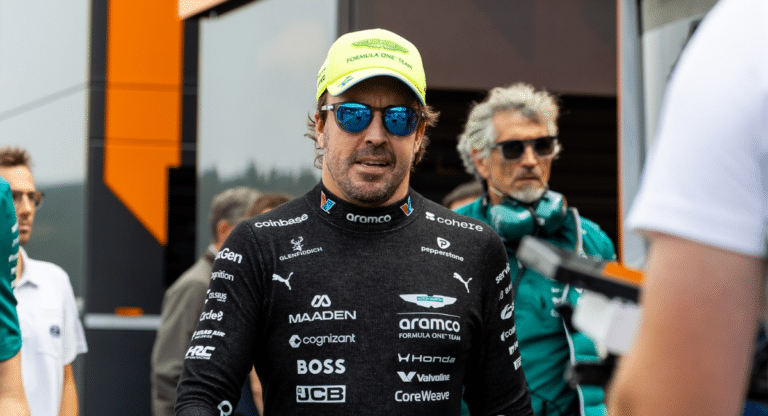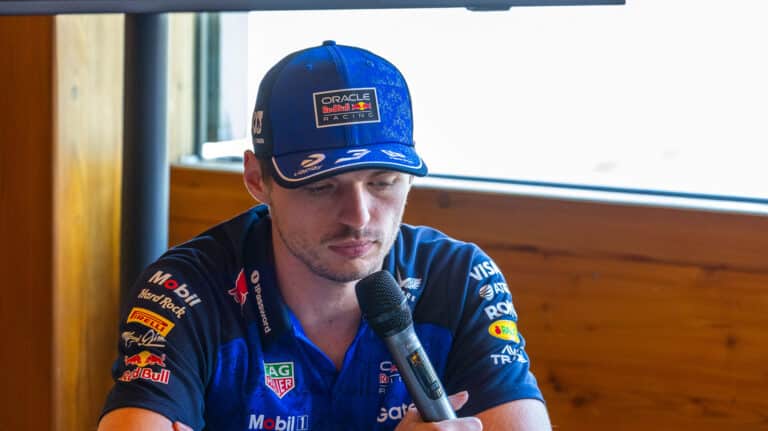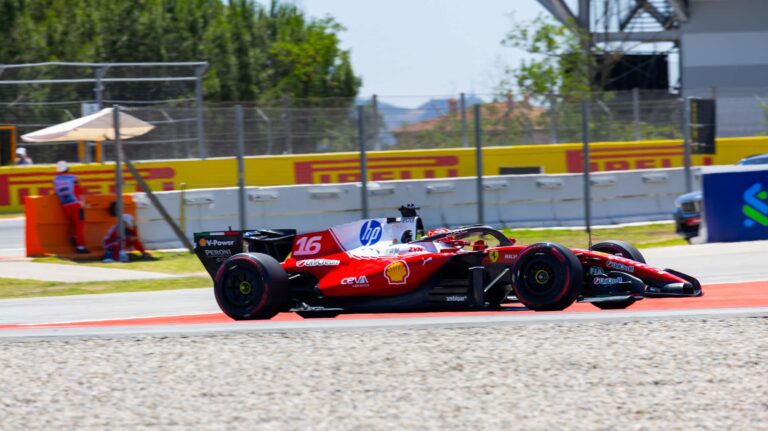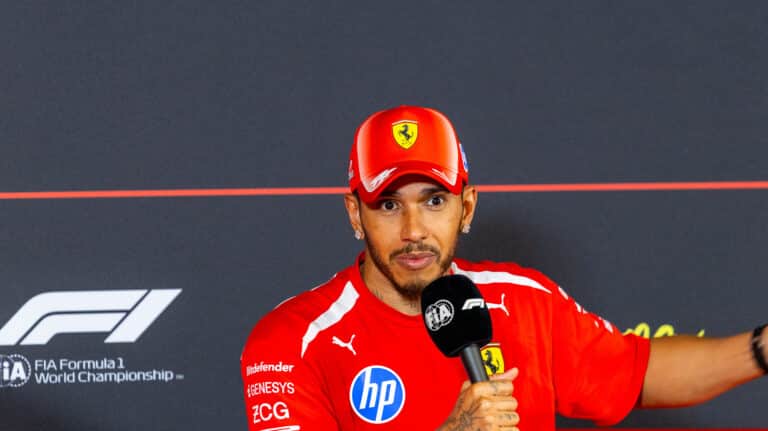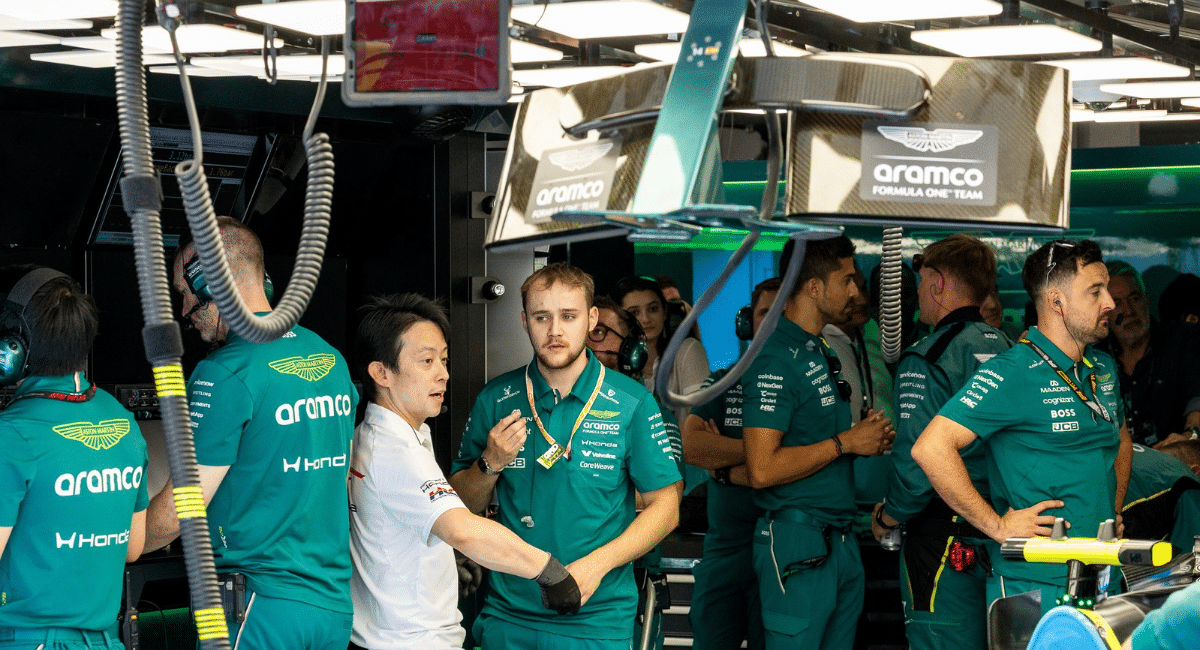
A single number has dominated Formula 1 paddock conversation this week: 50 horsepower. That is the gain being attributed to Honda’s new specification power unit, arriving with Aston Martin at Zandvoort. If accurate, it would turn Aston Martin into a genuine midfield contender almost overnight, with Fernando Alonso fighting for points and Lance Stroll running ahead of established rivals. But Honda itself has now pushed back on the figure, and the man responsible for delivering the engine programme says the number simply is not real.
Where the 50 Horsepower Rumour Came From
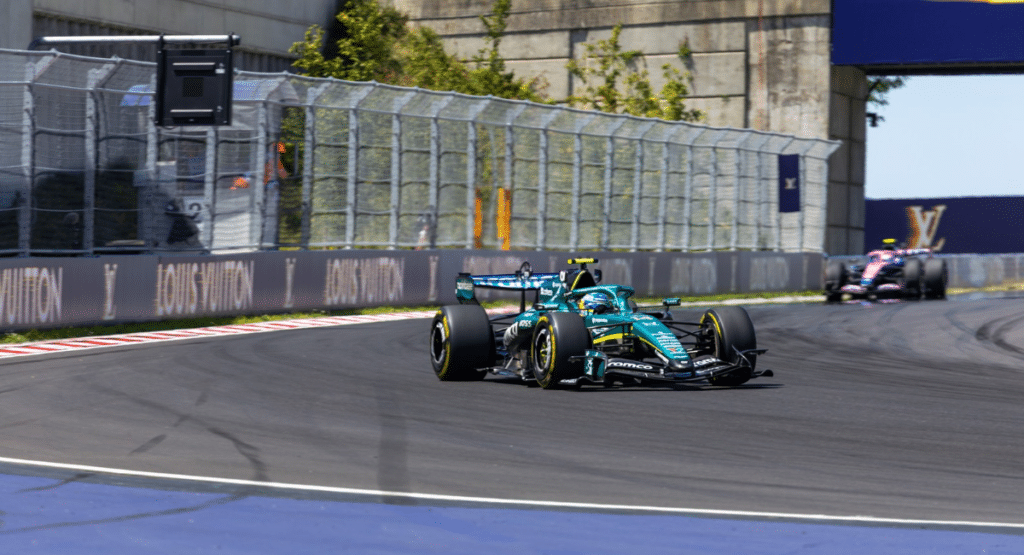
The claim did not emerge from nowhere. For much of the season, paddock rumours placed Honda’s deficit at more than 90 horsepower — an extreme figure, but one that persisted because insiders privately conceded the unit was underpowered. Much of Honda’s public messaging in the build-up to the Hungarian Grand Prix was built around managing that narrative: tempering expectations while still projecting momentum.
That balance became harder to hold once Aston Martin arrived in Budapest with the largest upgrade package of their season — a 16-part chassis revision that technical chief Adrian Newey had been building towards since the early races. It worked. Alonso reached Q2 for the first time in 2026, and both Aston Martins finished the race ahead of both Williams cars, both Cadillacs, and one Haas. The chassis had delivered. But the chassis was always only half the story.
Honda’s new specification power unit made its first appearance during Wednesday’s filming day at the Hungaroring, ahead of the summer shutdown — in a car Aston Martin now understands intimately, giving observers close to ideal conditions to gauge a genuine power step. Someone who watched that session put the gain at 50 horsepower, and from there the figure spread through the paddock.
What Honda Is Actually Saying
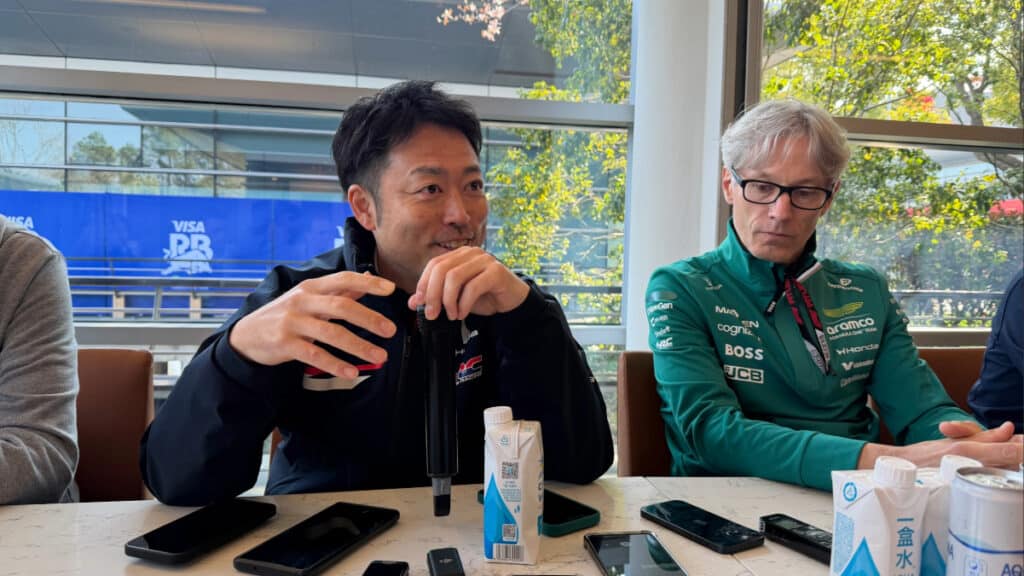
That is where Shintaro Orihara enters the story. As Honda Racing Corporation’s trackside general manager, he is the individual responsible for delivering the Sakura engine programme to Aston Martin every race weekend, and when he discusses power figures, he does so with full knowledge of what they mean.
His response to the 50 horsepower claim was carefully worded rather than a blunt denial. Asked directly, he said: “I want to have that number, but that is quite a big number.” That single sentence carries two signals. First, he is acknowledging that 50 horsepower would be significant — in a season where the leading manufacturers are separated by tens of horsepower, a jump of that scale would be category-changing, and Orihara knows it. Second, “I want to have that number” is aspiration, not confirmation.
He followed up with more caution still: “I can’t describe the detail of power, but my feeling with that is just, no, I don’t think, not the real number.” The phrase “not the real number” closes the door on 50 horsepower without opening one onto whatever the true figure might be — a deliberate, characteristically measured approach from Sakura’s communications style. When questioned further, with figures closer to 10 horsepower raised, Orihara’s expression reportedly shifted, hinting that something more modest was closer to reality, though nothing was confirmed on record.
Reading Between the Lines
Honda finds itself in a difficult position. The Hungary chassis upgrade worked so well that the engine has now become the story — and any remaining performance shortfall will inevitably be attributed to the power unit, fairly or not. Lance Stroll effectively confirmed as much after qualifying in Budapest: “I think we’re missing a lot on the engine, so we have to find more power.” He added that the car had improved significantly on grip, but that the power deficit remained “no secret.”
Our own assessment, based on the available evidence, places Honda’s realistic gain somewhere between 20 and 35 horsepower — enough to move Aston Martin from the back of the midfield into contention with Racing Bulls, Audi and Alpine, but not enough to challenge the sport’s leading teams outright.
Why Zandvoort Won’t Give the Full Picture
Zandvoort marks the new power unit’s first competitive race weekend, though not its first track running — that came quietly in Hungary, much as an earlier shakedown had in Barcelona back in February, with no media access and no driver comment either time. The fact that nothing negative has leaked since is, in Formula 1 terms, typically a positive sign.
However, Zandvoort itself won’t provide a definitive verdict. It is a mixed-load circuit that rewards chassis balance and aerodynamic efficiency as much as raw straight-line power, meaning a genuine power step could be partially masked by the chassis gains arriving at the same time. The clearer test comes at Monza, a full-power circuit where power unit deficits are exposed in the speed trap and in lap time with little room to hide. If Honda has genuinely closed the gap to Mercedes, Ferrari and Red Bull Ford, Monza will show it. If a deficit closer to 60 or 70 horsepower remains, that too will be laid bare.
More Than Just Horsepower
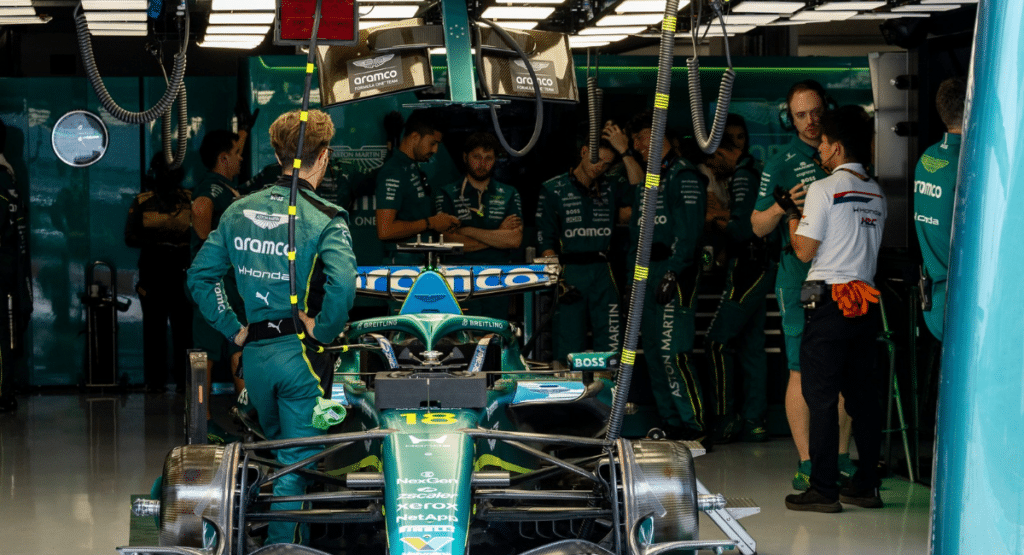
There is a further dimension to this story that raw figures don’t capture. Beyond outright power, Honda’s new specification is understood to be lighter, more reliable, and better integrated aerodynamically with Aston Martin’s chassis. Adrian Newey himself confirmed to our team in Hungary that the working relationship between his design operation and Honda’s Sakura base has improved — and coming from an engineer with four decades of experience, that assessment carries real weight. Even if the headline horsepower number lands towards the lower end of expectations, it may still arrive packaged inside a power unit that integrates more cleanly with the car than anything Honda has previously supplied.
Our editorial view heading into Zandvoort is that Honda is delivering a genuine, meaningful step — just not the 50 horsepower currently circulating. Alonso is unlikely to be fighting for a podium just yet, but a consistent push towards Q3 looks realistic. The chassis has already delivered its verdict in Hungary. The engine gets its first race weekend test at Zandvoort. The full, honest answer arrives at Monza.
▶ For the full breakdown of Honda’s power unit rumours and what to expect at Zandvoort, watch our complete video analysis below and subscribe to our YouTube channel — The Motion Report — for weekly race previews, paddock news, and in-depth analysis throughout the 2026 F1 season.
Formula 1, Honda, Aston Martin, F1 2026, Zandvoort, Adrian Newey, Lance Stroll, Power Unit
Read More
- The £1.8m Watch Chase: Why F1 Drivers Are Being Targeted on Their Own Wrists
- Max Verstappen’s $200m Gamble: Sign, Stay, or Walk Away From Red Bull?
- Why Half the Formula One Grid Calls Monaco Home — And Why Some Are Having Second Thoughts
- F1 2027: The Race to Fill Haas’s Last Open Seat
- Inside the Private Garages of Formula 1’s Biggest Stars