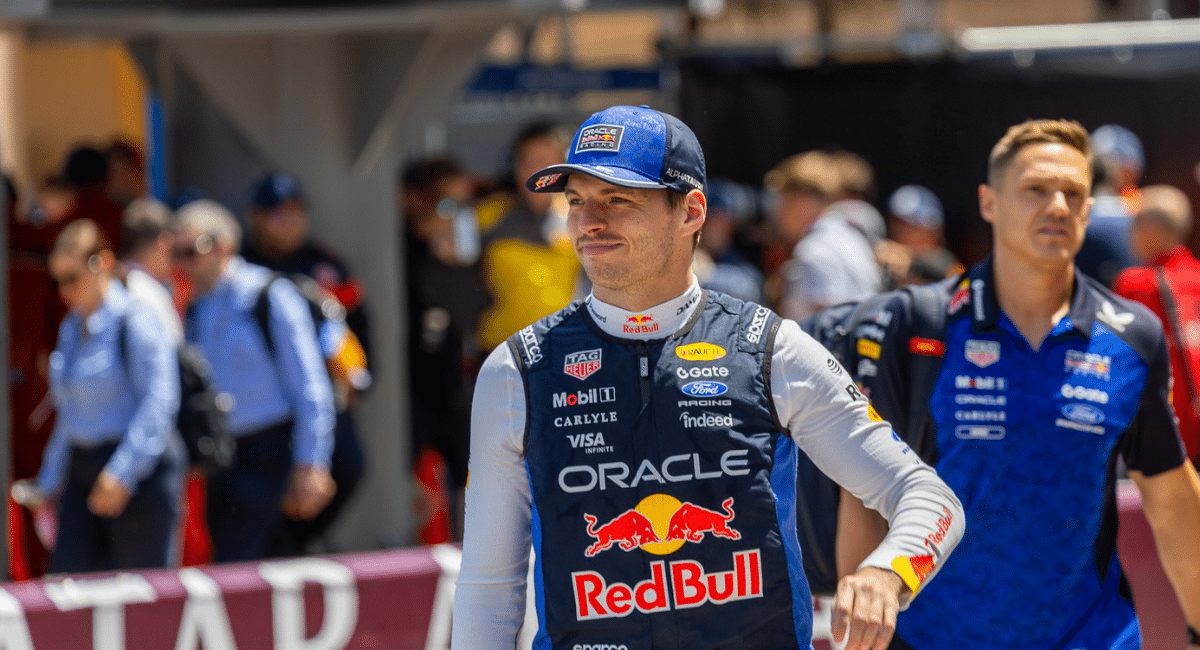
In an office in Milton Keynes, a contract worth roughly €65 million a season is waiting for a signature. It would bind Max Verstappen to Red Bull Racing through to 2029, offer him long-term security, and make him one of the highest-paid drivers on the grid. But according to reports circulating in the paddock, signing it would also mean giving up the single most valuable asset Verstappen currently holds — and it has nothing to do with his car, his jet, or his house.
The Exit Clause in Verstappen’s Red Bull Contract
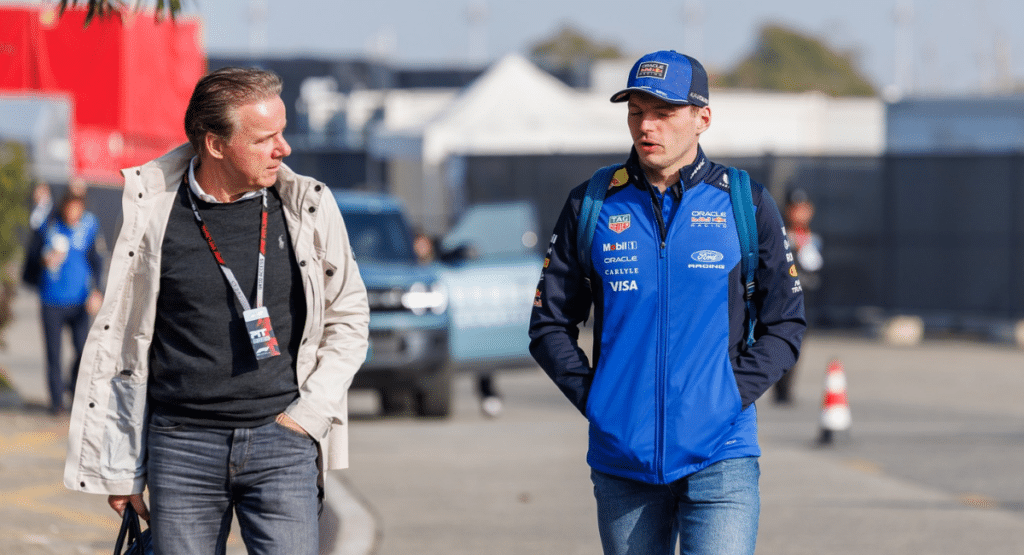
Buried in Verstappen’s existing deal is a performance clause. If he isn’t inside the top two in the drivers’ championship at the summer break, he’s free to walk away — no penalty, no fee. He simply exits and signs elsewhere. As things stand, Verstappen sits sixth in the standings, more than 100 points off the championship lead. Reports suggest that clause has already activated. He has until October to use it.
Red Bull’s response has not been to buy the clause out for a one-off fee. Instead, they’ve offered an extension: one additional year through to 2029, at a salary close to what he already earns, with every exit route quietly removed from the paperwork. The message is straightforward — Red Bull wants commitment without conditions, tying Verstappen to the team’s fortunes regardless of results.
The Numbers Behind the Deal
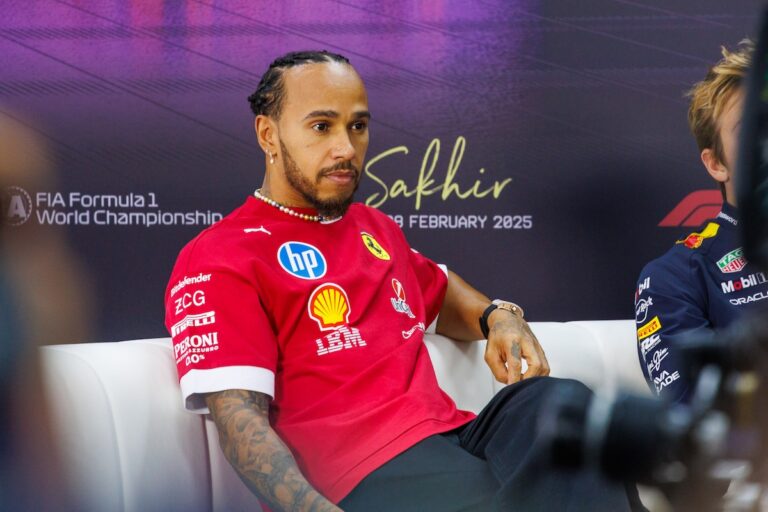
To understand why this matters, it helps to look at where Verstappen’s money actually comes from. His base salary for the 2026 season is reported at around $70 million, comparable to the reported figure for Lewis Hamilton in his second season at Ferrari. Once bonuses and endorsements are added, Forbes puts Verstappen’s total annual earnings closer to $86 million.
What’s notable is how small the personal endorsement slice actually is — reportedly between $9 million and $15 million a year, spread across partners including Jumbo supermarkets, Heineken, and EA Sports. In Formula 1, the commercial machine sits largely at team level rather than driver level; Oracle alone reportedly pays Red Bull around $110 million annually for title sponsorship, none of which touches Verstappen directly. That leaves his income unusually concentrated in a single contract, with a single team — one that is also, functionally, his biggest sponsor.
What “Losing” Hundreds of Millions Actually Means
It’s worth being precise here. Nobody is taking money out of Verstappen’s bank account. Estimates of his existing net worth vary wildly, from around $156 million to nearly $400 million depending on the source, and he will be extremely wealthy under any version of this story. What’s really at stake is forfeited future income — money that was available to him but goes uncollected because of a decision made in the coming weeks. Even under the most conservative reading, that gap runs into the tens of millions.
Mercedes, McLaren and the Price of Freedom
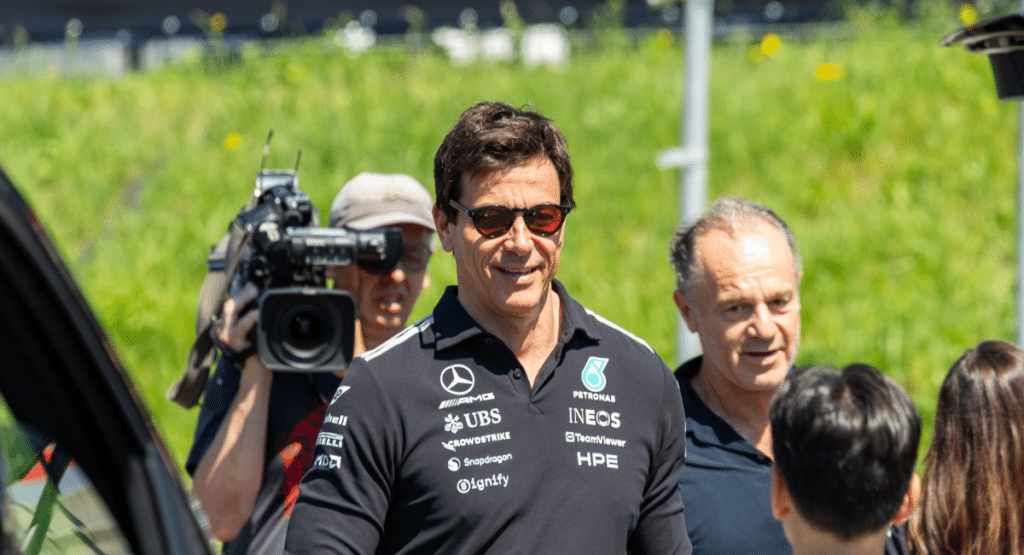
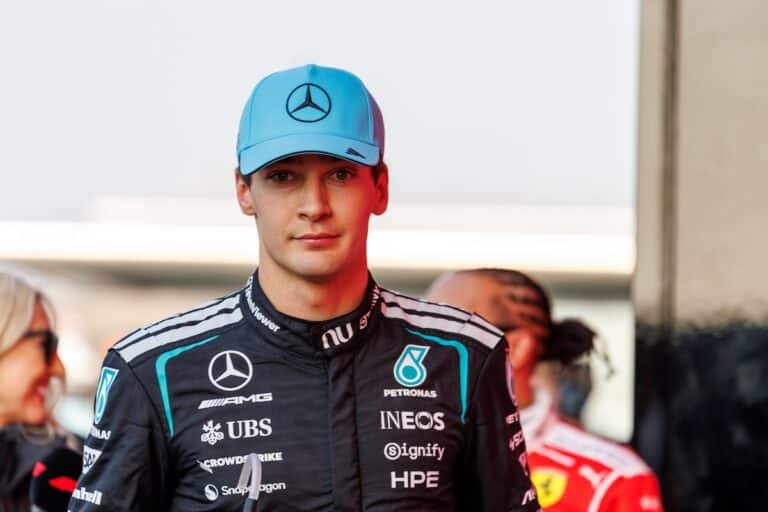
For eighteen months, one name has been persistently linked with Verstappen: Mercedes. Team principal Toto Wolff has never hidden his admiration, and the two were photographed together on holiday in Sardinia for a second consecutive year. But Wolf has also been clear on record that he intends to keep George Russell and Kimmy Antonelli for 2027 — about as close to a closed door as Formula 1 gets.
That leaves McLaren as the most realistic alternative, though the economics are less favourable. Lando Norris’s reported base salary sits in the $25–30 million range, with Oscar Piastri’s reportedly lower still — both well below Verstappen’s current $70 million floor. Any offer from a rival would likely land $25–30 million below what Red Bull already has on the table, possibly with a reduced first-season rate while he adjusts to a new car and team.
Could a Sabbatical Be the Real Strategy?
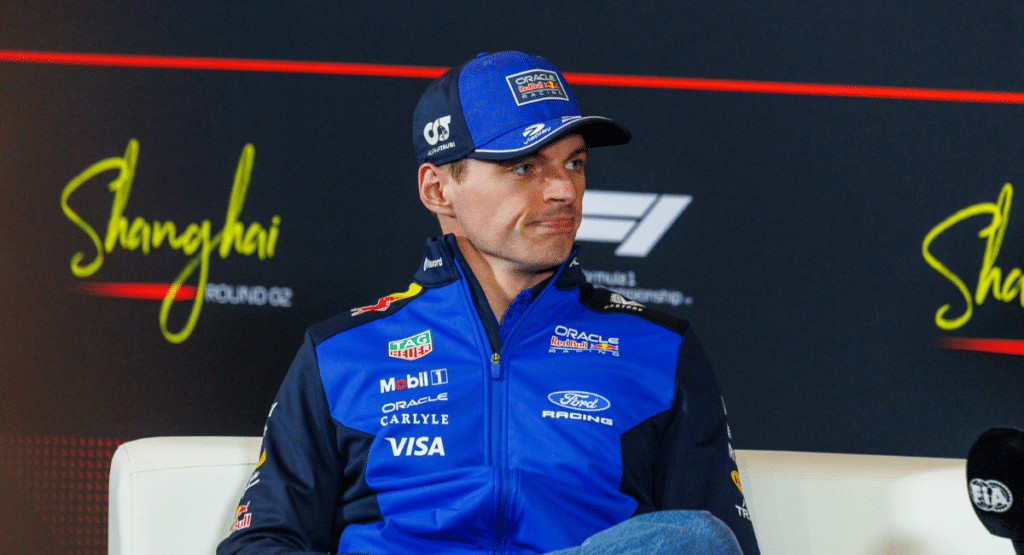
According to ESPN, Verstappen may be leaning toward a different option entirely: a sabbatical rather than retirement. The distinction matters. Retirement ends the story; a sabbatical manufactures scarcity. Verstappen already runs a racing operation, Verstappen.com Racing, which has competed in GT endurance racing and moved to a multi-year Mercedes-AMG partnership, alongside a sim-racing programme with Team Redline.
A year away from Formula 1 would likely cost around $60 million in forfeited team salary, though personal sponsorship deals like Heineken and EA Sports would largely remain intact. In return, it could recreate the kind of demand that followed Fernando Alonso’s high-profile comeback — turning a driver who might leave into one whose return is an event.
Three Ways This Could Play Out
Reports suggest three broad scenarios, each with a very different price tag attached.
The first is signing the extension. This secures roughly $200 million across the remaining seasons through to 2029 — safe, guaranteed, and immediate. But the moment he signs, Verstappen is off the market for years, locked in at a rate agreed while he sits sixth in the championship. If a genuine bidding war would otherwise have pushed his price toward Hamilton-at-Ferrari territory, that premium — estimated at $25–30 million a year — disappears the day the contract is signed.
The second scenario is walking away entirely, with no Formula 1 seat at all. At 28 years old and with four world titles already secured, three forfeited prime seasons at roughly $70 million each could total around $210 million. Once lost bonuses and sponsorship overlap are factored in, some estimates push that figure past $230 million — the largest number on the table, and reportedly the least likely outcome given his manager’s comments about wanting to fulfil his contract through to 2028.
The third and most complex scenario is holding the clause and finding the market doesn’t fully materialise. If Mercedes remains committed to its current line-up and McLaren is the only realistic bidder, any offer would likely arrive at a discount, with a reduced first-season rate while Verstappen settles into a new team. In that outcome, the net gap compared with simply signing with Red Bull could still run to $60–80 million — proof that holding out is not without its own risks.
Taken together, analysts suggest the spread between the best and worst versions of this decision runs from roughly $60 million to well over $200 million — a gap of more than $100 million separating a well-played negotiation from a costly one.
What would you do — take the guaranteed money, or hold out for more?
▶ For the complete financial analysis, including exact figures on sponsorship deals, salary comparisons, and every scenario in play, watch the full video below and subscribe to our YouTube channel — The Motion Report — for weekly race previews, paddock news, and in-depth analysis throughout the 2026 F1 season.
Max Verstappen, Red Bull Racing, F1 2026, F1 Contracts, Formula 1 News, Mercedes F1, McLaren F1, F1 Driver Market
Read More
- Why Half the Formula One Grid Calls Monaco Home — And Why Some Are Having Second Thoughts
- F1 2027: The Race to Fill Haas’s Last Open Seat
- Inside the Private Garages of Formula 1’s Biggest Stars
- F1 WAGs 2026: Who’s Together, Who’s Split, and Who’s Back on the Market
- Yuki Tsunoda Opens Up on Films, Music, and His Bond With Pierre Gasly