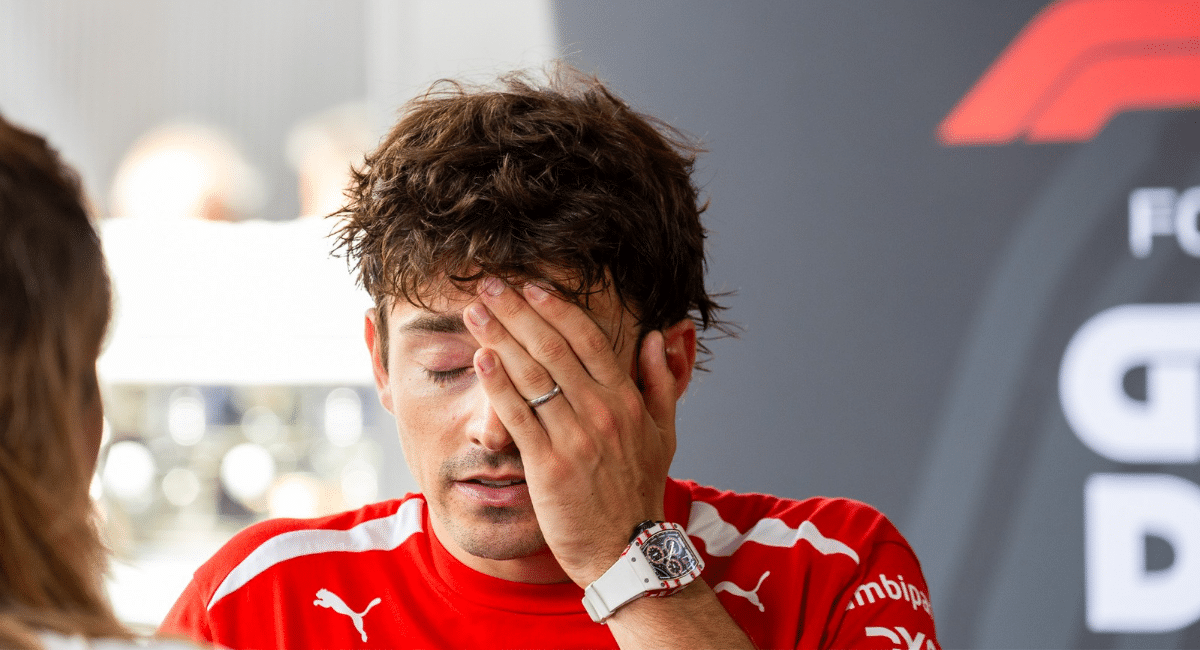
In April 2022, on the seafront of a Tuscan resort town, Formula 1 championship leader Charles Leclerc was approached by two people in motorcycle helmets asking for a photograph. He obliged, as he does everywhere he goes. Moments later, they were gone — and so was his watch. Not just any watch, but a one-of-a-kind Richard Mille built in the red and white of the Monaco flag, reported to be worth up to $2 million.
What Leclerc did next is not something any insurance company would recommend. He got into his Ferrari and went after them. The chase tore through the streets of the coastal town before ending in a car park, where one of the thieves pulled a knife on him. The pair escaped on a scooter, shielded by accomplices waiting in an SUV nearby.
For a while, it looked as though the watch was gone for good — the kind of one-off piece that is almost impossible to sell quietly without being caught. But this story has an ending worthy of a film script. Spanish police recovered the watch, and in November 2023 the thieves were sentenced: two of the men to more than ten years, and the woman who staged the fake photo request to over six.
A Pattern Across the Paddock
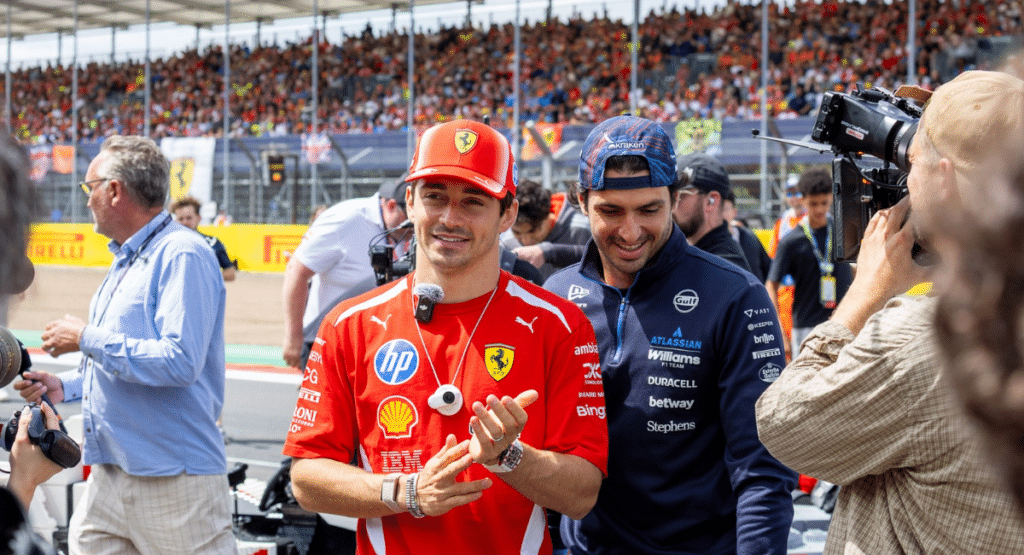
Leclerc is far from alone. Carlos Sainz had his Richard Mille stolen hours after standing on the podium at the Italian Grand Prix. Lando Norris has been robbed not once, but twice. These watches have become so valuable, and so instantly recognisable, that they turn a driver’s own wrist into a target. Many drivers now wear decoys in public. Some choose to wear nothing at all.
It raises an obvious question: what is it about a watch that makes it worth this kind of risk?
Why a Watch Means More Than Money
A car sits in a garage. A house stays where it is. A watch, by contrast, goes everywhere its owner goes — worn through wins, losses, and all the years in between. In a paddock full of wealthy people, the watch is often the one thing that gets noticed first, whether at a private dinner or a hotel bar at 1 am. It is easy to start a conversation about, and notoriously hard to fake. That is likely why, when one is stolen, it rarely feels like simple theft. It feels personal.
The Watch That Started It All
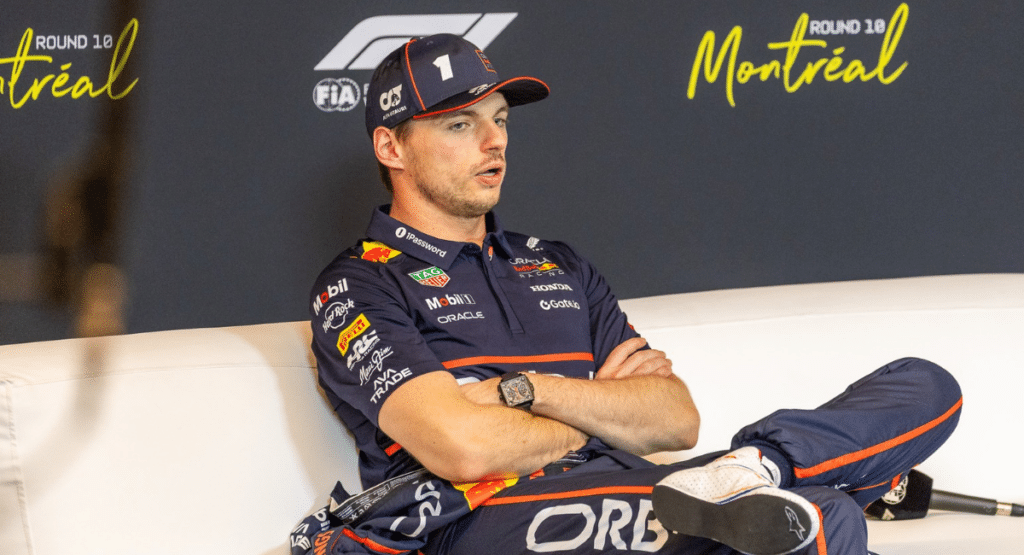
The origins of this obsession trace back to 1970, when Steve McQueen filmed Le Mans, widely regarded as the most authentic racing film ever made. Wanting to emulate his friend, the real-life Swiss racing driver Jo Siffert, McQueen was offered a choice of watches by the production’s property master. He picked the Heuer Monaco — square-cased and electric blue at a time when every serious watch was round, black or white. Off-screen, McQueen actually preferred his own battered Rolex Submariner, and only agreed to wear the Monaco on camera to match his stunt double. That single compromise turned a slow-selling square watch into motorsport’s most iconic timepiece; the actual watch McQueen wore later sold at auction for more than $87,000.
More than fifty years on, TAG Heuer marked Max Verstappen’s fourth consecutive world title with a bespoke Monaco split-seconds chronograph — his name and championship years engraved into the dial. Same watch family, born in 1969, worn by both the King of Cool and the modern king of the grid.
Rolex, Without a Single Driver
Curiously, the most powerful watch brand in Formula 1 is worn by no driver at all. Rolex owns the trackside clocks and the timing graphics instead, letting its legend run through figures like Sir Jackie Stewart, the three-time world champion who has worn a Rolex Daytona over his cuff for more than fifty years — not because a sponsor demanded it, but because it was simply his.
The Watches You Can Actually Buy

Not every racing watch requires a driver’s salary. Vintage TAG Heuer Formula 1 models — the affordable line launched in 1986 to introduce ordinary enthusiasts to Swiss watchmaking — can be found from around $200 on the pre-owned market. A brand-new solar-powered Formula 1 model sits closer to $1,800, but collectors often point to the vintage route as the smarter buy: those pieces have already taken their depreciation, meaning owners are buying near the bottom of the market rather than the top.
For those drawn to the Monaco itself, a new TAG Heuer Monaco chronograph — the direct descendant of McQueen’s watch — sits near $6,000. The more understated Carrera, sharing the same racing DNA in a round case, starts from roughly $2,000 to $3,000 new, and less again on the pre-owned market. It is often described as the watch people wear every day, with a suit or a T-shirt, quietly aware of exactly what is on their wrist.
The Dream That Holds Its Value
Then there is the tier that functions as both a dream and, arguably, a sound decision. A clean pre-owned Rolex Oyster Perpetual or older Datejust can typically be found from $4,000 to $6,000. Unlike most watches in this story, Rolex has historically held or grown its value over time — though, as with any market, nothing is guaranteed.
For those not quite ready for that step, Tudor — built by Rolex and sharing much of its engineering — offers real racing pedigree at a lower price point, with models like the Black Bay Chrono sitting around $4,000 to $5,000 new. Omega’s Speedmaster, meanwhile, is prized by collectors for its engineering pedigree and tends to hold value well, typically retailing between $5,000 and $6,000 new.
Why This Story Resonates Beyond the Money
There is a reason stories like Leclerc’s chase through Tuscany capture public attention far beyond the racing world. A watch, unlike almost anything else people own, is designed to be kept for decades and then passed on. In an era of disposable goods, a well-maintained mechanical watch can outlive the person who first wore it — carrying its story to whoever wears it next.
That may explain why people who have achieved enormous success — world champions, movie stars — still light up when talking about their watches. It rarely comes down to vanity. It is closer to an appreciation of craftsmanship and permanence, and that appreciation is not reserved for those who can afford a Richard Mille. It applies equally to the owner of a $200 vintage TAG Heuer.
The Bottom Line
From a square blue watch worn by Steve McQueen in 1970, to a Ferrari chase through the streets of Tuscany, to a $200 vintage piece available on the pre-owned market this week, the watches connected to Formula 1 were never really about telling the time. They are about carrying a story — one that travels with its owner through the moments that matter, regardless of what it cost to buy.
▶ Watch the full story below, including exclusive paddock reporting, and subscribe to our YouTube channel — The Motion Report — for more exclusive F1 lifestyle coverage.
Formula 1, F1 watches, Richard Mille, TAG Heuer Monaco, Charles Leclerc, Luxury watches, Rolex, Watch collecting
Read More
- Max Verstappen’s $200m Gamble: Sign, Stay, or Walk Away From Red Bull?
- Why Half the Formula One Grid Calls Monaco Home — And Why Some Are Having Second Thoughts
- F1 2027: The Race to Fill Haas’s Last Open Seat
- Inside the Private Garages of Formula 1’s Biggest Stars
- F1 WAGs 2026: Who’s Together, Who’s Split, and Who’s Back on the Market