A 686-day wait, one commanding Ferrari victory, and suddenly the 2026 championship looked different. Lewis Hamilton finally delivered, Mercedes cracked for the first time this season, and the field behind them got closer together. Behind the emotion of Sunday’s result, though, uncomfortable conversations were happening in several garages. Here are our five key takeaways from the Spanish Grand Prix at the Circuit de Barcelona-Catalunya.
Update, 20 November: This is our analysis straight after Barcelona. Kimi Antonelli went on to win the 2026 drivers’ championship, and Mercedes clinched the constructors’ title at Interlagos. Several storylines below, including Verstappen’s future and Aston Martin’s upgrade, developed a great deal afterwards. See our 2027 F1 grid guide and our Aston Martin upgrade analysis.
One: Lewis Hamilton Is Back, and F1 Needed It
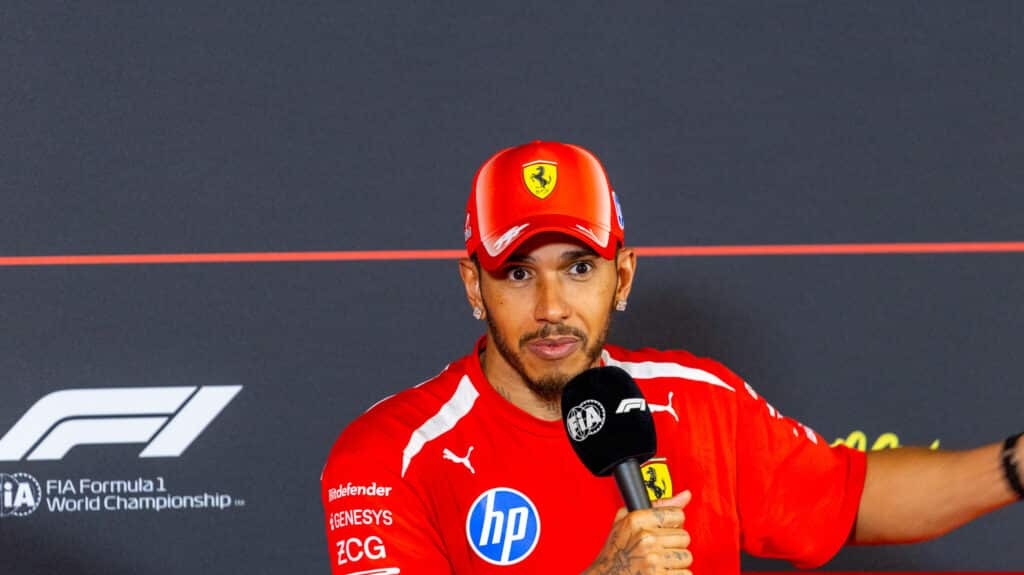
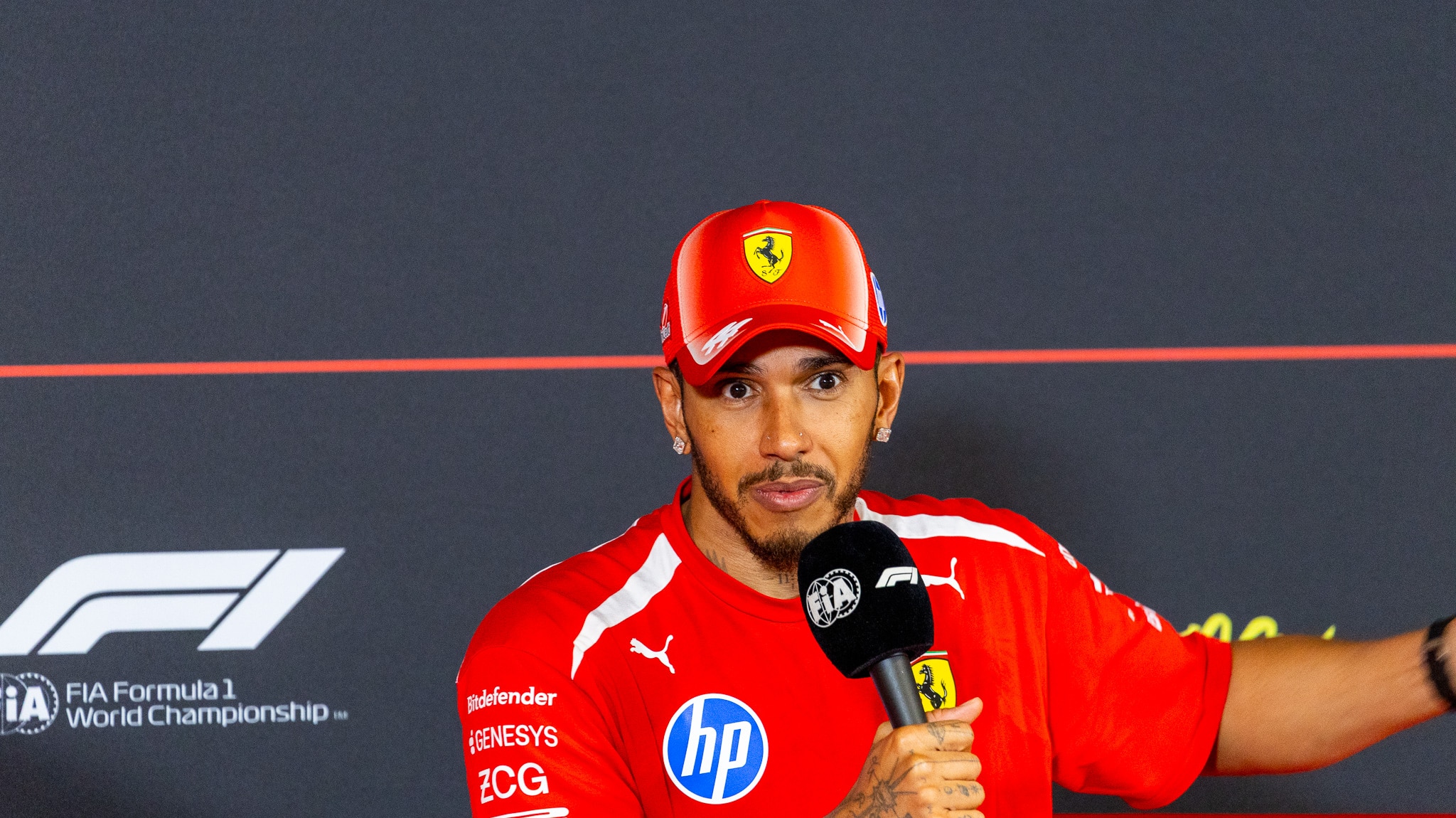
Hamilton ended his 686-day wait for victory with his first win in Ferrari colours, the 106th Grand Prix win of his career. It was not just a result for Ferrari. It was a result for Formula 1. Hamilton was visibly emotional on the podium, unable to hold back tears as the Italian anthem played. Even Toto Wolff, the man Hamilton spent 12 years working with, could not hide his respect. He said he was happy for Hamilton after so many difficult moments, particularly last year, and that if it was not one of Mercedes’ two drivers winning, it should be Lewis. Hamilton, in his view, merited it.
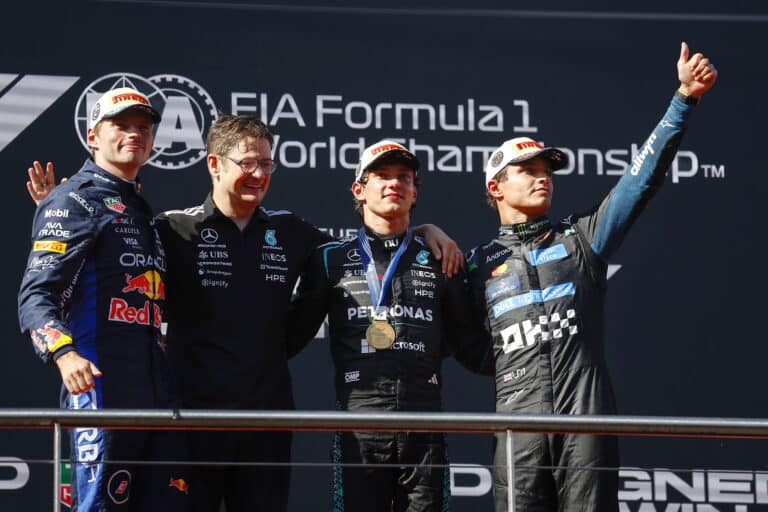
A championship from here looked unlikely, with Hamilton 41 points behind Antonelli. But the race mattered. For the first five rounds this was a Mercedes story, Antonelli against Russell, full stop. Barcelona was the first race of 2026 not won by a Mercedes driver, and Ferrari’s focus on development was paying off. Lando Norris inherited the final podium place when Antonelli retired. The field was tightening, though Mercedes remained the team to beat and the championship theirs to lose. See our report on the Barcelona qualifying shake-up and the celebrities and WAGs at Hamilton’s historic win.
Two: Verstappen Goes Quiet
While Hamilton took the headlines, Max Verstappen was spotted in Salzburg, Austria, with his manager Raymond Vermeulen, meeting Red Bull’s senior leadership. When journalists asked in Barcelona, he closed the topic down: if there was anything new, he would let them know. The timing was no coincidence. It followed a strange ruling. The FIA’s ADUO assessment found Red Bull Ford to be the benchmark power unit manufacturer, which meant Red Bull received zero engine upgrade tokens this year while Mercedes, Ferrari, Audi and Honda all received them. Verstappen confirmed Red Bull was in talks with the FIA, said the team was surprised, and called it baffling given that Mercedes is widely seen as having the strongest engine.
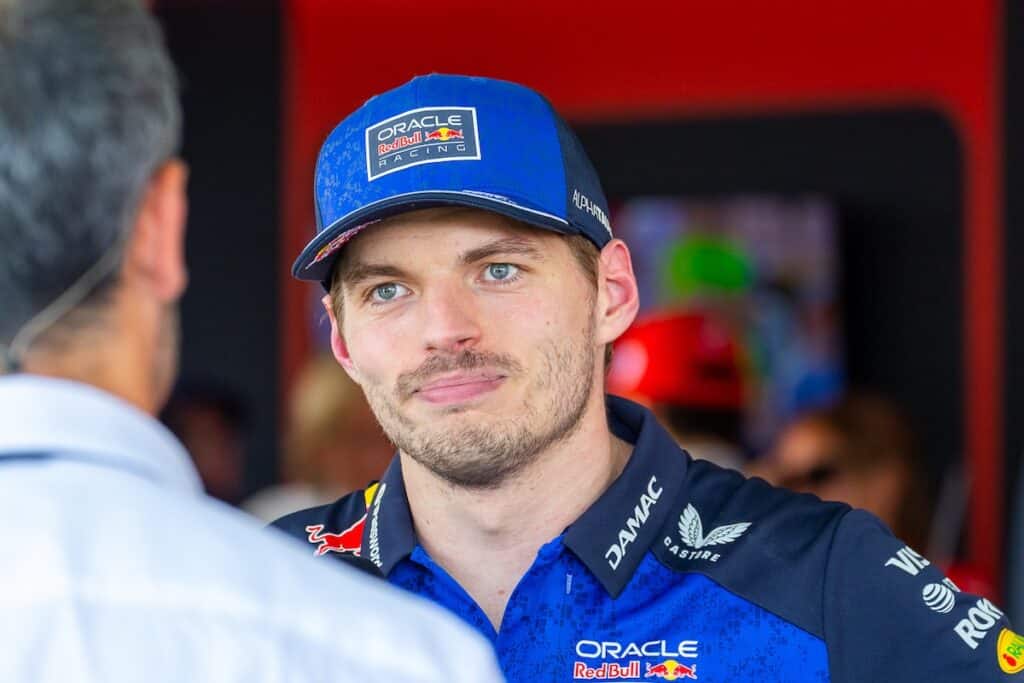
Even Red Bull’s own people did not think the engine was the real issue. Verstappen said the team was still behind Ferrari, Mercedes and McLaren because it had finished behind each of them, so it was still fourth as a team. He called it a lonely race and asked aloud whether Red Bull were the fourth team at the moment, adding that it felt that way to him. Put together, a summit in Austria, a chassis and aero package clearly behind the front three, an engine ruling under protest and a driver who said almost nothing publicly: make of that what you will. The driver market implications were a separate report, in our look at Verstappen and the 2027 driver market.
Three: Aston Martin Honda Lose the Spanish Press
If you want to know how bad things had become at Aston Martin, listen to what was being said in Spain. Fernando Alonso retired on lap 40 with a battery problem, and Lance Stroll also failed to finish with a gearbox issue. Alonso had been out-qualified by his own teammate and started from the pit lane after Aston Martin changed his energy store and MGU-K. His own verdict was that they knew they had the worst car and the worst engine. He told Spanish media the team repeated the same strategy every weekend, would arrive in Austria two weeks later and be last in qualifying, and asked whether that exposed weaknesses in the car.
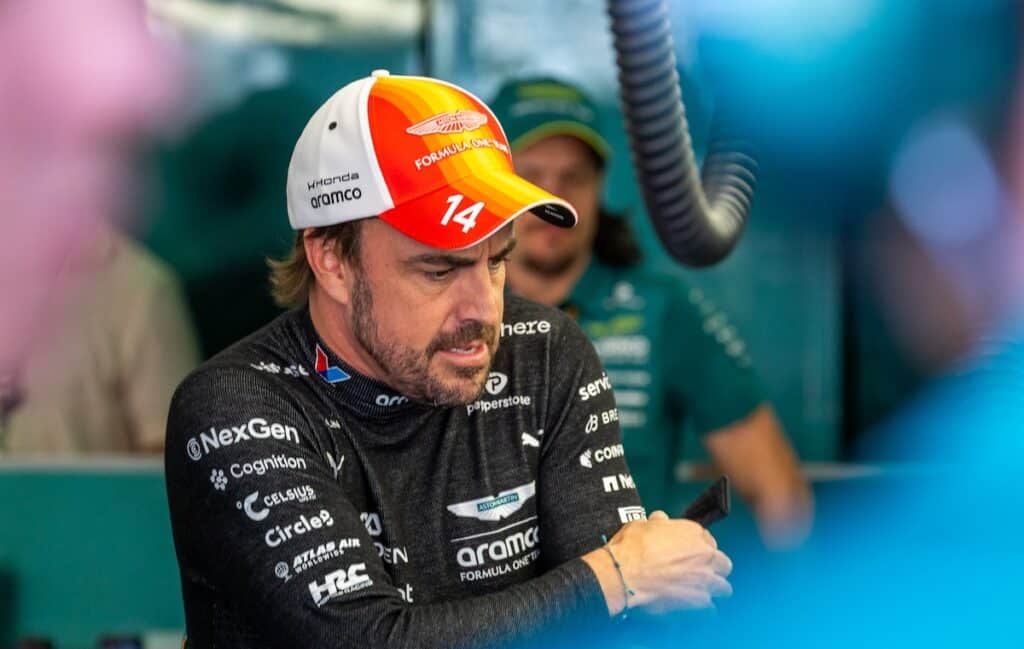
At a successful enterprise, results like this bring accountability. Aston Martin was asking everyone to wait for upgrades that were not even scheduled and not yet proven, and the team had a poor track record in that department. The refinement could take months and, at worst, spill into 2027. Aston Martin committed to one larger upgrade package arriving in the summer, rather than small incremental updates, with Honda also targeting an engine upgrade around the same time. For what that package looked like, read our Hungarian GP upgrade analysis.
There were also rumours of Alonso rejoining Alpine and reuniting with his old mentor Flavio Briatore. Both Aston Martin and Alonso denied it immediately, though the two are as intertwined as any pair on the grid. We read it as Alonso speaking indirectly, since openly criticising the team or Honda was not an option given his post-F1 plans. The rumours put pressure on Aston Martin to act faster. But we did not expect heads to roll soon: Aston Martin’s ownership and decision-making structure looks nothing like Red Bull’s, even though both have a dominant individual owner at the top.
Four: McLaren’s Disappointing Weekend
This was supposed to be McLaren’s race, and it became Ferrari’s. Barcelona’s long, loaded corners punish weak aerodynamics, and its heat and tyre degradation expose any car that cannot look after its rubber. McLaren finished third and fifth, solid on paper but underwhelming given the pre-weekend expectation that they would be the team closest to challenging Mercedes. Oscar Piastri finished 35 seconds behind Norris, and McLaren could not match Ferrari’s tyre management once the race became a degradation contest, a contrast that was stark against Hamilton.
Piastri admitted McLaren had no answers right now. Andrea Stella said McLaren can get close to Mercedes over one lap, but over a race distance there is nowhere to hide, and Mercedes and Ferrari can drive three-tenths slower, look after the tyres, and still beat them. It was a reversal from the McLaren dominance of 2025. Reliability issues, from batteries to power units, remained a concern across the grid. There were also persistent rumours that Piastri could leave McLaren, with reports of Red Bull lining him up as a long-term replacement for Verstappen. Stella dismissed it as silly season speculation, and Piastri was under contract until the end of 2028.
Five: The George Russell Problem
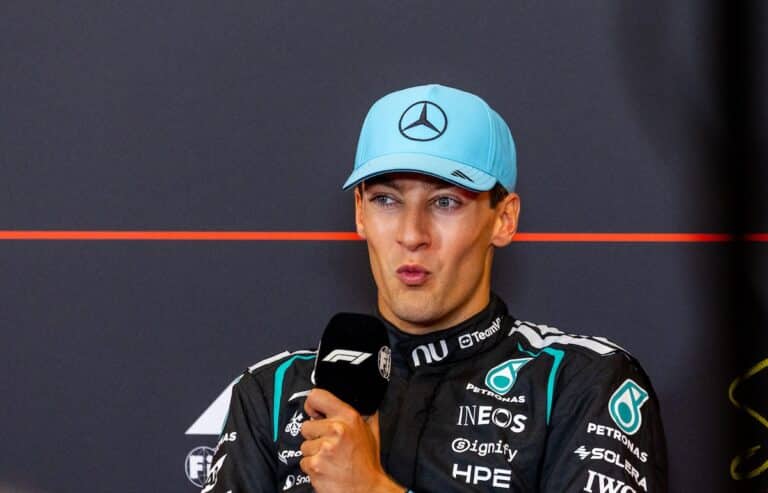
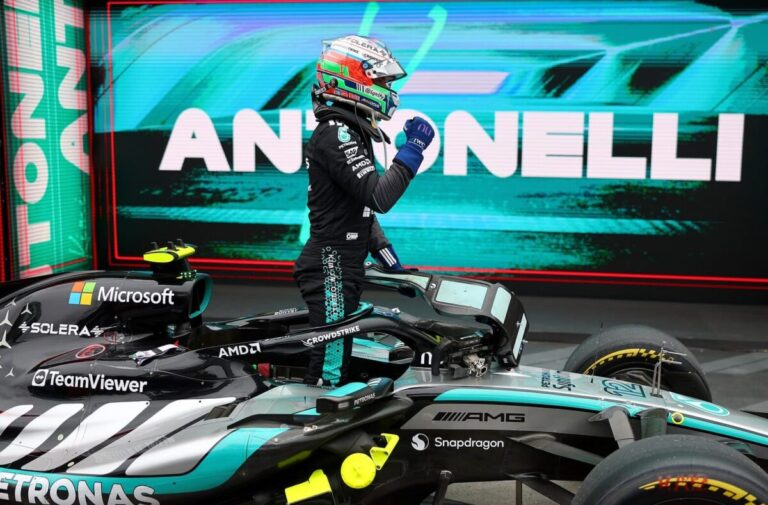
Russell had every advantage a pole-sitter could ask for: first pick on strategy, clean air, and a teammate in third who was expected to support the team effort. None of it was enough. He was outpaced and outsmarted by Antonelli, who had none of those advantages and still beat him on track. Antonelli’s retirement handed Russell second place, but the truth was out. Antonelli looked faster and more comfortable in this generation of car, managing the tyres better while extracting more performance, a combination that is very hard to defend against. And Wolff hinted that team orders could come, which would add insult to injury.
Russell’s championship fight was still on, and there is a proven route: the Nico Rosberg approach, a title-winning strategy against a stronger teammate that came at a heavy personal cost inside the team. Which path Russell chose would show in the races that followed. Watch our full video below and tell us your own key takeaways from Barcelona.
FAQ
Who won the 2026 Spanish Grand Prix?
Lewis Hamilton won at the Circuit de Barcelona-Catalunya, his first victory for Ferrari and the 106th of his career. It ended a 686-day winless run.
Was it the first non-Mercedes win of 2026?
Yes. The first five rounds were won by Mercedes drivers. Barcelona was the first race of the season won by someone else.
Why did Red Bull get no engine upgrade tokens?
The FIA’s ADUO assessment found Red Bull Ford to be the benchmark power unit manufacturer, so it received no upgrade tokens while Mercedes, Ferrari, Audi and Honda did. Red Bull said it was in talks with the FIA about the ruling.
Why was McLaren’s Barcelona weekend disappointing?
McLaren finished third and fifth, with Oscar Piastri 35 seconds behind Lando Norris. Team principal Andrea Stella said Mercedes and Ferrari could drive three-tenths slower, look after their tyres, and still be quicker over a race distance.
Read More