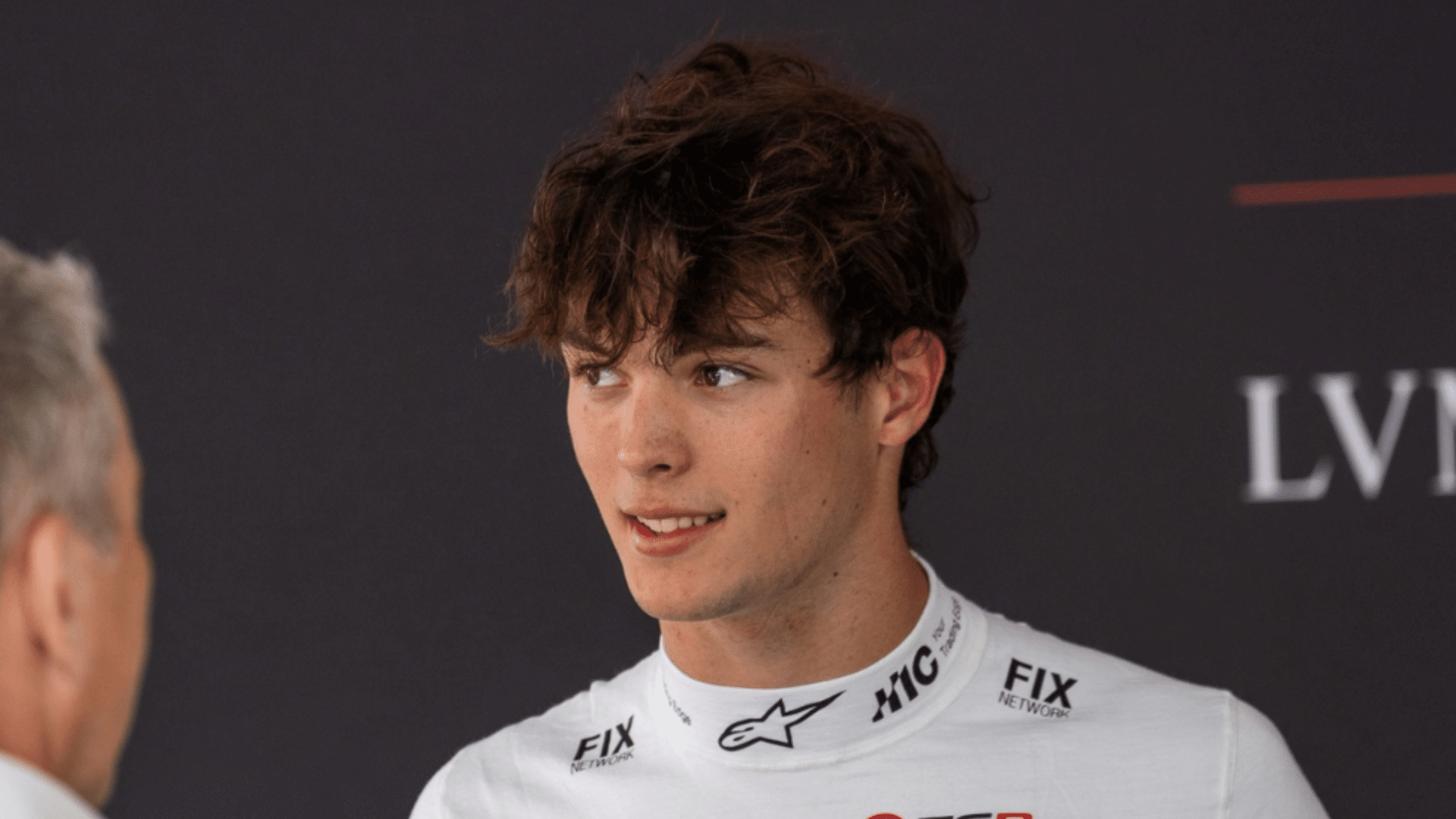
Formula 1’s 2027 driver market has largely settled, but one seat remains genuinely open — the second Haas cockpit alongside Ollie Bearman. Four names are circling it: Formula 2 champion Leonardo Fornaroli, Ferrari junior Rafael Camara, Red Bull’s Yuki Tsunoda, and endurance racer Ryo Hirakawa, a name few in the paddock are taking seriously. The bigger question is why any of them would want it.
Ocon’s Ceiling, Bearman’s Stalled Momentum
The picture around Esteban Ocon looks increasingly settled. With just three points from eleven races this season against Bearman’s eighteen, the gap between the two Haas drivers has been described by former team principal Gunter Steiner as the widest between any teammates on the grid — and, in his view, this is likely to be Ocon’s final season with the team. Steiner’s phrasing was notable: he did not call Ocon underperforming, but suggested this represents the Frenchman’s ceiling. That is arguably the harsher assessment. An underperforming driver can improve; a driver at his limit cannot. Ocon remains a Grand Prix winner with four podiums and over 160 starts, reportedly earning around $7 million a year — a difficult figure to justify for a team whose budget doesn’t stretch to the cost cap.
Bearman’s situation is more complicated. He beat Kimi Antonelli to the Formula 2 title fight in their junior careers, yet while Antonelli is now winning races and challenging for a world title at Mercedes, Bearman is contending with a Haas car that has gone five consecutive Grands Prix without scoring a point. In Hungary, he was eliminated in Q1 and finished nineteenth, two laps down, admitting afterwards that his confidence in the car had collapsed. As a Ferrari junior on loan, his season was meant to build a case for promotion. Instead, he’s learning to survive a team sliding backwards — and a driver’s talent is hard to measure in a car that is falling out of the midfield.
A Team Spending Below the Cap
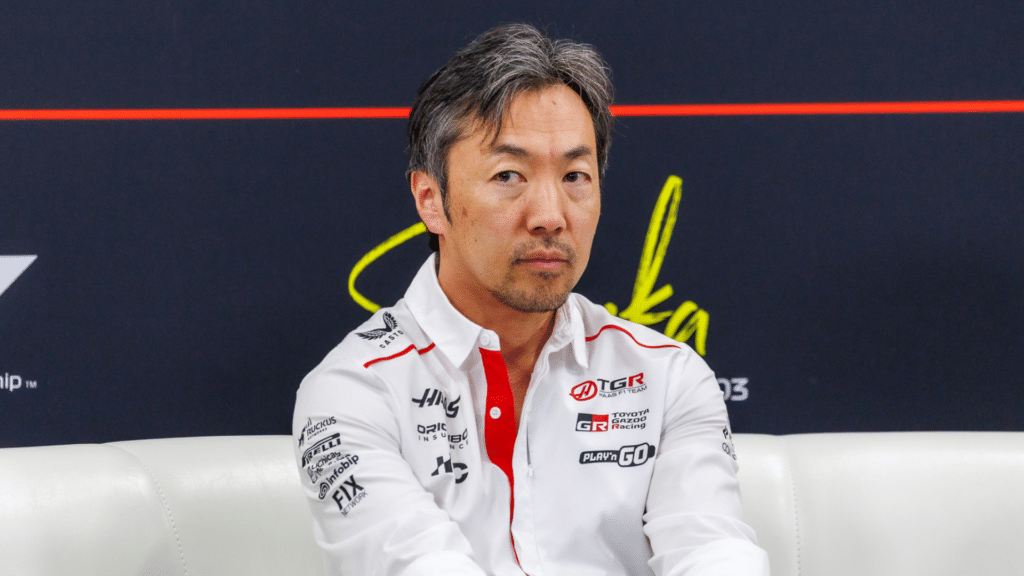
Much of this traces back to money. Team principal Ayao Komatsu has confirmed Haas is the only outfit on the grid not spending up to the cost cap, framing it as a resourcing problem rather than a design one — his engineers, he said, are working with one hand tied behind their backs. Owner Gene Haas disputes the scale of the shortfall, insisting the team typically sits within around $10 million of the limit, and has been open about turning down outside investment that would have required a 15% annual return and an exit strategy. It’s a defensible business decision, and Haas retains full ownership of a team now valued at roughly $1.5 billion. But there’s a distinction between a sound investment and a competitive racing operation, and the results this season suggest Haas has optimised for the former. Capital spending on wind tunnels, simulators and personnel sits outside the cost cap entirely — it’s how rivals make their capped budgets work harder, and it’s an area where Haas has lagged.
Four Very Different Candidates
Fornaroli arrives with the strongest résumé — back-to-back Formula 3 and Formula 2 titles and an eye-catching test outing for Haas at Jerez after being loaned by McLaren. But it’s a loan, not a gift: McLaren retains his contract and any long-term upside, leaving Haas developing a driver for a rival with title ambitions.
Camara, backed by Ferrari, is reportedly being pushed hard by Maranello and represents the simplest deal commercially. The risk is dependency — with two Ferrari-affiliated drivers in the car, Haas edges closer to functioning as an unofficial Ferrari feeder team, without the ownership structure or funding that made similar arrangements work elsewhere.
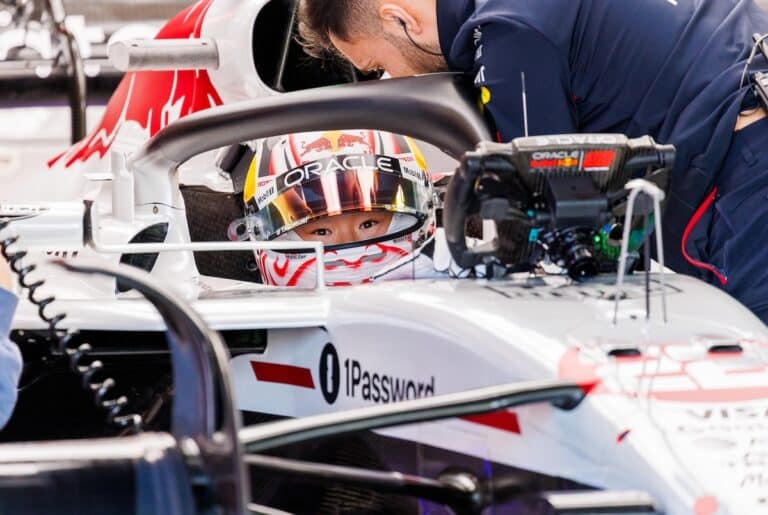
Tsunoda generates the most headlines but, as Steiner has pointed out, remains contracted to Honda — a brand Toyota’s Haas partnership was never going to hand a seat to. A move would also represent a step down for a driver already fighting for relevance.
The Toyota Long Game
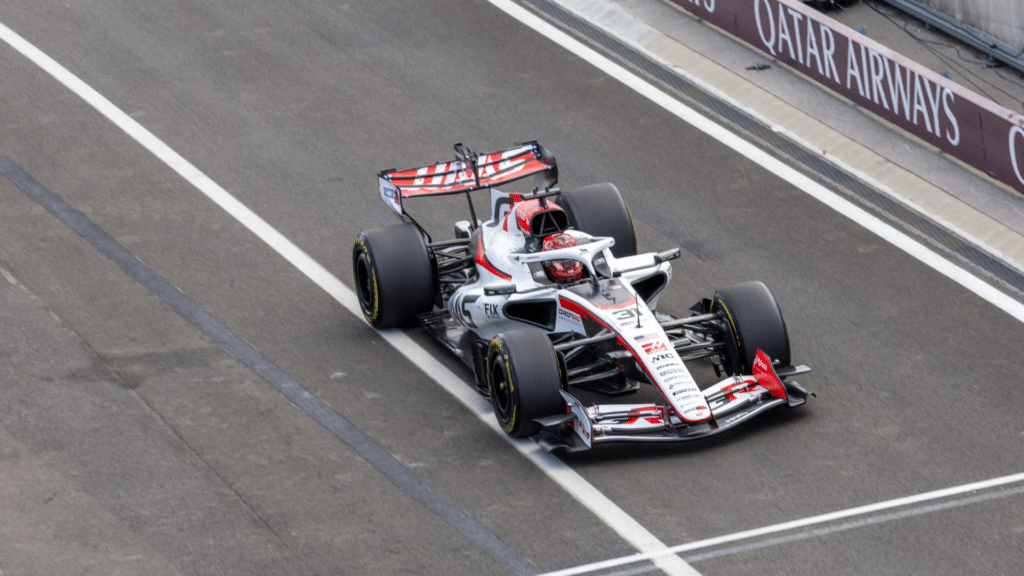
The most intriguing name is Ryo Hirakawa, who has held roles at three F1 teams in as many years, culminating in his current position at Haas. Framed publicly as a reward for his endurance racing success — including two World Endurance Championship titles and a Le Mans win — the pattern instead resembles a structured Toyota placement programme, feeding Japanese talent through the paddock ahead of a longer-term push. At 32, Hirakawa is unlikely to be the headline act; more plausibly, he’s proof of concept for drivers who follow. Crucially, his case strengthens the worse Haas performs, since the commercial rationale for Toyota’s continued investment grows more important than short-term results.
What’s Really at Stake
Whoever takes the seat inherits a team underspending relative to its rivals, an ownership structure resistant to change, and a manufacturer partner — Toyota — whose patience isn’t guaranteed to be indefinite. If investment doesn’t match ambition, Toyota doesn’t need to walk away; it can simply stop escalating its commitment.
Who do you think should get the seat?
▶ For the full breakdown — including why the most-searched name may make the least sense — see the analysis below, and subscribe to our YouTube channel — The Motion Report — for weekly race previews, paddock news, and in-depth analysis throughout the 2026 F1 season.
F1 2027, Haas F1, Esteban Ocon, Ollie Bearman, Yuki Tsunoda, Ryo Hirakawa, Toyota F1, F1 Driver Market
Read More
- Inside the Private Garages of Formula 1’s Biggest Stars
- F1 WAGs 2026: Who’s Together, Who’s Split, and Who’s Back on the Market
- Yuki Tsunoda Opens Up on Films, Music, and His Bond With Pierre Gasly
- F1 2027 Driver Market: Verstappen’s Silence Leaves the Grid in Limbo
- Hungarian Grand Prix 2026: Inside the Paddock’s Wildest WAGs Fashion Weekend