Lando Norris took the chequered flag in Budapest, and reportedly received a good-natured reminder from Aston Martin team principal Andrea Stella’s counterpart about not damaging this year’s trophy, given its six-figure price tag. But away from the podium, the more consequential story of the Hungarian Grand Prix weekend belonged to a team that finished well outside the points: Aston Martin.
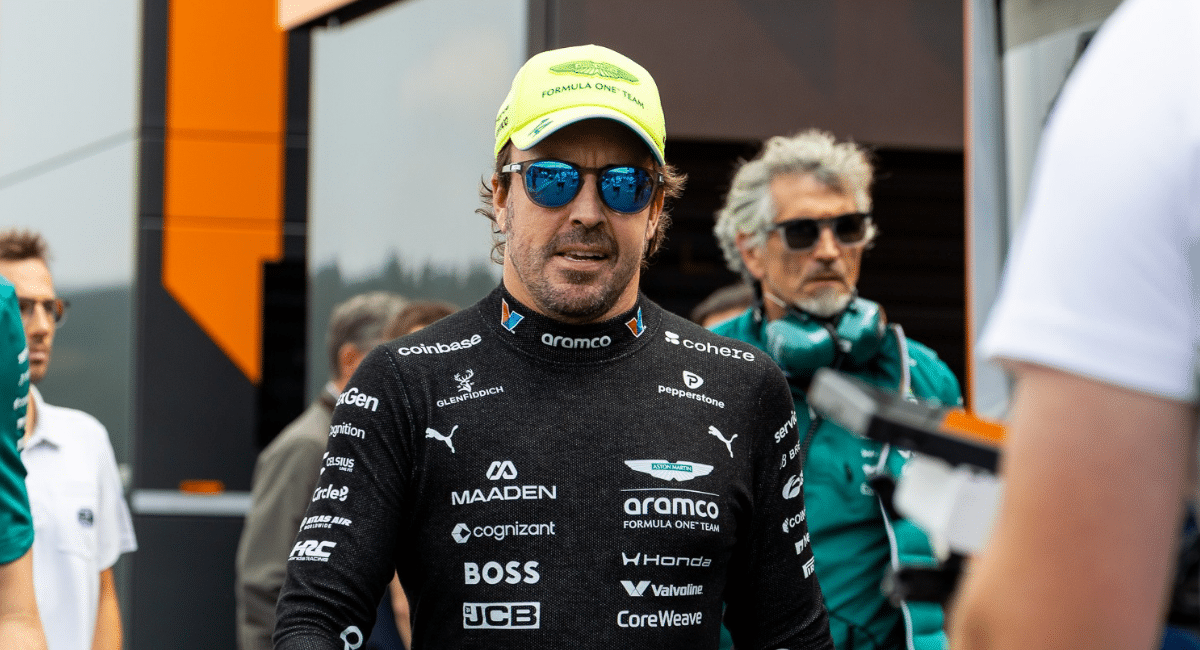
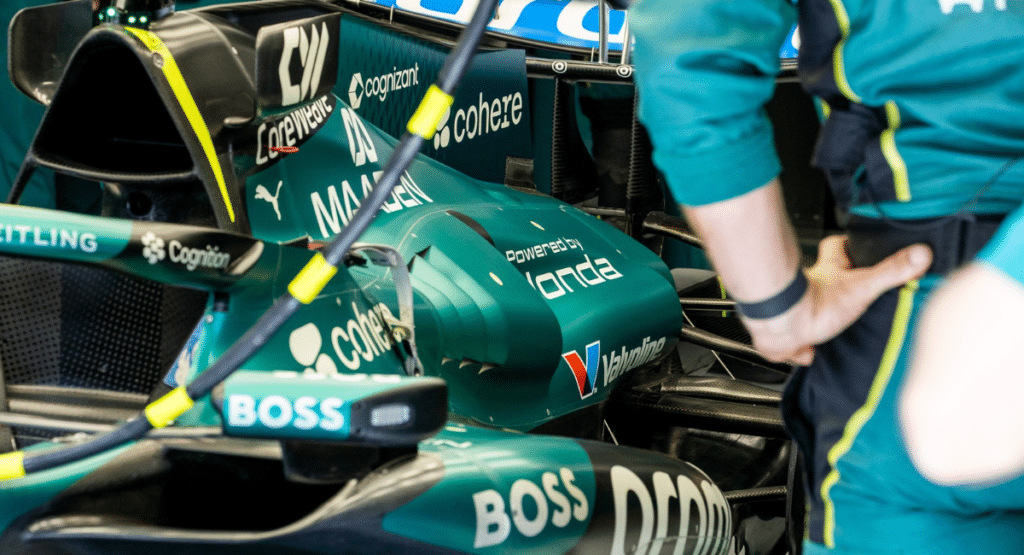
A new B-spec chassis, the product of a development programme led by design chief Adrian Newey since the start of the season, finally showed its true pace. Fernando Alonso reached Q2 for the first time in 2026, qualifying 16th and crossing the line 14th, while teammate Lance Stroll brought his car home 13th. Both cars finished — a rare achievement for a team that has struggled with reliability and pace in equal measure this year.
For a team that has spent much of the season fighting near the back of the grid, the significance of Sunday’s result goes well beyond the points table. Aston Martin’s race pace was roughly two seconds closer to the front than it had been just two weeks earlier in Belgium, a jump that reflects genuine mechanical progress rather than a one-off circuit-specific gain. It was, by most measures, the most complete weekend the team has produced all year.
A Genuine Midfield Weekend
The scale of the shift becomes clear when you look at who Aston Martin beat. Both Williams drivers, Carlos Sainz and Alex Albon, were eliminated in Q1, with Albon reportedly frustrated by a car that has fallen behind in development. Both Cadillac entries exited at the same stage. Even Haas, a team that has picked up points consistently this season, saw Oliver Bearman knocked out in Q1 behind Alonso.
Tyre management, often a weakness for the team this year, was not an issue either. Both drivers ran long stints on the soft compound on a day when even Ferrari struggled to make its tyres last, suggesting the new chassis is putting less strain on its rubber than its predecessor. That is a meaningful shift for a car that has previously fallen away in the closing stages of races as its tyres degraded faster than those around it.
Team principal Mike Krack had set a simple bar for success before the race: get both cars to the finish. That box was ticked, and Krack said afterwards that the team’s main objective — simply racing competitively again — had been achieved, with more upgrades still to come. It was a notably understated response to a result that, on paper, still left the team outside the points, but one that underlined just how far Aston Martin’s baseline had fallen earlier in the year.
Alonso: “We Know Exactly What We’re Looking For”
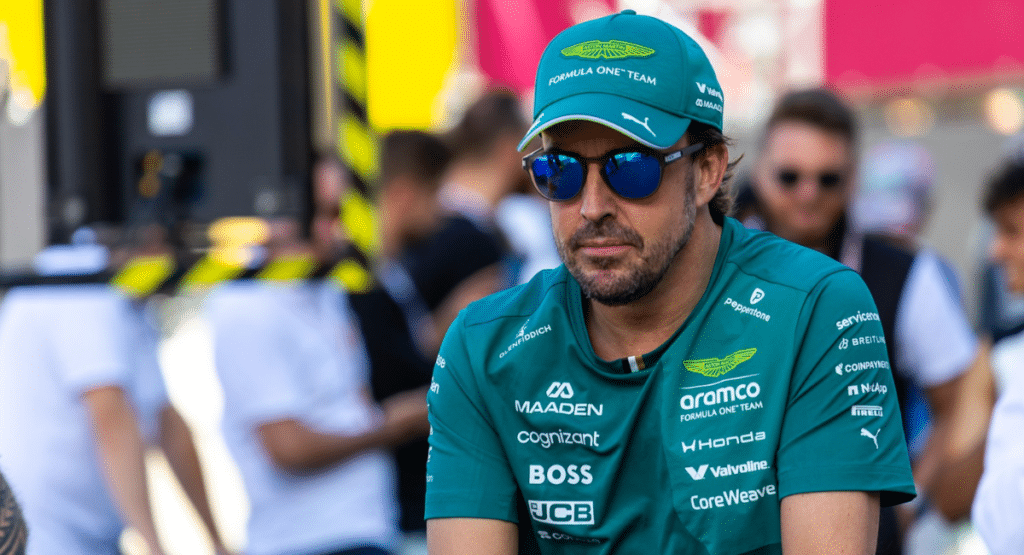
Alonso’s own assessment after qualifying carried more weight than the lap time itself. He explained that while the result didn’t shift many grid positions, it changed the mood inside the factory — the team was no longer chasing an unknown problem, but working towards clearly defined targets for future upgrades. That shift, from guesswork to a known development path, is arguably more valuable long-term than any single result.
Stroll echoed the sentiment after the race, saying it felt good to be racing competitively again and that the upgrade — while not a complete fix — was among the most encouraging steps the team has made in some time, with further updates expected at the next race.
Honda’s Power Deficit Comes Into Focus
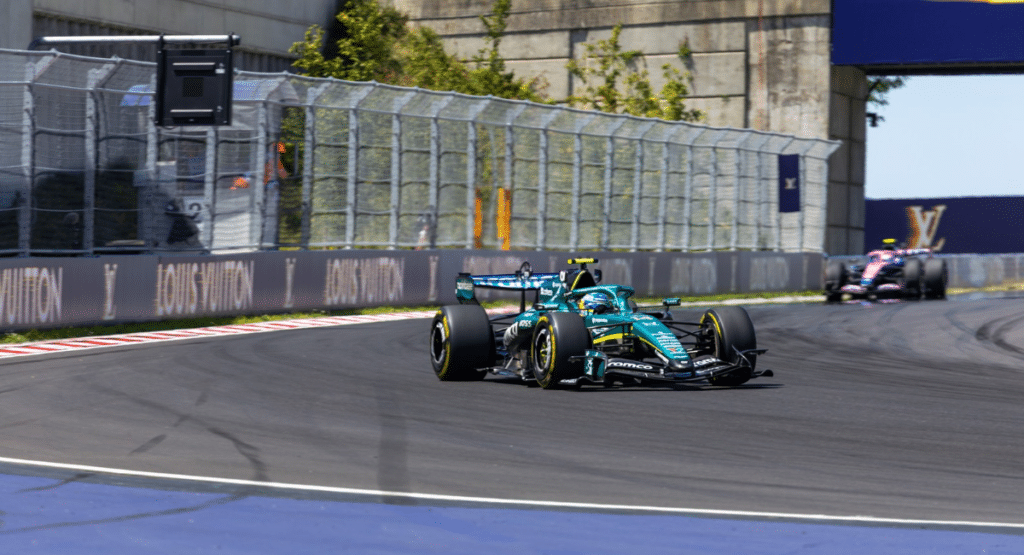
With the chassis now broadly competitive, attention shifts to the one variable left unresolved: Honda’s power unit. Stroll was candid after qualifying, acknowledging the team is still short on outright power compared to rivals despite strong grip levels, and said the priority now is closing that gap. Paddock estimates suggest Honda may be giving away somewhere between 15 and 90 horsepower to the front-running manufacturers — a wide range that reporting suggests is likely overstated, though it illustrates how much scrutiny Honda is now under.
That puts Honda in an awkward position. The chassis has improved so dramatically that any remaining shortfall will inevitably be blamed on the engine, fair or not.
Testing the Answer Before Zandvoort
Rather than debuting its upgraded power unit cold at the next round, Honda is taking a different approach. Using Aston Martin’s allocated Pirelli tyre test and FIA-permitted promotional filming day at the Hungaroring this week, the manufacturer confirmed it will run the new-specification engine in the AMR26 for the first time before the summer shutdown. Honda’s Sakura-based technical lead, Shintaro Orihara, said the team had gathered valuable data in Hungary that would support the introduction of the new power unit at the Dutch Grand Prix.
That decision matters more than it might first appear. It gives Honda’s engineers clean mileage and reliability data on the new engine without the pressure of a live race weekend, and lets Aston Martin isolate the power unit as a variable, separate from the newly introduced chassis. Newey himself pointed to an improved working relationship between Aston Martin and Honda as the foundation for this kind of coordinated testing — and better relationships, he noted, tend to translate into better performance.
What to Watch After the Summer Break
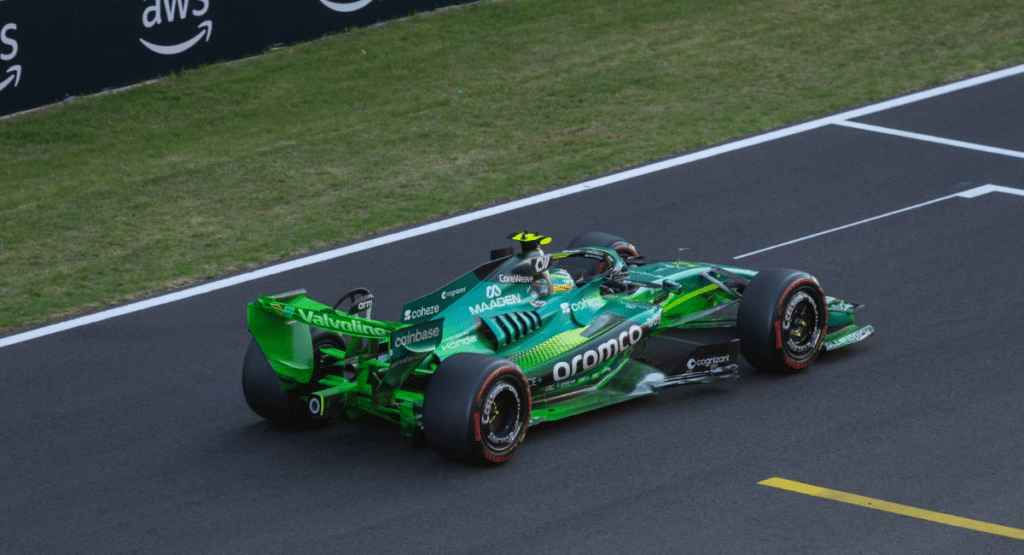
Two dates now matter most. The Dutch Grand Prix at Zandvoort should show, in race conditions, whether Honda’s new specification delivers a measurable step forward. Monza, with its long straights and minimal downforce, will offer the clearest read yet on where Honda’s power output truly sits relative to the grid — and whether those horsepower deficit rumours hold up.
If Aston Martin’s chassis progress in Hungary is matched by a genuine Honda power step at Zandvoort, the team could be on course for one of the more notable turnaround stories of the 2026 season.
Do you think Honda’s new power unit will deliver at Zandvoort? And do you believe the horsepower deficit rumours are accurate?
▶ Watch the full breakdown and driver reactions in our video analysis below, and subscribe to The Motion Report for the complete lap-by-lap analysis, tyre strategy breakdown, and what to watch for on race day.
Aston Martin F1, Honda F1, Hungarian Grand Prix, Fernando Alonso, Lance Stroll, Adrian Newey, Dutch Grand Prix, F1 2026 Season
Read More
- Ferrari Set the Pace as Aston Martin’s B-Spec Arrives in the 2026 Hungary Grand Prix
- Why 16 of Formula 1’s 22 Drivers Now Call Monaco Home
- Aston Martin Gambles Season on the 2026 Hungarian Grand Prix Upgrade
- Which Formula 1 Drivers Actually Own Private Jets in 2026?
- Quiet Paddock, Loud Style: Inside the 2026 Belgian Grand Prix’s Fashion Scene