The Myth of the F1 Private Jet Fleet
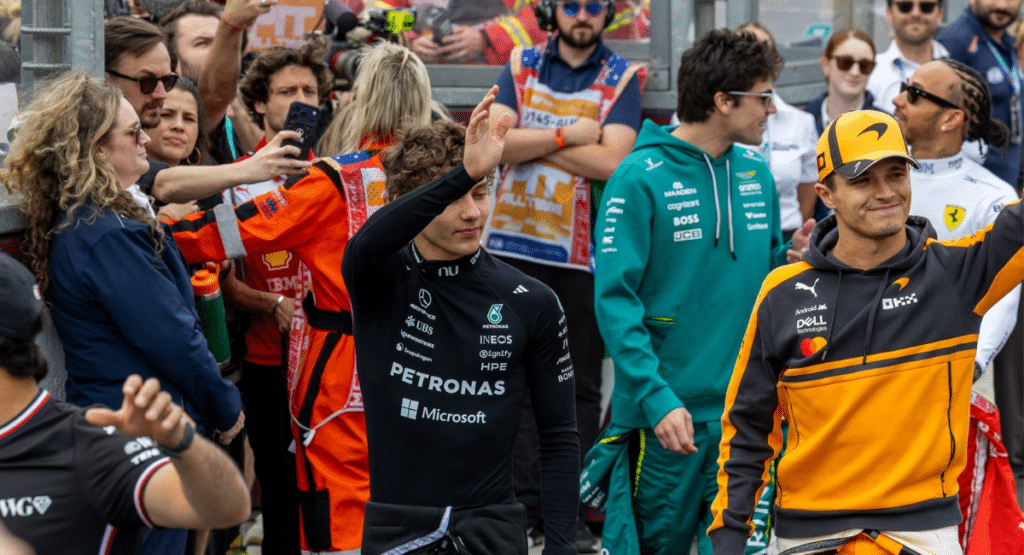
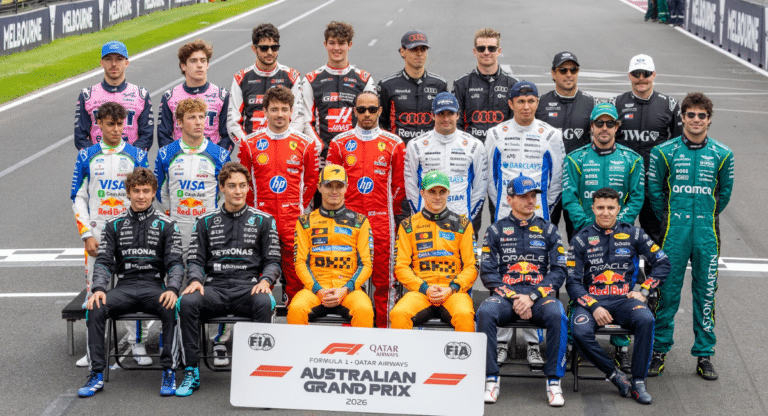
Formula 1 drivers earn millions and race across five continents over a 24-race season, so it is easy to assume that every one of them owns a private jet. According to a new video investigation, that assumption does not hold up. Across the entire 2026 grid, only one current driver has clearly documented personal ownership of a modern long-range aircraft. The rest depend on charter companies, team-owned planes, or jets belonging to family and friends. Times have changed considerably since the era of Bernie Ecclestone, F1’s former ringmaster, who has long owned a Dassault Falcon 7X registered N99BE — the initials, naturally, his own.
Why Private Aviation Matters So Much in F1
The modern F1 calendar spans Europe, Asia, North and South America, the Middle East and Australia, often leaving drivers only a few days between race weekends to fit in simulator work, sponsor commitments, recovery and travel across multiple time zones. Commercial airlines simply cannot offer that flexibility, and race-weekend airports are typically packed with fans. Private aviation allows a driver to leave the circuit almost immediately after a race, often with a police escort, and fly directly home. It also solves logistical headaches: quieter terminals, easier privacy from paparazzi, tailored diets, familiar crews, and space for confidential conversations away from other passengers. The catch is cost. A modern business jet can cost tens of millions of dollars upfront, with annual running costs exceeding $2 million — which is precisely why so few drivers actually own one.
Max Verstappen: The Only Documented Owner
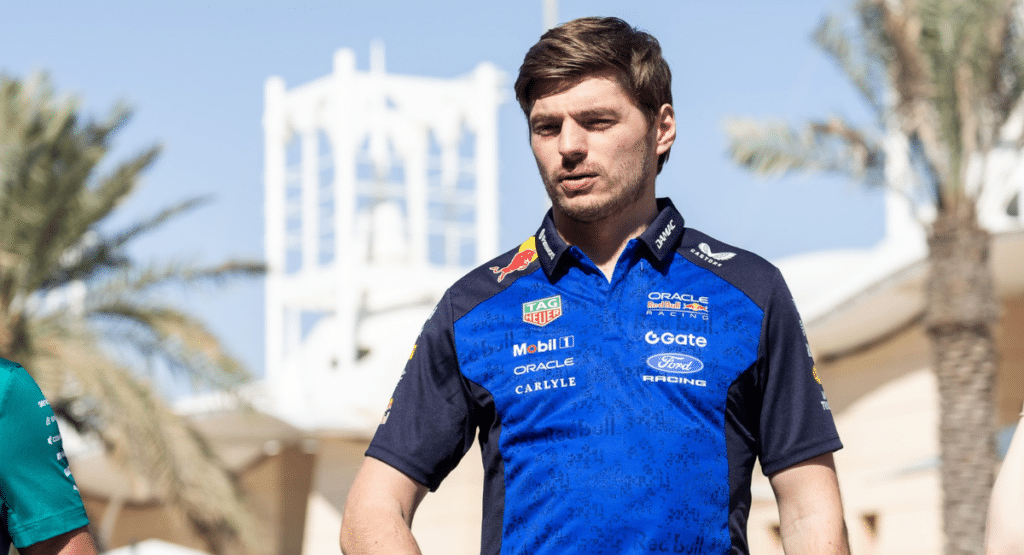
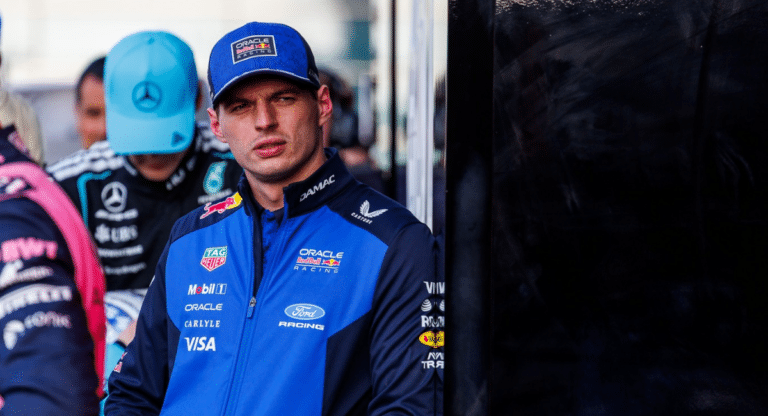
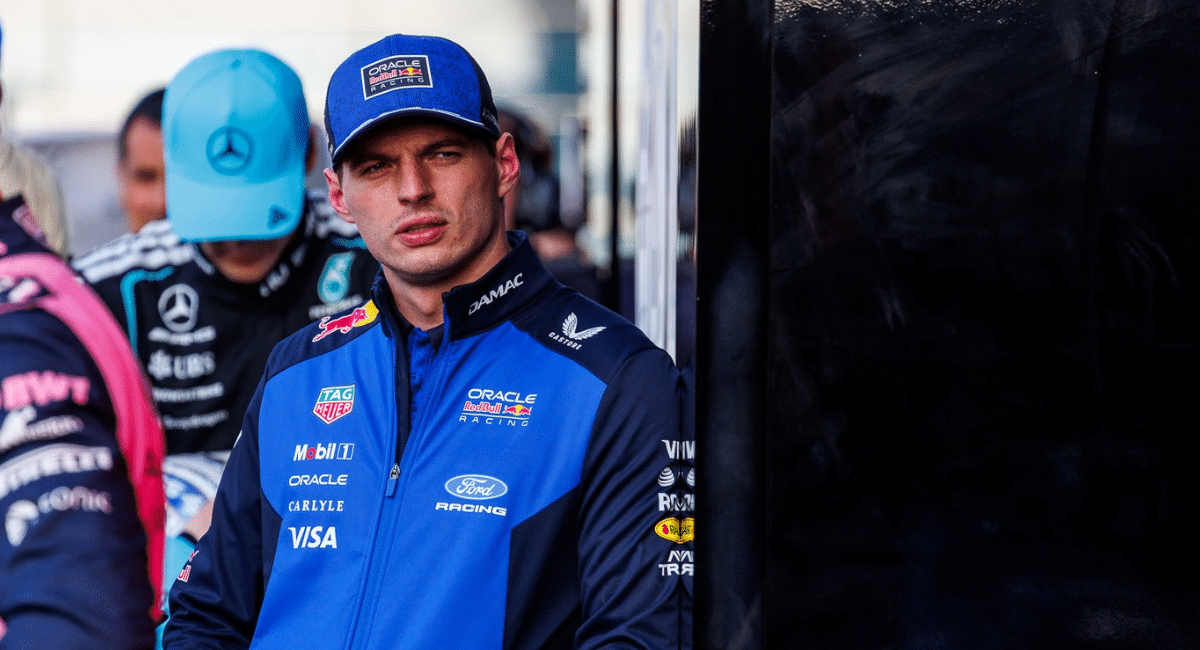
As of the 2026 season, Max Verstappen is the only current driver with verified personal ownership of a modern long-range jet: a Dassault Falcon 8X registered PH-UTL, standing for “Unleash The Lion” — also the name of his yacht. The aircraft carries a published list price of roughly $58 million, a range of about 6,450 nautical miles (enough to fly Bahrain to Melbourne non-stop), and seating for up to 16 passengers. It is operated on his behalf by the Dutch firm ExxAero. Notably, this is not Verstappen’s first jet — his earlier 2008 Falcon 900EX, bought in 2020 for around $16 million, previously belonged to Sir Richard Branson.
Hamilton’s Sold Jet and the Perez Family Operation
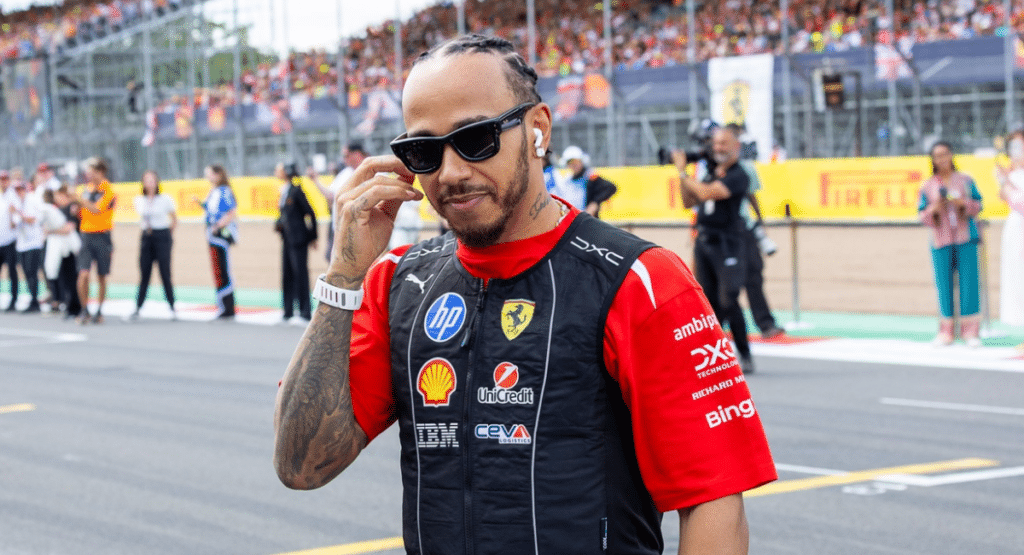
Lewis Hamilton bought a Bombardier Challenger 605, registered G-LCDH, back in 2013, but sold it in 2019, later citing environmental concerns. He is understood to charter aircraft today rather than own one. Sergio Perez, who races for Cadillac in 2026, is frequently seen in a Bombardier Challenger 604 registered XA-SP — but this operates as part of a family enterprise run with his father and sister, rather than as a straightforward personal purchase.
Toto Wolff and the Stroll Family
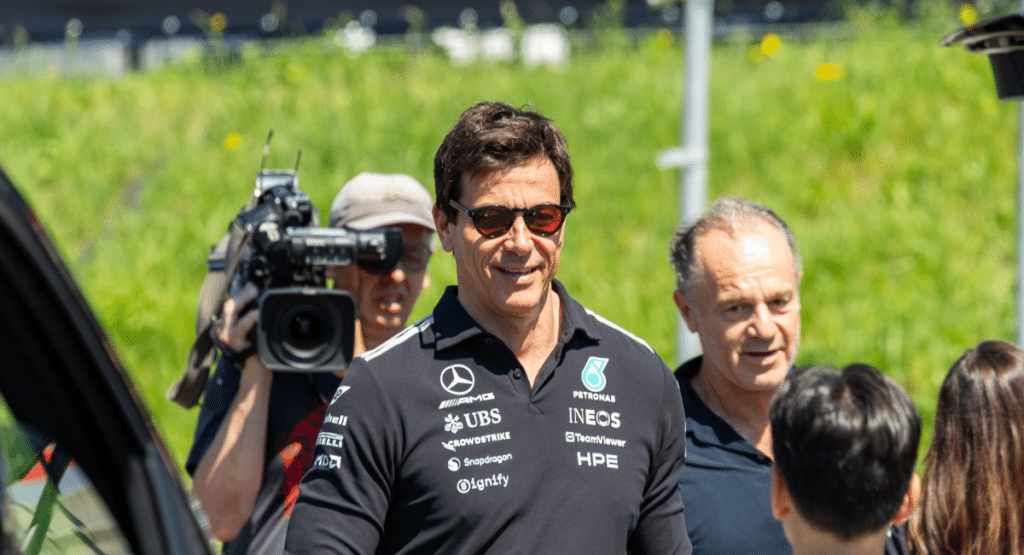
The most capable private jet linked to the paddock belongs not to a driver but to Mercedes team principal Toto Wolff, a long-standing Bombardier customer who owns a Global 7,500 — a $81 million aircraft with a 7,700 nautical mile range, four living areas, and room for 19 passengers. Aston Martin’s Lawrence Stroll runs an even more elaborate operation, combining a Global 7,500 with a Bell 429 helicopter for short hops around London and Switzerland. His son, driver Lance Stroll, reportedly flies a separately owned Challenger 604.
The Drivers Who Charter Instead of Own
Being photographed boarding a private jet does not mean a driver owns it. Charles Leclerc, Lando Norris, George Russell, Carlos Sainz, Fernando Alonso and Oscar Piastri are all regularly seen flying privately, yet none has verified personal ownership — most are believed to rely on charter services. After the 2026 Chinese Grand Prix, Valtteri Bottas publicly thanked Wolff for a lift home to Monaco alongside Russell and Hamilton, after commercial flights out of Shanghai proved impractical — a neat illustration of how borrowed jets fill the gap.
Team Jets and Fractional Ownership
Some teams operate their own aircraft. Honda gifted Red Bull’s junior outfit, now Racing Bulls, a Honda Jet Elite in 2020, used for short-haul hops between European races. For everyone else, the industry has built an entire ecosystem of alternatives to outright ownership: jet cards, leasing, and fractional ownership schemes offered by firms such as NetJets and Flexjet, the latter now F1’s official aviation partner for 2026. These programmes let flyers access private aircraft without the multi-million-dollar purchase price or running costs, offering dedicated crews and guaranteed access for a fraction of full ownership.
What This Means for F1’s Wider Ecosystem
It is not only drivers and team principals who lean on private aviation. F1 chief executive Stefano Domenicali and FIA president Mohammed Ben Sulayem cross the globe constantly to keep the sport running, relying on charter and fractional aircraft as working tools rather than personal assets. That pattern fits neatly with F1’s decision to name Flexjet as its official private aviation supplier for 2026, cementing the idea that access, not ownership, is now the industry standard even at the very top of the sport.
The Bottom Line
Genuine private jet ownership remains rare in Formula 1 not because private travel is unaffordable, but because chartering, sharing, or leasing is simply the smarter financial move — even for drivers earning eight-figure salaries. Running costs alone can exceed $4 million a year for a large jet, on top of a purchase price that can climb past $80 million — numbers that make sense only for the busiest and wealthiest operators in the paddock. For most of the grid, a charter card or a seat on someone else’s aircraft delivers the same privacy and convenience without the balance-sheet risk. For the full breakdown, including registration numbers, price tags, and how fractional ownership actually works, the complete video is linked below.
▶ For the full story — including Toto Wolff’s Bombardier Global 7,500 and the Stroll family’s helicopter habit — watch the complete video below and subscribe to The Motion Report for more F1 paddock fashion, WAG style updates, and behind-the-scenes coverage from every Grand Prix.
Formula 1, F1 2026, Private Jets, Max Verstappen, Lewis Hamilton, Motorsport Travel, F1 Drivers, Luxury Aviation
Read More
- Quiet Paddock, Loud Style: Inside the 2026 Belgian Grand Prix’s Fashion Scene
- F1 2027 Driver Market: Verstappen’s Silence Speaks Louder Than Words at Spa
- Colapinto Set to Stay at Alpine for 2027, Sources Suggest
- Verstappen to McLaren, Bearman to Red Bull, Portimao to Replace Abu Dhabi? This Week’s Biggest F1 Rumours
- Belgian Grand Prix 2026: Mercedes Bring Biggest Upgrade of the Season to Spa-Francorchamps