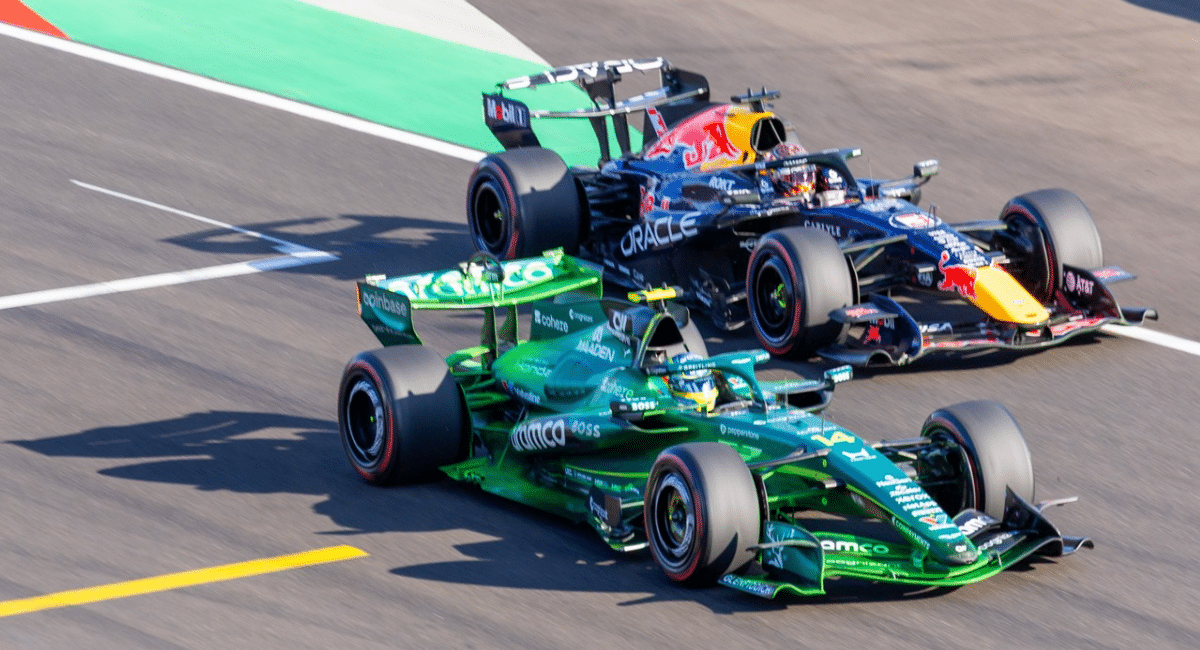
Aston Martin spent a whole summer building one thing. No smaller updates, no in-between steps, one car, one weekend, one swing. Adrian Newey confirmed it himself: the AMR26 B-spec, with a new nose, a new floor and a major weight reduction, would arrive at the Hungarian Grand Prix in Budapest. The question was never whether it would be faster. It was whether faster would be enough.
Update, 20 November: This is our pre-race analysis from the Hungarian GP weekend. For what the upgrade actually showed, read our follow-up on the Hungarian GP breakthrough and Honda’s Zandvoort plans, and for the engine side, Honda and Aston Martin’s power unit story at Zandvoort.
Budapest: The Basics
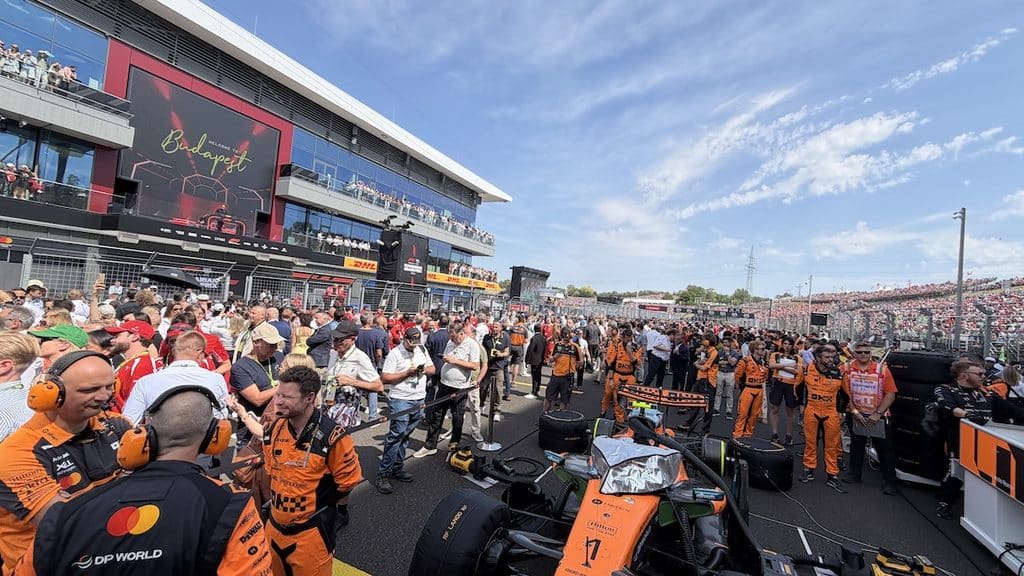
The Hungarian Grand Prix was round 11 of the 2026 season, held at the Hungaroring near Budapest, with practice on Friday 24 July, qualifying on Saturday 25 July and the race on Sunday 26 July. It was the last stop before the summer shutdown. The circuit is slow and twisty with almost no straights, and teams run the same maximum downforce they use at Monaco. Think of it as Monaco with a bit more room.
That rewrites the weekend after Spa. At Spa the drivers were starved of energy, with long straights draining the battery before they reached a corner. Budapest is the opposite: braking zone after braking zone, traction zone after traction zone, so full energy regeneration in qualifying and none of the clipping seen down the Kemmel Straight. Kimi Antonelli said he expected all four top teams to be close because the battery problems disappear and it becomes a track where you simply drive as fast as you can.
Pirelli brought its three softest compounds, the C3 as hard, C4 as medium and C5 as soft. Do not be fooled by the soft selection. Budapest eats tyres, with high temperatures and endless traction zones, and a mix of one and two stop races. Last year there were 29 pit stops and 35 on-track overtakes. Charles Leclerc took pole with a 1:15.372, and George Russell set the fastest race lap with a 1:19.409. For our earlier look at the race build-up, see our report on Ferrari and Aston Martin in Friday practice.
A Team That Gambled Its Season
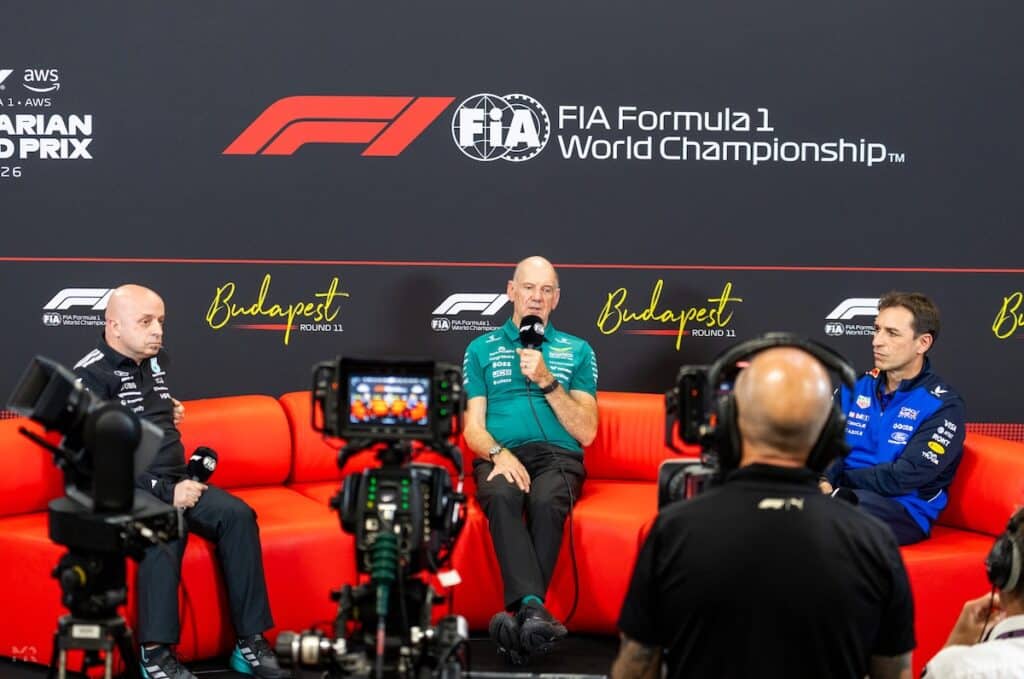
Be honest about where Aston Martin stood. The AMR26 was fundamentally the same car it was in pre-season testing. While every rival evolved race by race, Aston Martin skipped the small stuff and gambled the entire back half of the season on one package landing in Budapest. It has Newey’s fingerprints all over it.
Start with the weight. Newey confirmed a significant reduction in the chassis and gearbox. Reports suggested the car was carrying more than 30 kilograms of excess, which is not a setup tweak but pure lap time thrown away every lap. A big part of this upgrade was simply getting to the weight everyone else reached months ago. Then the aero: a completely new nose, a new front wing and substantially revised surfaces across the car. The aero group was quoted as talking about roughly 90 points of downforce. The rear suspension got a light revision, while the front stayed and the gearbox layout stayed broadly the same in concept. The car that rolled out on Thursday looked visibly different.
The Schedule Risk Nobody Talked About
Team principal Mike Krack called it the million-dollar question: would the team arrive in Budapest with two complete cars, or a pile of new parts and a lot of hope? He expected two cars, but admitted they would not have five spares of everything. New nose, new wing, new gearbox internals and revised rear suspension all arrived at once under a brutal deadline. Krack also said the team had contingency plans in case one or two components did not make it in time.
How Big a Step Do They Need?
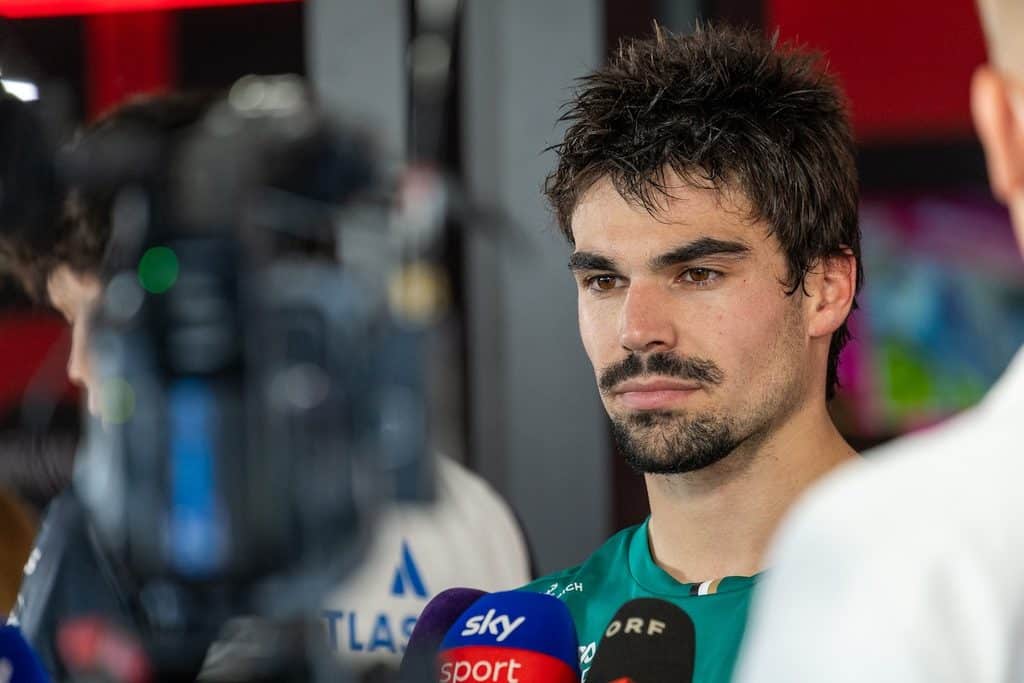
Newey said the upgrade was worth seconds a lap, and the internal figure was between two and a half and three seconds. That sounds enormous, and it is. But look at the hole Aston Martin were climbing out of. At Spa they were four to five seconds off the front. Fernando Alonso, a two-time world champion, was lapped twice at the longest circuit on the calendar. In qualifying he was two seconds off the nearest Cadillac, and he finished 19th. Lance Stroll retired with a gearbox problem.
Measured against Spa, a track that brutally exposed this car, two and a half seconds does not put Aston Martin in the points. It drags them back toward Cadillac and into the midfield fight. If the gain holds on a normal track, they are genuinely back in the conversation. Our view was that the package would work: the direction was right and the weight saving was real. But nobody closes four to five seconds in a single weekend.
Two Traps: Reliability and Integration
Even a fast car faces two traps. The first is reliability. You do not introduce a new nose, new aero, a revised gearbox and new rear suspension all at once under deadline and expect it to run clean. The second is integration. Three practice sessions is not much time to understand a car that behaves nothing like the old one. One scenario to watch was Stroll, given his Spa retirement and history: if early damage forced him to run a mix of new and old parts, a half-new, half-old car would wreck the data and waste much of the exercise.
There was one more layer. The aero and chassis package landed in Budapest, but the engine did not. Honda’s power unit upgrade was due at Zandvoort after the summer break. Shintaro Orihara confirmed the new engine was already on the dyno, with early signs in line with expectations and a focus on combustion efficiency and drivability. So Budapest was the chassis verdict and Zandvoort the power verdict, the two halves of a recovery. See the wider context in our report on Mercedes and the customer team engine market.
What We Were Watching For
We did not expect points, though they were possible on a downforce track where this package adds exactly what the car needs. Our line in the sand was the gap to Cadillac. If Aston Martin left Budapest still two seconds behind Cadillac, it would become a crisis, with big decisions and a very real question over Alonso’s future with the team. If they showed clear, measurable progress, even without a perfect result, the direction would be proven and the Zandvoort engine could give them a second wind. It was not about a race win. It was about a verdict. Our checklist was whether two complete cars rolled out, the real gap to Cadillac in qualifying, whether the package survived a full race distance, and Alonso’s body language more than his lap times. Watch our full video below.
FAQ
What did Aston Martin bring to the 2026 Hungarian Grand Prix?
The AMR26 B-spec: a new nose, a new front wing, a revised floor and aerodynamics, a light rear suspension revision and a major weight reduction, all designed under Adrian Newey.
How much faster was the Aston Martin upgrade expected to be?
Newey said it was worth seconds a lap. The internal figure being quoted before the race was between two and a half and three seconds.
Why was the Hungaroring chosen to debut the upgrade?
It is a slow, high-downforce circuit with almost no straights, so a package that adds downforce should show its full benefit. Energy problems seen at Spa also largely disappear there.
When does the Honda power unit upgrade arrive?
After the summer break, at Zandvoort. Honda’s Shintaro Orihara said the new engine was already on the dyno, focused on combustion efficiency and drivability.
Read More