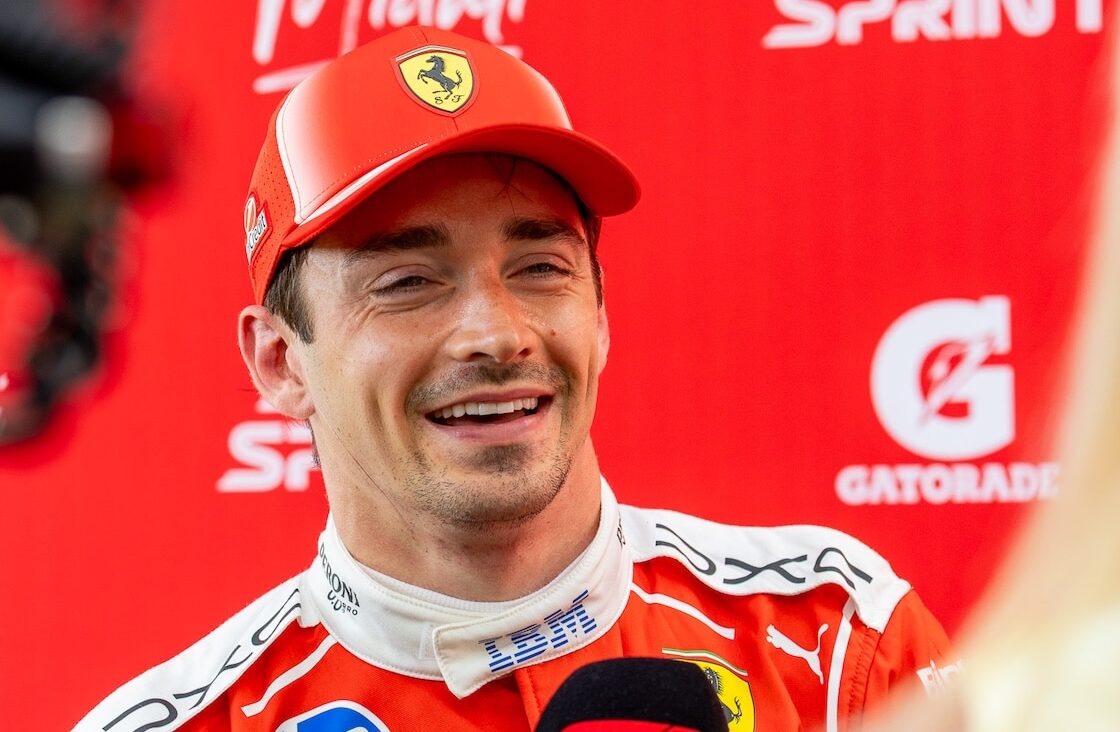
A typical race weekend for Charles Leclerc and Ferrari. He spun into the wall at turn three on the penultimate lap of the Miami Grand Prix while defending third place against Oscar Piastri. The podium was 20 seconds away. He pushed too hard, the rear stepped out and the car hit the wall. A 20-second penalty followed for the manner of his defence, and the final classification was eighth. It was one more season in a long line that offered hope, disappointment, a fight back, and finally despair followed by understanding. This was our argument, written in May, that Ferrari were just not good enough for the 2026 title.
Update, 20 November: Ferrari proved better than this piece feared. Lewis Hamilton won the Spanish Grand Prix, his first win for the team, and Leclerc won at Silverstone, as we reported in our Spanish GP takeaways and Silverstone report. Mercedes still took both 2026 titles. We have left the analysis below as written in May, because the Miami pattern it describes is still worth understanding.
Miami: Hope, Then Reality
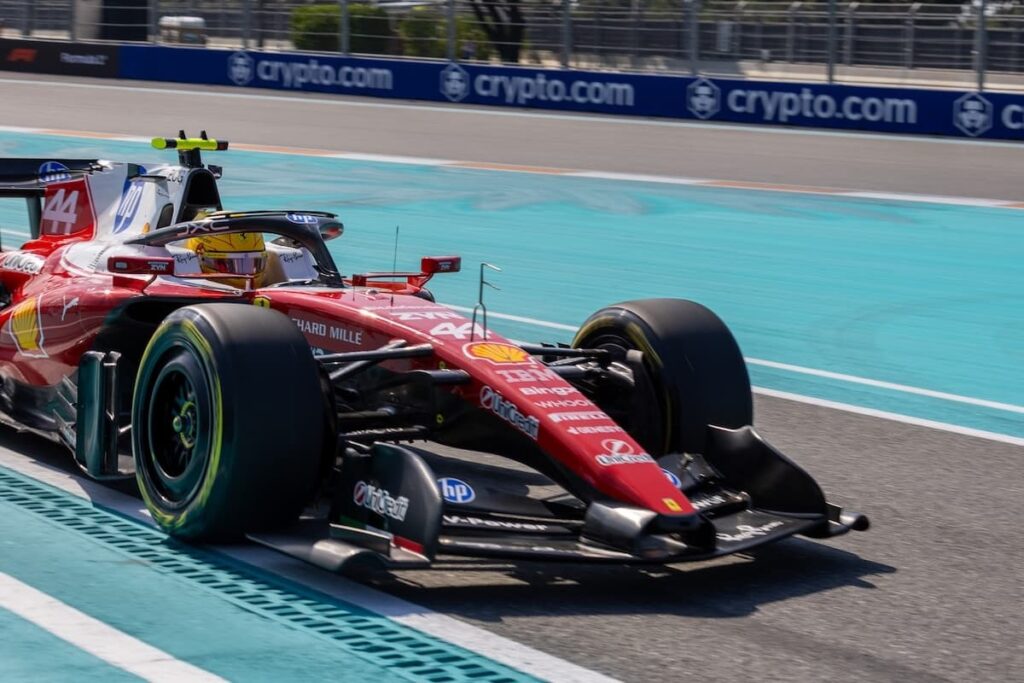
Leclerc started third on the grid. Ferrari had brought its biggest upgrade package of the season, and the car was visibly faster than in Japan three weeks earlier. Fred Vasseur had publicly confirmed the gains, and Saturday’s sprint, where Leclerc finished third, offered the first proof of the upward trend. A second podium of the weekend looked within grasp. Then the stewards ruled on his last-lap defence, and the sixth-place finish became eighth.
Leclerc has a long record of being honest about his own mistakes, and Miami was no different. He said he was very disappointed with himself, that the last-lap mistake was all on him and cost a third or fourth place, and that mistakes happen but not at the level he should be at. Vasseur said the pace was strong in clean air and the team was fighting at the front, but once Leclerc dropped into traffic it became more difficult and consistency was the main issue. There was a big performance delta between the part where he led and the later part of the race, and it was a similar picture in the sprint.
That line deserves careful reading. The team principal was saying in public that the SF26 has a traffic problem: when the car runs behind others, its behaviour changes. It was the same problem with different outcomes. On Saturday it worked and Leclerc finished third in the sprint. On Sunday it did not, and he spun into the wall. His teammate was nowhere to be seen, most likely fighting the same issues with less potential to reach the podium. The pattern from one weekend was that Leclerc was driving on the edge, extracting everything from a car that was not quite delivering, a high-risk, low-reward equation that cannot continue.
Where Ferrari Stood After Four Races
Going into 2026 the noises from Maranello were louder and more confident. Vasseur had made bold announcements: the car would be a step forward, the internal reorganisation was complete, Hamilton’s signing had brought new professionalism, and the 2025 rebuild was finished. It was symbolised by an innovative rear wing widely nicknamed Macarena. Our SF26 launch report captures that mood. After four races, the noises had stopped. McLaren had closed more than Ferrari, Verstappen was fighting back in a Red Bull that was supposed to be three-tenths slower, and Mercedes was pulling away, with Kimi Antonelli leading the championship ahead of George Russell. Ferrari left Miami with its biggest upgrade and sixth and eighth places.
In a four-team fight between Mercedes, McLaren, Red Bull and Ferrari, our view was that the Scuderia was the fourth team, not the second and not the threat. Antonelli led with 100 points and Ferrari was 70 points behind Mercedes in the constructors’ standings, with the European season still to start.
The Same Three-Part Pattern Since 2007
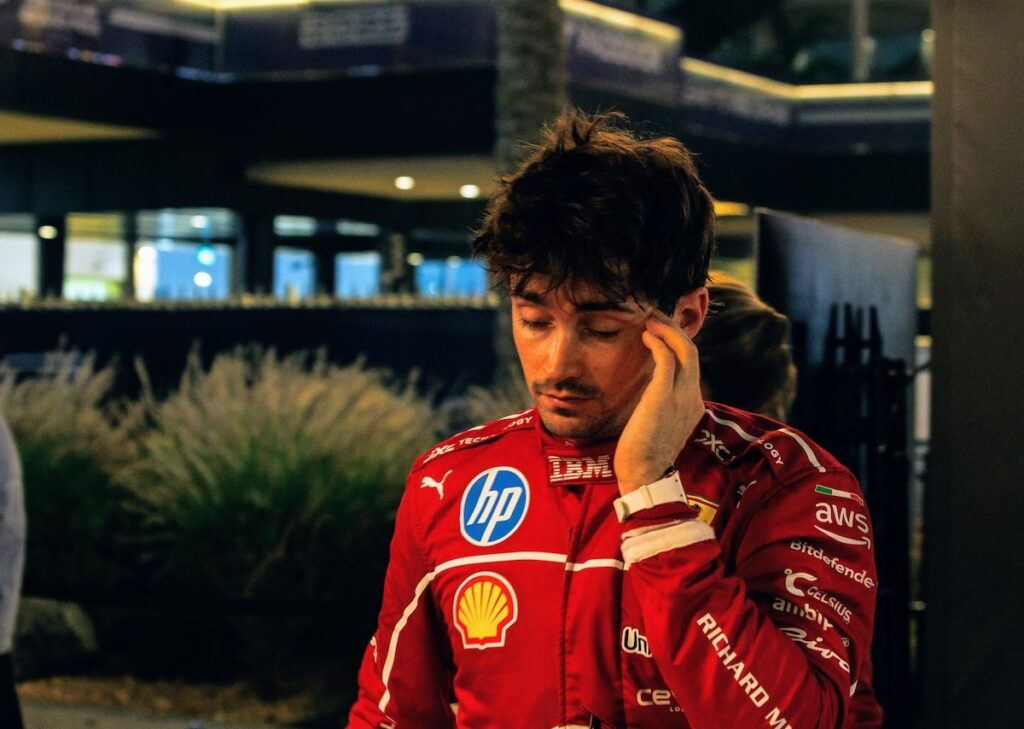
We argued that the pattern behind that position is the same one behind every Ferrari near miss since the Schumacher era, leaving out Kimi Räikkönen’s title in 2007. It has three parts. The first is reliability and consistency problems emerging when least expected. Vasseur’s remark about the sprint told us the SF26 had a traffic-handling problem the engineers had not yet diagnosed, and it appeared in qualifying, the sprint and the race with no fix between sessions.
The second is strategy decisions without a clear plan for what follows. Leclerc’s lap 21 pit stop dropped him into traffic that wrecked his tyre management. The call was reasonable in isolation, but he then spent 25 laps pushing flat out behind George Russell because the team had no answer for the traffic problem the strategy had created. The third is the driver over-driving a car that is not quite good enough. Leclerc ended the weekend with a self-inflicted crash and a 20-second penalty because he was trying to extract more than the car could deliver. That is not a failure of skill. It is the predictable result of asking a senior driver to bridge the gap between expectations and equipment.
We tied these three components to the title losses of Felipe Massa in 2008, Fernando Alonso in 2010 and 2012, Sebastian Vettel in 2017 and 2018 and Leclerc in 2022. The Schumacher years were the exception, built on Jean Todt, Ross Brawn and Rory Byrne running the team as an outside management group, imposing operational discipline on an Italian engineering culture that historically resisted it. Once that group dissolved, the old pattern came back. Vasseur is the latest attempt to impose that discipline from outside, and Hamilton’s arrival is the most visible part of it. Miami was supposed to be the proof the new operating model was working, and it was not.
Leclerc at 28: How Long Can He Wait?

Our outlook then for Leclerc was a third place at best and fifth or sixth at worst, with another season of being faster than the result and slower than the expectation. He was 28, had started more Grands Prix for Ferrari than any driver since Michael Schumacher, and had been told for eight years that next year would be the year. His long-term dream is to win his first title with the team he is loyal to. The question was whether he could keep waiting for the Ferrari that finally breaks the pattern, or whether 2026 was the season to accept that the wait might never end. We also covered the engine side of the picture in 0. Watch the full video below.
FAQ
What happened to Charles Leclerc at the 2026 Miami Grand Prix?
He spun into the wall at turn three on the penultimate lap while defending third place from Oscar Piastri. He still finished sixth on the road, but a 20-second penalty for the manner of his defence dropped him to eighth.
What did Fred Vasseur say about Ferrari’s problem in Miami?
He said Leclerc’s pace was strong in clean air, but once he was in traffic it became difficult and consistency was the main issue. He said there was a big performance delta between the leading part of the race and the later part, and that it was a similar picture in the sprint.
How many seasons has Leclerc waited for a title at Ferrari?
Eight seasons at the time of writing. We noted he had started more Grands Prix for Ferrari than any driver since Michael Schumacher.
Was Ferrari’s 2026 season as bad as predicted here?
Not entirely. Lewis Hamilton won in Spain and Leclerc won at Silverstone, though Mercedes still won both 2026 titles.
Read More