In Las Vegas, Cadillac CEO Dan Towriss said the team will stay a Ferrari customer through 2029. The cause is a V8 deal for 2030. The FIA announced that deal, deleted the announcement, then published it again, saying everyone agrees. Is giving up the 2029 engine the right call? Here is what Cadillac gave up, and why the maths forced it.
The short answer: Cadillac planned to race its own V6 for two seasons, 2029 and 2030. With V8s arriving in 2030, that becomes one season. General Motors would have built a new engine to race for a single year, then thrown it away. So it stepped back. The full story is stranger than that.
What Cadillac Was Promised
When Cadillac was approved as Formula 1’s 11th team, the engine was part of the deal. Cadillac would start as a Ferrari customer. General Motors would become a works engine maker from 2029. In April 2025, the FIA approved General Motors Performance Power Units as an official supplier from the 2029 season.
Building a Formula 1 engine from nothing is one of the hardest jobs in motorsport. Just ask Honda. Its 2026 campaign with Aston Martin has been miserable, and Honda is no newcomer. We covered that in our report on the Honda and Aston Martin power unit problems. Under the FIA’s financial rules, an engine maker can spend around $130 million a year on its power unit. Honda, Mercedes and Ferrari have each spent more than a decade learning to make these engines win.
Red Bull Powertrains is the outlier. It raced with Honda’s engines for years and learned from them, then built its own with Ford as a partner and recruited top engineers from Mercedes. A newcomer can get there, but only with years of groundwork and the right people. General Motors gave itself that time. It first talked about 2028, then settled on 2029. ESPN reported a $150 million investment in a new facility near Charlotte.
The Engine Cadillac Was Building For
Earlier this year Towriss said the engine project was ahead of schedule. So what changed? The engine Cadillac was building for. This season, Formula 1 started a new engine era: 1.6-litre V6 turbo engines, with roughly half the power coming from the battery and electric motor. The fuel is fully sustainable, and the complex MGU-H, which recovered energy from the exhaust, is gone. These rules were written to run from 2026 to the end of 2030, five seasons. That shaped Cadillac’s whole plan.
The plan was simple. Arrive with Ferrari power in 2026, learn the sport, bring in a General Motors V6 in 2029 and race it for two seasons before the next rules in 2031. Two seasons is short, but it is enough to learn. A new maker could make its early mistakes on the current engine, then arrive at the next formula with experience.
But the engine has had a hard first year. Drivers have complained about running out of electrical energy down the straights. Lewis Hamilton said this week that the current engines are dying halfway down them. We looked at the first wave of that debate in our report on the 2027 engine overhaul and the FIA regulation crisis.
Ben Sulayem’s First Attempt at a V8
One man had been saying this for a long time. FIA president Mohammed Ben Sulayem never liked this engine. Before it had even raced, he was pushing to replace it. At the 2025 British Grand Prix he said: “To us, the V8 is happening.”
His plan was a 2.4-litre naturally aspirated V8 with a small hybrid element, as early as 2029. He argued it would cut costs and weight. The engine makers were split. Changing the engine rules needs a majority of them, and the real argument was not about eight cylinders. It was about electric power. Honda and Audi had both committed to Formula 1 because of it, and they insisted the FIA keep its promise and let the 350 kW hybrid run its full five years.
Mercedes and Ferrari were open to change, but not before 2030. Ford, Red Bull’s partner, and Cadillac were reported to be open to a 2029 reset. That was not enough. A summit in London was due on 11 September. On the Friday of the Italian Grand Prix at Monza, Ben Sulayem cancelled it. BBC Sport reported there would be no agreement for 2029. The plan looked dead, and the next engine would come in 2031. At least, that was the plan until this week.
This Week in London: The Announcement That Vanished
On Tuesday, the FIA, Formula 1, the teams and the engine makers met in London. The mood had changed. After a season of complaints, the manufacturers moved. They also had a reason to. Reports said the FIA had warned it could impose its own engine rules from 2031 if no deal came this year. Agree now and shape the rules, or wait and be handed them.
The plan on the table is a 2.1-litre turbocharged V8 with a much smaller electric element. BBC Sport reports electric power would fall to a maximum of 200 kW from 350 kW this year. Note what changed. Ben Sulayem wanted a 2.4-litre V8 with no turbo in 2029. He got a smaller turbocharged engine, one year later than he wanted and one year earlier than the rules allowed. He did not win the argument about the engine. He won the argument about the date.
On Thursday in Las Vegas, two team bosses confirmed the direction. McLaren’s Zak Brown said, “There’s an agreement in principle.” Alpine’s Flavio Briatore went further: “It’s not signed, but it looks like everybody’s agreed.”
The announcement itself had already had a strange life. On Tuesday after the meeting, the FIA posted a statement on its website, with graphics on its social channels, saying an agreement in principle had been reached for V8 engines in 2030. Ben Sulayem was quoted calling the return of V8s “an opportunity to reconnect with the DNA of this championship.” Then it was gone. The statement vanished from the FIA website, and the graphics were pulled, with no explanation. Autosport looked at the factors behind the abortive announcement, and The Race reported that not every manufacturer agreed on every detail.
On Friday, the FIA published it again, and this time it stayed up. It said the 2030 engine framework had been unanimously agreed by the FIA, Formula 1 management, the teams and every engine manufacturer: a 2.1-litre turbocharged V8 on sustainable fuels with limited hybrid power, lighter, simpler and cheaper. The final rules still go to the World Motor Sport Council in Shanghai next month.
Why the V8 Could Work
Not everyone got what they wanted. In Las Vegas, Max Verstappen said he would go further and bring back a naturally aspirated V10, then answered himself: “That sounds even better, but I know it’s unrealistic.” Without a turbo the engine burns more fuel, so the cars would need bigger tanks, and nobody wants refuelling back. Even so, Verstappen called the V8 a good choice for the sport.
For the drivers, it fixes the biggest complaint of this season. BBC Sport reports that half of the smaller electric power would always be available and the other half kept for overtaking. Less battery to manage means less energy running out on the straights. For the fans, it brings back the sound. For the planet, the green promise stays, because the V8 will run on advanced sustainable fuels made from sources such as waste and captured carbon. For the sport, it keeps the manufacturers. The engine is still a hybrid and the fuel is still sustainable, so Honda and Audi can stay. In our view, the V8 is a compromise, but it gives almost everyone something.
The Arithmetic That Changed for Cadillac
Go back to the plan: a General Motors V6 in 2029, raced for two seasons. With V8s in 2030, those two seasons become one. General Motors would have had to finish, test, build and race a brand-new engine for a single year, then throw it away and start again. In engine terms, that is like building a house you know will be demolished after one winter.
So Cadillac changed course. Towriss said the team would keep working on both designs for now: “They’ve already got a V6 base to build off. The testing, the people and the factory now go into the V8.” Honda’s season at Aston Martin shows what happens when a new engine arrives before it is ready. The new rules give Cadillac what every newcomer wants, a start at the same moment as everyone else. Mercedes, Ferrari, Audi and Red Bull Ford will all be building a brand-new V8 from scratch for 2030, and so will General Motors.
BBC Sport reports that as part of the deal, General Motors gives up its voting rights on the current engine rules and will be classed as a new manufacturer from 2030. Towriss told Reuters the direction was obviously very helpful for a new manufacturer. In our view, this was not a retreat. It was the only sensible call. A one-year engine would have burned money for a few headlines.
The Price on Track
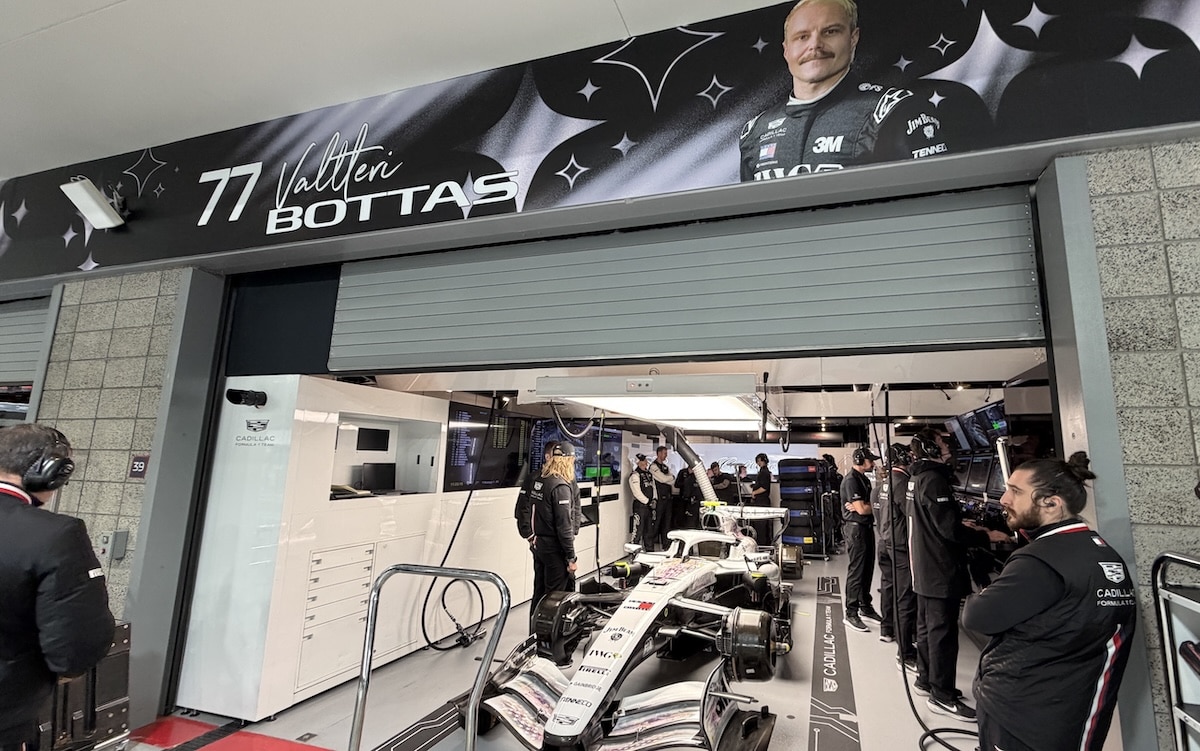
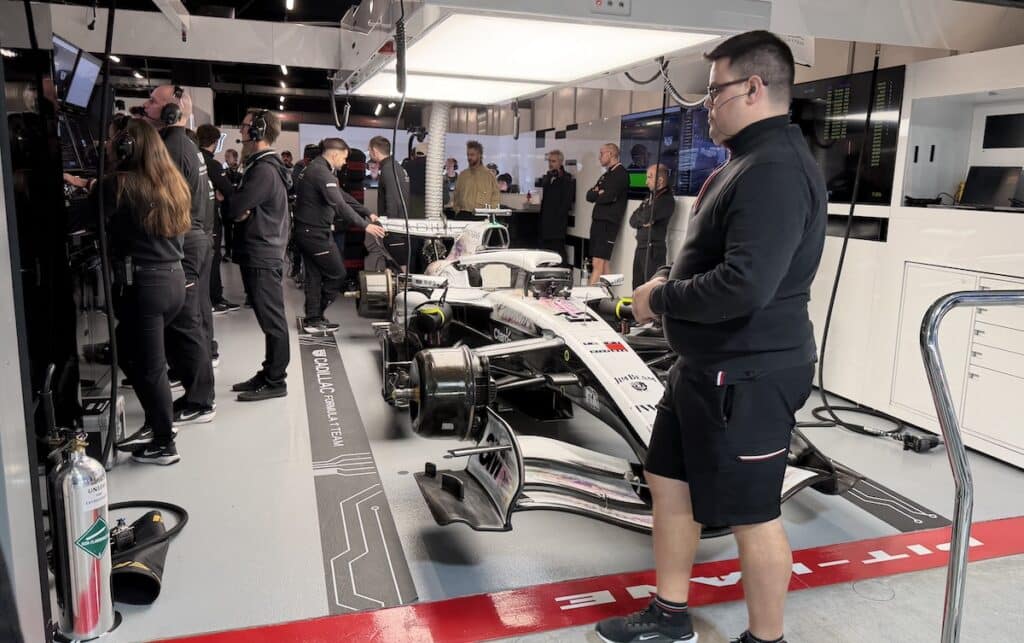
The decision still has a cost. Cadillac will now spend four full seasons as a Ferrari customer, from 2026 to 2029. As a customer, it gets the engine Ferrari designs for its own works team. It does not shape the engine around its own car, and it does not control the development. When Ferrari’s engine is strong or weak, Cadillac goes with it. That matters for a team that entered Formula 1 to be a manufacturer. See our report on Cadillac at Suzuka and its Miami upgrade for where the team stood early in the season.
The American story, the Super Bowl ad and the General Motors badge all promised an American team with an American engine. That engine is now four years away, not three. It matters for the people too. Engineers who joined General Motors to build an engine for 2029 now wait an extra year. Some will stay for the V8, and some may not want to wait. But look at it another way. Ferrari’s is not the worst power unit on the grid, and it removes one worry for a team that has made plenty of rookie mistakes this season.
When Cadillac was let into Formula 1, a General Motors engine in 2029 was part of the terms. It was one of the reasons the sport changed its mind after rejecting Andretti. This week, that promise was quietly let go: no statement from General Motors, no press release, just a few sentences from Dan Towriss in a press conference. Why did Cadillac drop its engine plan? Because the rules it was building for are ending early. A one-year engine was a bad deal. A fresh start, level with everyone else, is a good one. We will cover the World Motor Sport Council vote in Shanghai. For the wider engine picture, see our 2027 F1 grid guide and the Las Vegas paddock report. Watch the full video below.
FAQ
Is Cadillac giving up on its own F1 engine?
No. Cadillac is moving its General Motors power unit from 2029 to 2030. It will stay a Ferrari customer through 2029, and the V6 work already done becomes the base for a V8.
Why did Cadillac delay its engine to 2030?
The current V6 rules end after 2030, and the FIA now plans V8s from 2030. A General Motors V6 in 2029 would have raced for one season before being replaced. Cadillac chose not to build an engine for a single year.
What is the new 2030 F1 engine?
A 2.1-litre turbocharged V8 on sustainable fuels with a much smaller hybrid element. BBC Sport reports electrical power falling from 350 kW this season to a maximum of 200 kW. The FIA says it will be lighter, simpler and cheaper.
Is the 2030 V8 engine agreed?
The FIA says the framework was agreed unanimously by itself, Formula 1, the teams and every engine manufacturer. The final rules still need approval from the World Motor Sport Council, which meets in Shanghai next month.
Why did the FIA delete its V8 announcement?
The FIA published a statement after the London meeting on Tuesday, then removed it without explanation. The Race reported that not every manufacturer agreed on every detail. The FIA published it again three days later, saying the agreement was unanimous.
How long will Cadillac use Ferrari engines?
Four full seasons, from 2026 to 2029. As a customer, Cadillac gets the engine Ferrari designs for its own works team and has no control over its development.
Read More