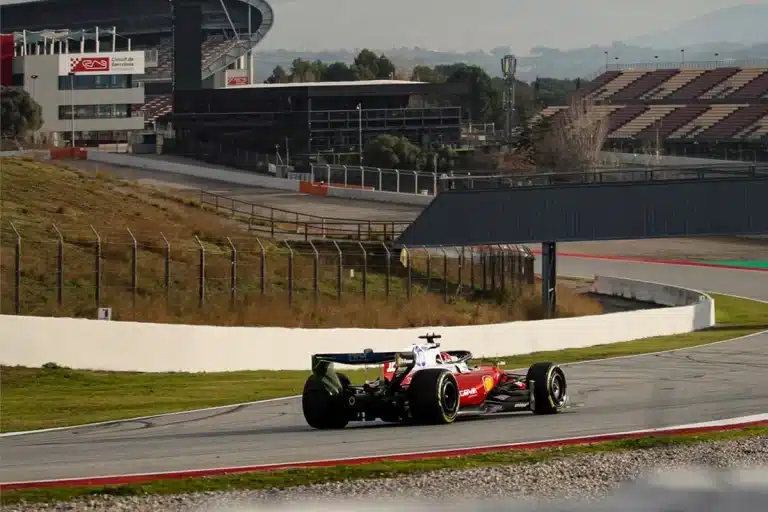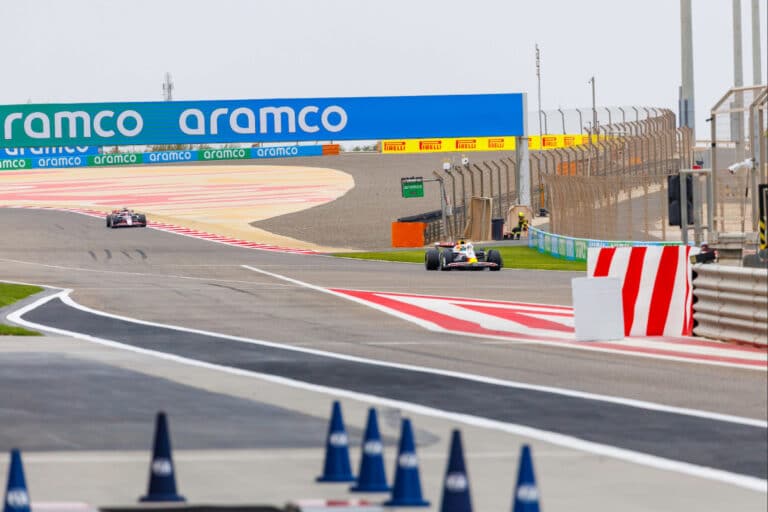
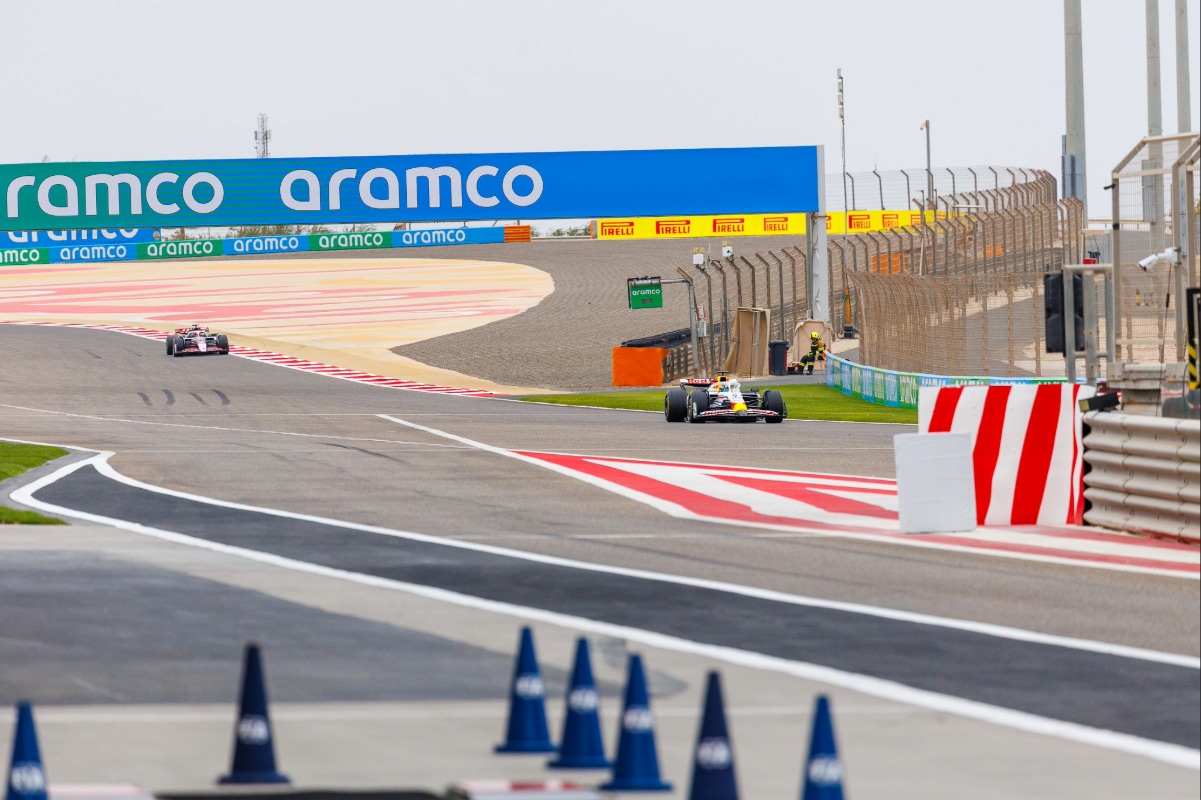
Five days of private running in Barcelona told us very little beyond which teams were able to start their engines — and which arrived with a clear sense of purpose.
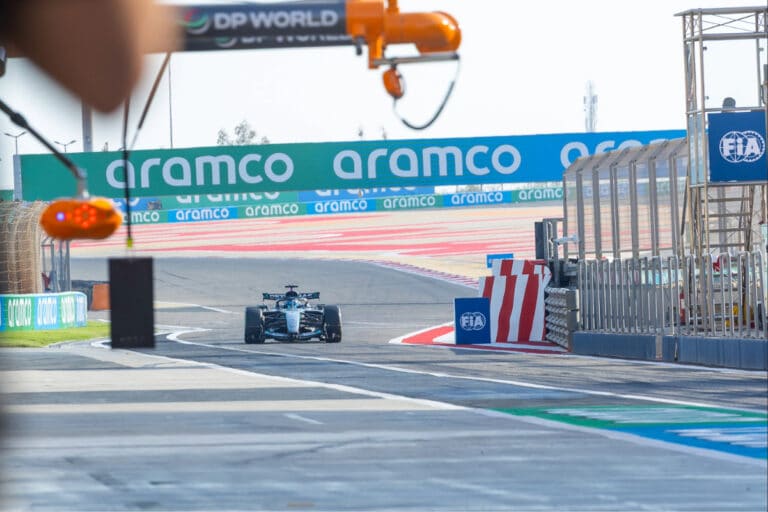
In the desert, the sport’s winter discretion gives way to visibility. Cars run in full liveries. Teams operate at full strength. And, for the first time this year, the stopwatches matter.
With accredited media trackside and full pit-lane access restored, the opening Bahrain test marks the moment when Formula One’s 2026 competitive order begins to take shape. What follows is not yet a verdict — but it is the first meaningful examination.
The Early Favourites
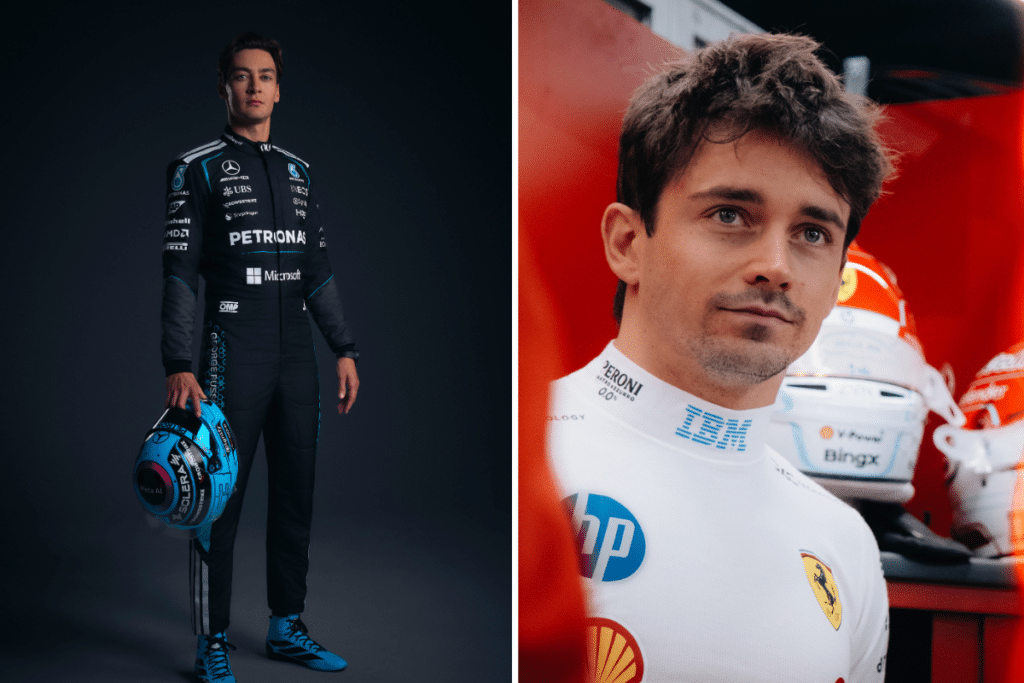
Barcelona quietly outlined the shape of the early battle.
Two teams stood apart, not through headline lap times but through composure: Mercedes‑AMG Petronas Formula One Team and Scuderia Ferrari.
Both accumulated heavy mileage. Both avoided disruption. Both appeared organised rather than reactive — often the earliest indicator of a serious contender.
At Mercedes, attention naturally centres on George Russell. His Barcelona programme was the most extensive of any driver, delivering stable, predictable running with no visible compromises. Russell has been careful publicly, speaking in measured terms about balance and consistency, but the language was quietly confident — the tone of a driver who trusts the fundamentals beneath him.
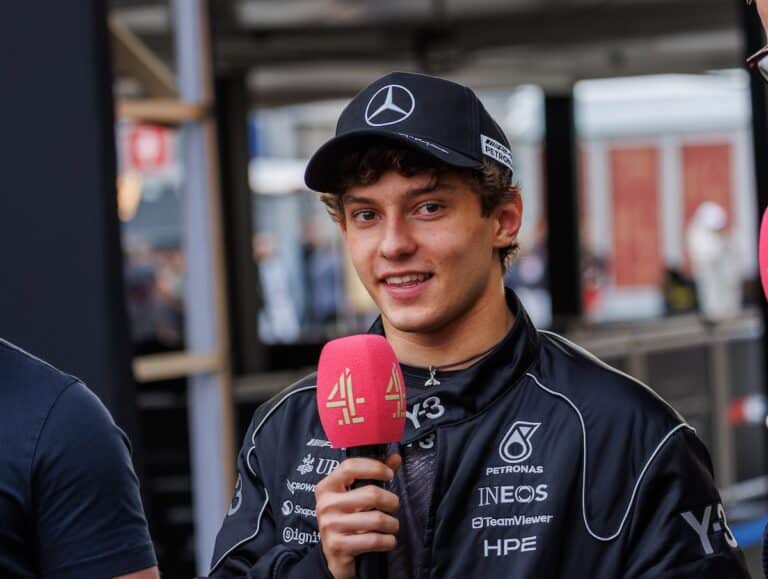
Alongside him, Kimi Antonelli enters the season with less immediate pressure. That freedom may prove valuable. While Russell is positioned as the reference point, Antonelli’s ability to contribute consistently — and occasionally disrupt internal expectations — should not be underestimated.
At Ferrari, the atmosphere is similarly controlled, but the centre of gravity remains unchanged.
Charles Leclerc continues to anchor the team.
Ferrari’s Barcelona running was clean and methodical. Long runs completed without interruption, predictable behaviour through corners, and strong correlation between simulation and track data all pointed to a car that behaves as expected. In that environment, Leclerc’s strengths — particularly his qualifying speed — become decisive.Lewis Hamilton, meanwhile, remains in a transitional phase. His integration continues, compounded by changes on the engineering side that require him to rebuild trackside working rhythms. That process typically takes time, particularly under pressure, and for now Leclerc retains the natural authority within the garage.
The Political Undercurrents
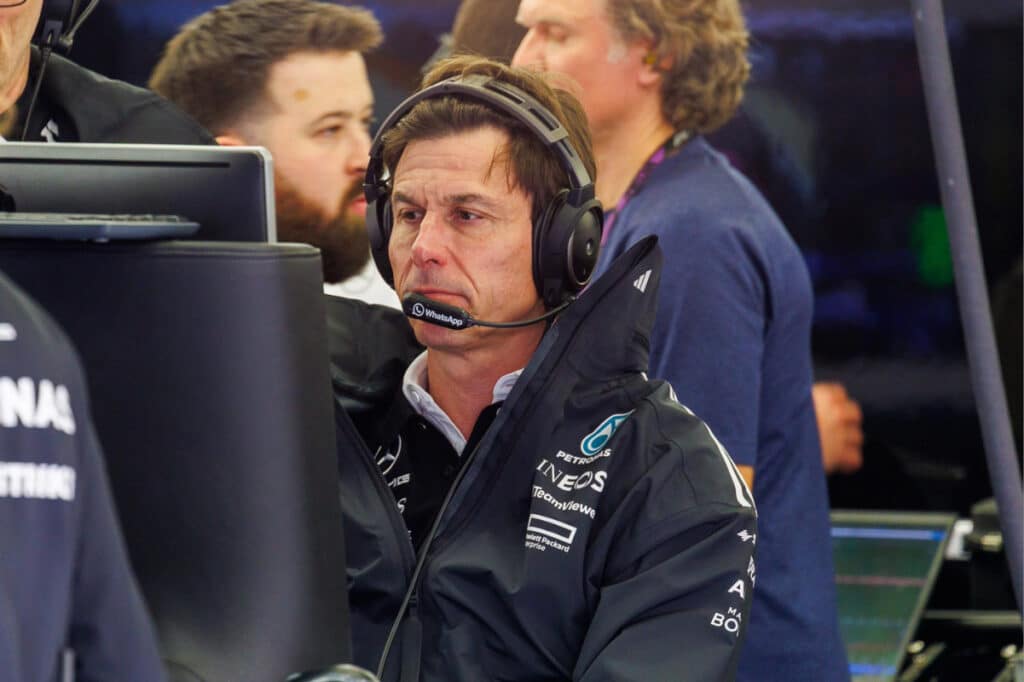
One of the most consequential stories in Bahrain will unfold away from the timing screens.
Mercedes enters the test under continued scrutiny regarding its interpretation of the 2026 power-unit regulations. Rival teams have questioned whether an early efficiency advantage exists, while Toto Wolff maintains that the concept is fully compliant and approved.
The FIA now finds itself balancing innovation against competitive equity. Any intervention risks legal challenge, particularly after senior Mercedes leadership indicated that late regulatory changes would not go uncontested. Bahrain may not deliver answers, but it will provide the first practical indications of how significant the issue could become.
The implications extend beyond the works team. Mercedes’ customer outfits will be watching closely, aware that any advantage — or restriction — ripples through the entire competitive structure.
Adrian Newey’s First Real Test
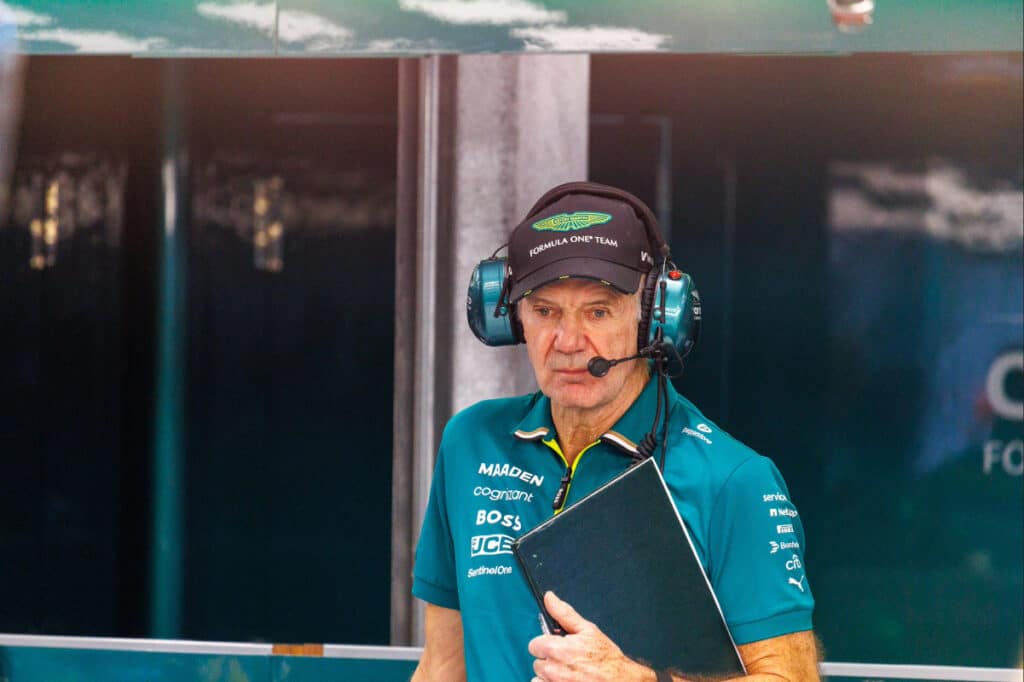
If one car will attract disproportionate attention in Bahrain, it is Aston Martin’s.
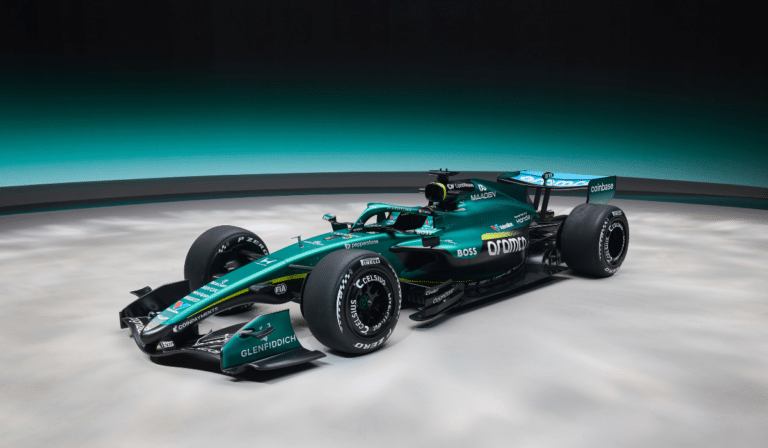
Barcelona revealed almost nothing of the Aston Martin Aramco Formula One Team challenger. The AMR26 ran largely in bare carbon, shielded from view, its details obscured behind screens and covers. Bahrain removes those protections.
This will be the first extended look at a car shaped by Adrian Newey since his departure from Red Bull. Expectations are correspondingly high — and internally, caution has been evident.
Newey has acknowledged the programme is behind schedule, while Fernando Alonso described the winter as “very, very intense,” a phrase that suggested urgency rather than comfort. Leadership structures are still settling, and the task of aligning ambition with execution remains substantial.
Even so, Bahrain represents a moment many have been waiting for: Newey’s ideas finally running in open view, over longer stints, under real scrutiny.
Paddock Signals
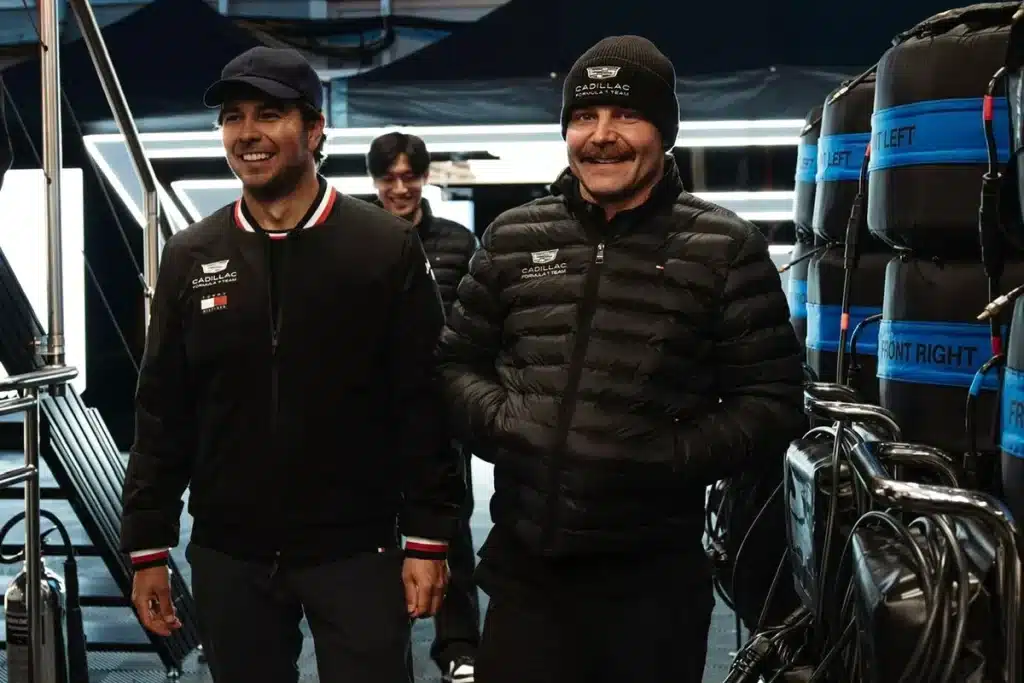
Bahrain also marks the return of the paddock’s human rhythms — the conversations, pressures, and narratives that define a season beyond lap times.
One figure quietly re-entering focus is Christian Horner. After months away from the spotlight, speculation has linked him to a potential ownership role within Alpine F1 Team. Any movement in that direction would carry strategic consequences, particularly given Alpine’s new Mercedes power-unit partnership.
Elsewhere, attention will be drawn to Sergio Pérez, returning with Cadillac alongside Valtteri Bottas. Their pairing forms one of the grid’s most experienced line-ups and will attract significant interest from both fans and sponsors.
Younger drivers face different tests.
Isack Hadjar, following a costly Barcelona incident, enters Bahrain under sharper scrutiny, aware of the unforgiving history attached to the second seat alongside Max Verstappen. Clean execution will matter as much as speed.
And hovering above it all remains Hamilton, whose presence extends beyond sport. Ongoing celebrity attention may follow him into Bahrain, adding another layer to the paddock’s already complex choreography.
Read More