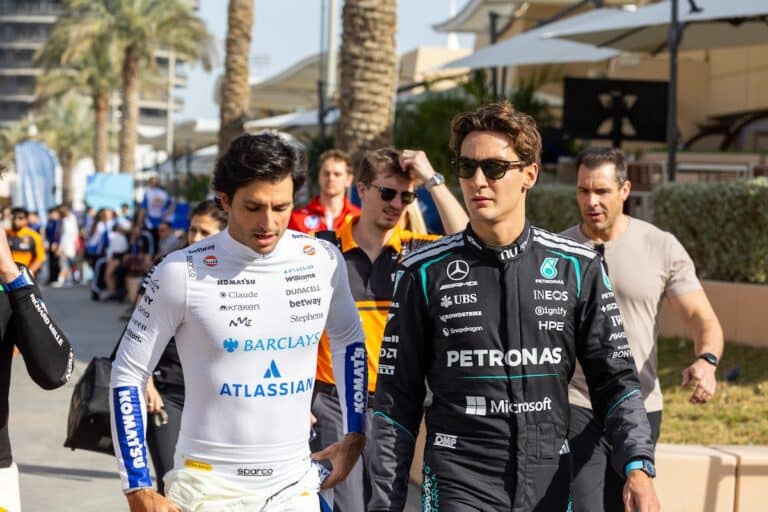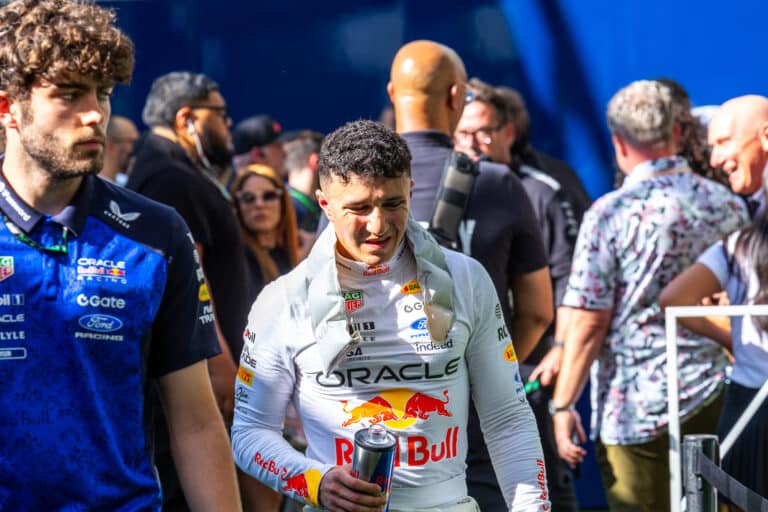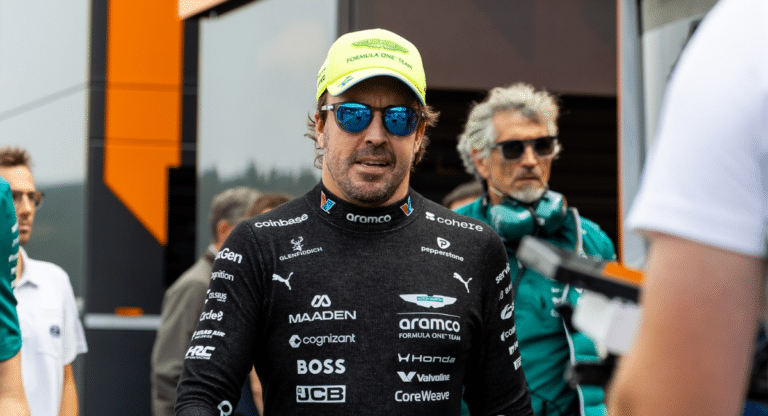
It is one of the most common questions put to anyone working in the paddock: how does a person actually break into Formula One? The honest answer is that there is no single route in. In 2026, the sport employs people across such a vast range of skills, salaries and entry requirements that the path into an F1 job looks completely different depending on where on the ladder someone is aiming.
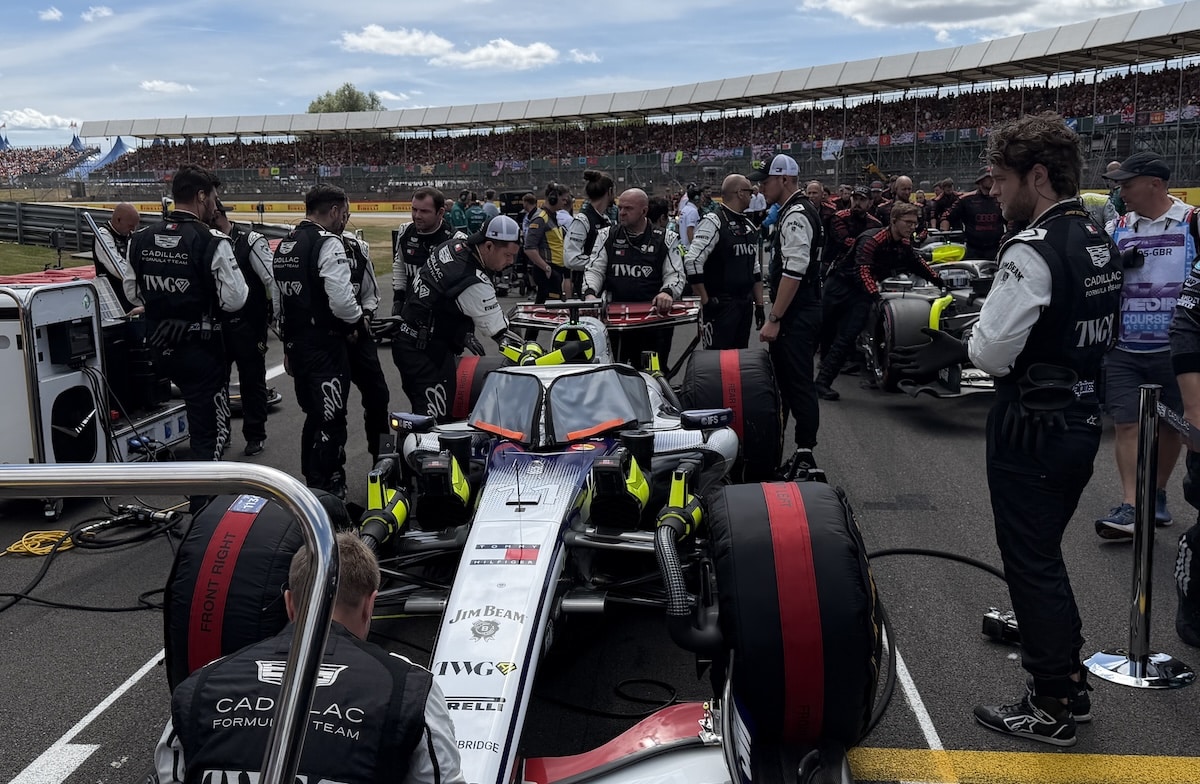
Across the 11 teams alone, roughly 1,100 to 1,200 people are employed trackside every single race weekend, all registered under the sport’s cost cap. But that figure only tells part of the story. Add in Pirelli’s engineers, hospitality staff, the FIA’s race officials, FOM’s broadcast and commercial teams, and more than a hundred accredited photographers, journalists and broadcasters, and the number on site climbs to around 2,500. At marshal-heavy events such as Singapore, where more than 1,100 volunteer race officials are deployed for that weekend alone, the total can push past 3,000.
Who Is Actually Trackside
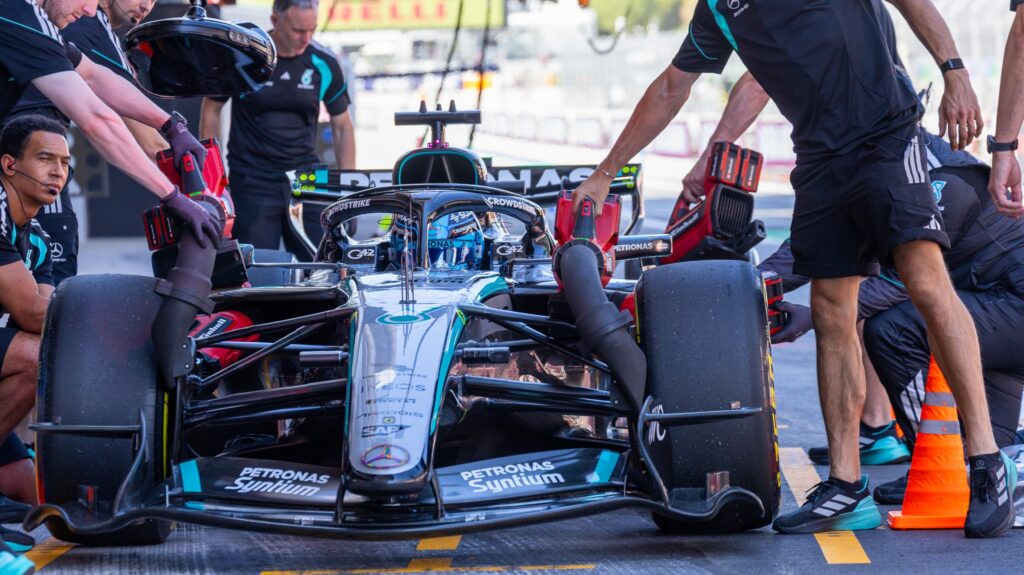
Every race weekend brings together four core groups. There are the teams themselves, alongside Pirelli. There is the FIA, running race control and scrutineering. There is FOM, overseeing the commercial and broadcast side of the sport. And there is the media pack, covering the action for outlets around the world. A fifth group is worth noting separately: the host circuit’s own marshals and volunteers, present for just one race a year, unlike everyone else on this list who travels to all 24 rounds.
Within these groups sit dozens of distinct job categories, each with its own entry path, skill requirements, and pay scale — from roles needing an engineering degree, to trade qualifications, to positions that require no formal qualification whatsoever.
Cadillac: A Team Built From Zero
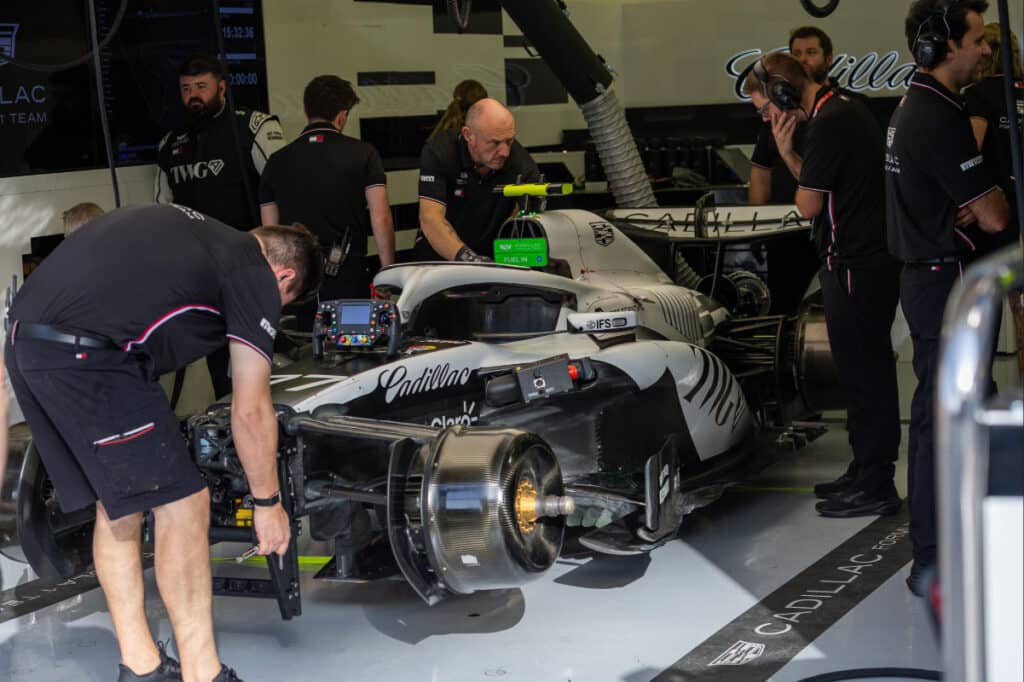
To understand what it actually costs to build a Formula One team from the ground up, this series uses Cadillac as its running case study. Unlike every other outfit on the grid, which inherited decades of staff, infrastructure and institutional knowledge, Cadillac had to construct its entire operation from scratch to make its debut in Melbourne.
That process began at the top, with Graham Lowden brought in as team principal before Cadillac had even been officially confirmed on the grid. It continued as recently as this February, when Mark Heinz was hired as chief racing officer to align the driver programme with the wider engineering group ahead of the season opener. The hiring has not stopped since. Reports suggest Cadillac has poached Red Bull’s chief engineer for car engineering, Paul Monaghan, after two decades at that team.
Crucially, Cadillac is doing all of this within the same $215 million cost cap that governs every other team on the grid — making its rapid build-out one of the most transparent windows the sport has ever offered into what it truly costs to staff a Formula One operation, person by person.
The Floor of the Pyramid
At the base of the F1 employment pyramid sit hospitality and catering staff, who work outside the cost cap entirely and are typically paid $30 to $35 an hour, with no bonus structure but decent accommodation included.
One level up, entry-level garage technicians and factory mechanics can realistically expect between $45,000 and $95,000 a year, with some paid by the day — as low as €100, according to Paddock Sourcing. Trackside race mechanics sit a little higher still, with a number one mechanic able to push toward $110,000. It is a respectable salary, but far below what many fans assume an F1 role commands. Yet this career path has no fixed ceiling: some mechanics, after over a decade trackside and multiple championships, go on to become broadcasters, authors or official team ambassadors.
The Middle Layer: Data, Strategy and Engineering
Move further up the pyramid, and the roles start deciding races outright. Race engineers, the voice a driver hears in his ear every lap, typically earn between $115,000 and $135,000, with senior team veterans pushing past $165,000. Strategists, responsible for the pit-call decisions fans debate for days afterward, sit in a similar band.
A newer category has emerged in this same layer over the past decade: data and software specialists. Every team now runs a dedicated bench of performance analysts, simulation engineers and software engineers processing the tens of thousands of data points a modern F1 car generates every lap. Entry-level data analysts typically start between $30,000 and $80,000, while specialist software engineers building telemetry tools can earn considerably more — with reports putting average salaries at some teams around $149,000, and senior specialists well over $200,000.
Beyond the Garage
Not every job in Formula One touches the car. A parallel team runs the sport’s commercial and communications operation — content creators capturing footage the moment a driver steps off the grid, press officers managing media schedules, and commercial teams securing the sponsorship deals that fund it all. With the cost cap limiting what teams can spend on the car itself, commercial partnerships remain one of the few areas left where a team can genuinely outspend its rivals.
The Very Top
At the summit of the pyramid, team principals earn anywhere from roughly $1 million a year at the low end to $17 million for the most senior operators, some of whom also hold ownership stakes in their teams. Drivers command even greater sums: $1 to $2 million for rookies, $5 to $15 million for the mid-grid, and $50 to $75 million for the very best in the sport.
Watch the Full Breakdown
This overview is only the starting point. The full video explores each of these roles in far greater depth — what the job actually involves, what it pays at today’s market rate, and how someone genuinely gets hired into it.
▶ Watch the full video below:
Formula 1 jobs, F1 careers, Cadillac F1, F1 salaries, Working in F1, F1 paddock, Motorsport careers, F1 team structure
Read More
- British Grand Prix 2026: Inside Silverstone’s Biggest Celebrity and WAGs Weekend
- F1 2027 Driver Market After British GP: Verstappen Pressure Grows, Sainz-Audi Talks Advance, Alpine Set to Confirm Before Summer
- Charles Leclerc Stuns Silverstone as Ferrari Claims Historic 250th F1 Win at 2026 British Grand Prix
- Antonelli Stuns Silverstone at 2026 British Grand Prix as Hamilton’s Home Heartbreak Deepens
- Hamilton Stuns Silverstone With Shock Ferrari Pole for 2026 British Grand Prix Sprint