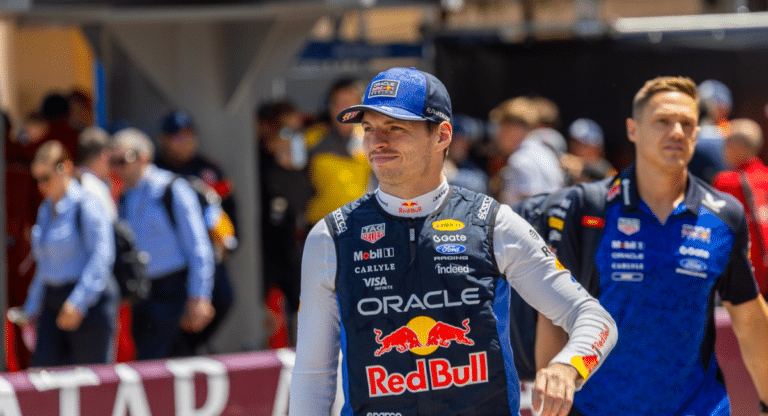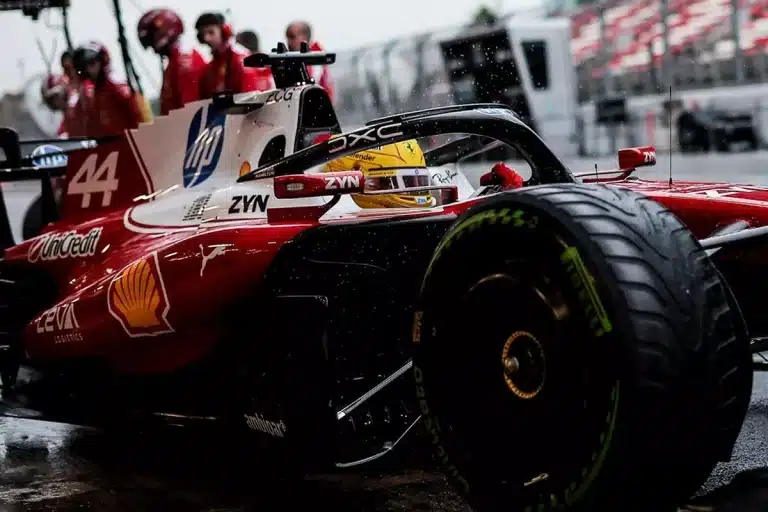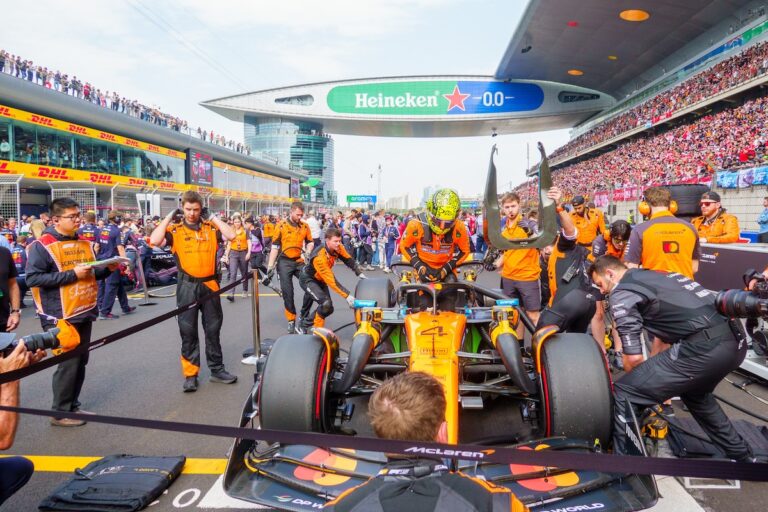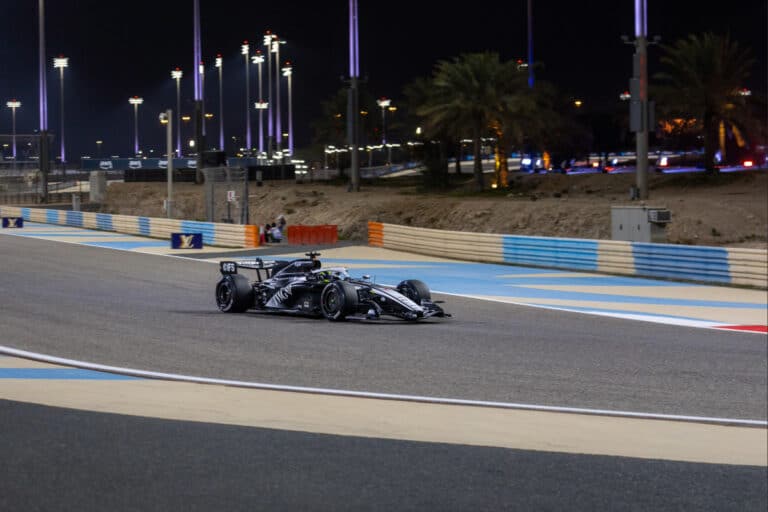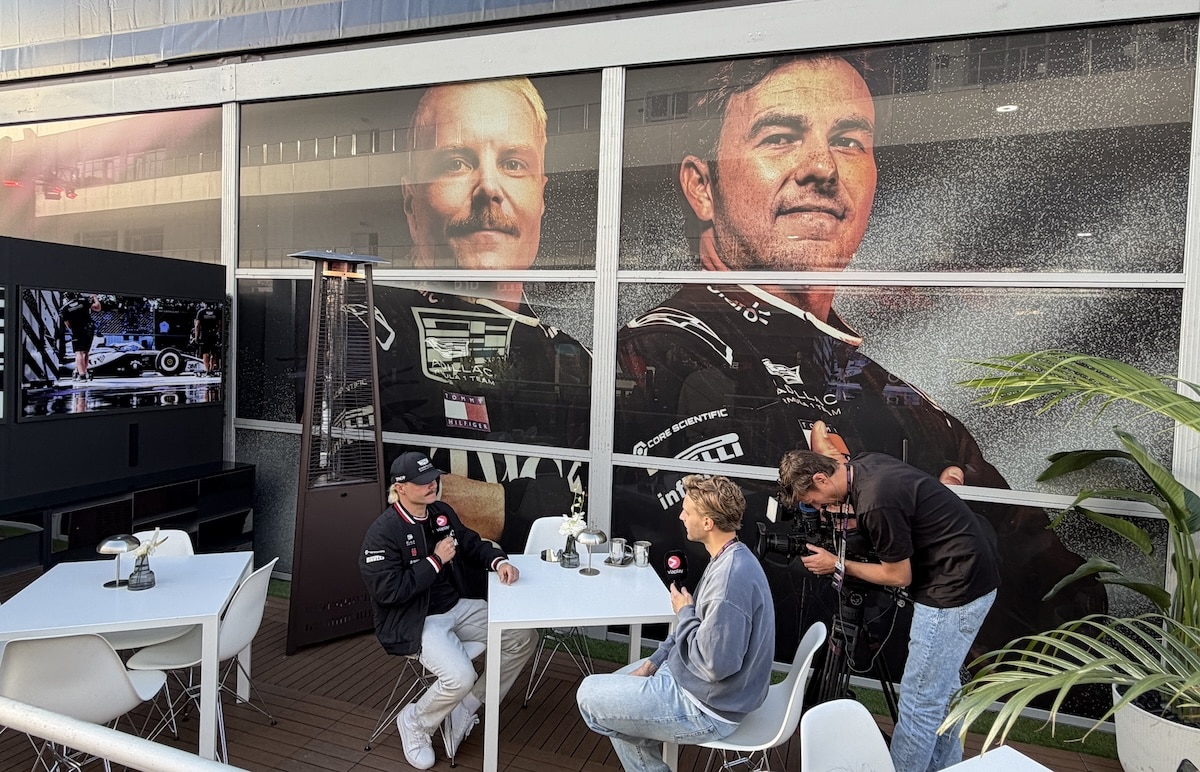
In February, Cadillac stopped the Super Bowl. A black and white car, the voice of John F. Kennedy saying “We choose to go to the moon”, and America had a new Formula 1 team. Nine months later, the Cadillac F1 team has started 20 races and scored zero points. Its majority owner is reportedly shopping his stake, the man who knew how to build a team from nothing lost his job after 11 races, and the driver pairing for 2027 is open. In this report, The Motion Report looks at why Cadillac is last, what is holding it back and what needs to change.
What Cadillac Got Right: Branding, Marketing and a Marketable Driver
American companies know how to sell, and Cadillac proved it before its car turned a wheel in a race. It bought a slot in the Super Bowl, the biggest television audience in America. Chief executive Dan Towriss has suggested the reveal cost up to $20 million. A replica car sat in a frosted glass box in Times Square that cleared at the moment the ad aired, and the next morning the first track run went out through Apple’s Shot on iPhone campaign.
Then came Hollywood. The team talked to Michael Bay, the director of Transformers and Armageddon, about making the Super Bowl ad. Bay did not make the final ad. He sued for $1.5 million for fraud and breach of contract, alleging the team used his ideas without paying for them. Cadillac’s answer was that Bay is a cinematic genius but that after two meetings it became clear he could not meet their timeline. Keanu Reeves, who won an Emmy telling the story of Brawn GP, signed on to host and produce a documentary series on Cadillac’s journey to the grid.
The driver sells too. When Sergio Pérez was Max Verstappen’s teammate, Helmut Marko said his products sell much more than Verstappen’s, and Pérez brings Mexico and much of Latin America with him. Read why we called it a smart move in Sergio Pérez and Cadillac: Why This Comeback Matters. The car itself is deliberately asymmetric, a “yin and yang”, and Cadillac sold a first: no American car giant had ever entered a Formula 1 team under its own name.
Under the skin, the choices were smart as well. Until General Motors’ own engine arrives in 2029, the car runs on Ferrari power. There is a race base in Silverstone, a headquarters going up near Indianapolis and a General Motors engine factory near Charlotte that opens on 18 December. In our view, the branding, the logo and the marketing are spot on. Getting onto the grid was the hardest part, and Cadillac did it. The mistakes started once it was there.
Mistake 1: The Owner Question and the Reported $3 Billion Sale
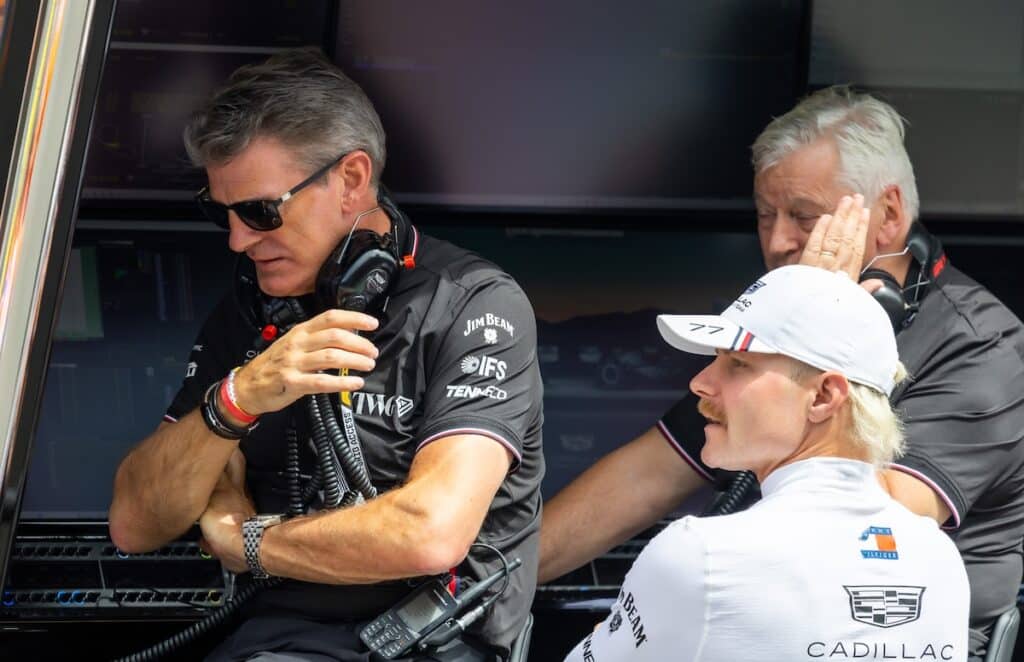
Nobody has officially published who owns Cadillac. Darren Cox of The Race reports what is generally understood: Mark Walter’s TWG is the controlling owner, General Motors holds options of up to 30%, and Dan Towriss holds options of around 3%. Cox stresses that none of this is confirmed, and RACER says the structure has never been disclosed. On those reported numbers, Towriss, an actuary by training who has run Walter’s insurance business since 2009 and had no Formula 1 experience before this project, holds little real power. In our view he is not a racer.
In August, TWG said it was not considering a sale of the Cadillac team. On 2 November, Sportico reported that Walter is shopping his stake, asking at least $3 billion, with at least seven parties interested. The sale talk comes against a wider backdrop. Bloomberg reports that two of Walter’s insurance companies received grand jury subpoenas in February, with prosecutors in Manhattan examining whether they properly disclosed private credit investments tied to other Walter businesses. The Securities and Exchange Commission is running a parallel inquiry. No charges have been filed, TWG denies any wrongdoing and has said “There has been no fraud”, and The Race reports the investigations do not implicate the Cadillac team.
Other assets have gone too. In August, Walter agreed to sell the Los Angeles Lakers to Joshua Kushner and Bob Iger for $12.5 billion, and his Chelsea stake is gone as well. His Dodgers stay, and The Athletic reports his IndyCar and NASCAR teams are not for sale either. In our view, when a man liquidating his portfolio keeps the baseball and sells the Formula 1, Cadillac looks more like an adventure investment than a lifelong passion. Compare Vijay Mallya, who held on to Force India through years of legal trouble until the team went into administration in 2018.
The numbers show what is being sold. The entry fee alone was around $450 million, and at least another billion went in, so roughly $1.5 billion invested against an asking price of $3 billion. Sportico also reports the team is on track to lose around $400 million this year, largely because of start-up costs and a commercial business still ramping up. Inside the team, Graeme Lowdon was replaced as team principal after 11 races, as we covered in Cadillac sacks Lowdon and names Budkowski. On that same weekend at Zandvoort, the denial of a sale was read out by General Motors because Towriss was at an IndyCar race in Washington.
Audi Shows the Alternative: One Owner, One Plan
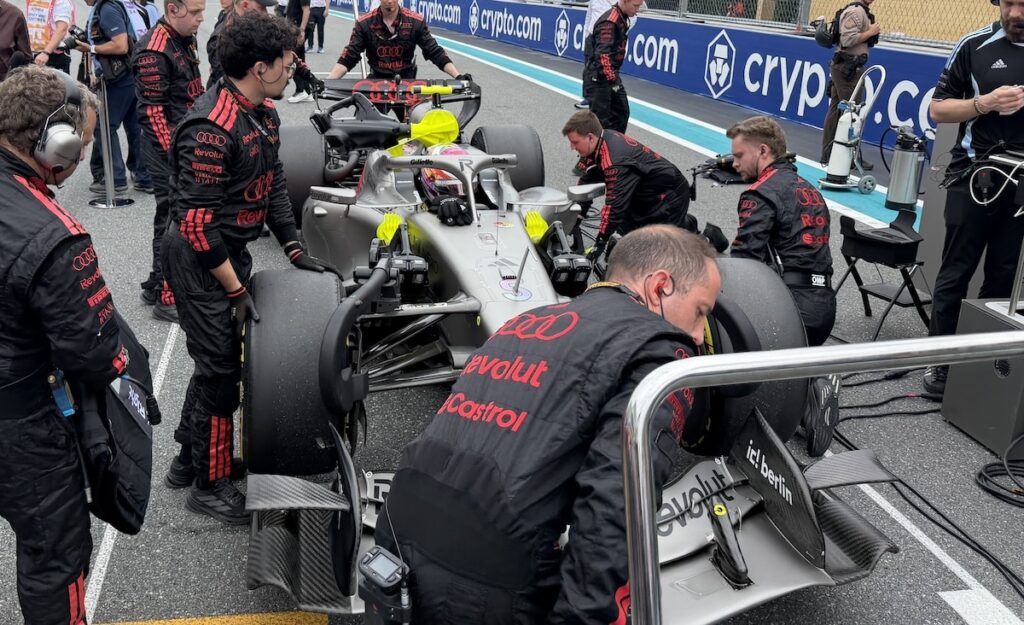
Cadillac was not the only new name on the grid. Audi arrived too and can match it for branding. It also started from scratch as a works team after taking over Sauber, but it made very different choices. Audi has owned 100% of Sauber since 1 January 2025, so there is no question about who decides. Qatar’s sovereign wealth fund, the QIA, took a significant minority stake as a long-term partner, and it is already one of the largest shareholders in the Volkswagen Group at around 10.5%. Audi builds its own engine in Neuburg in Germany from day one and has said its target is to fight for championships by 2030.
Audi had turmoil too. Team principal Jonathan Wheatley left suddenly after two races for what the team called personal reasons, and Mattia Binotto took over, the third leadership change in less than two years. But the owner never wavered and the plan never changed. Audi is eighth in the Constructors’ Championship with 28 points and is even challenging Haas for seventh. The same cannot be said of Cadillac.
Mistake 2: The Driver Decision for 2027
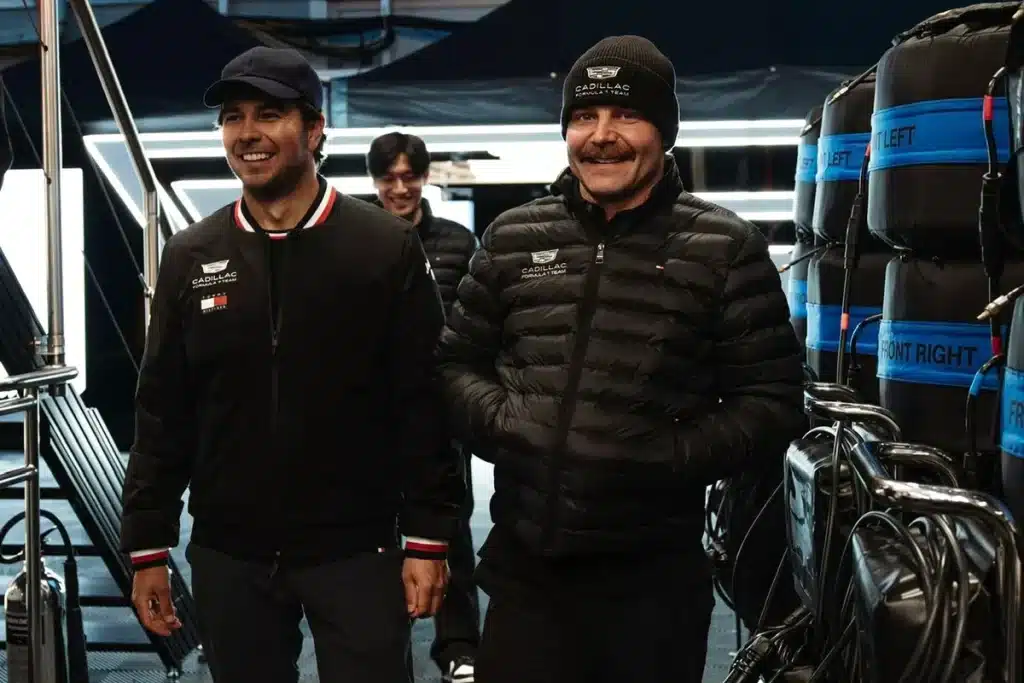
The decision to let Lowdon go was controversial in the paddock, and in our view it looked ungrateful. It put Cadillac in a negative spotlight at the moment it most needed calm. The driver decision is a case in point. Pérez is signed until at least 2029. Valtteri Bottas joined on a multi-year deal, but Formula 1’s own website reports that the team has yet to trigger the option that keeps him in the car for 2027. Team principal Marcin Budkowski says there is no timetable and no pressure and that Bottas still has a strong case.
The other name is Colton Herta, a nine-time IndyCar race winner who earned his Super Licence this month through his IndyCar results and six Friday practice sessions with Cadillac. At Interlagos in Pérez’s car, Herta was 20th in first practice, and The Race reports he was nine-tenths of a second slower than Bottas in the other Cadillac. The team says it is impressed with his work developing the car. On why an American driver matters, Budkowski said: “It is important. It is an American team.”
In our view, that line sounds handed down from above. By that logic Haas, the other American team, has had the wrong drivers for 10 years, because it has never run an American in a race. Haas team principal Ayao Komatsu says: “First and foremost, the guy needs to have speed.” Toyota helps fund Haas and wanted its own driver, but Haas ran a test and picked Rafael Câmara because he was the quickest. Our earlier analysis of the race to fill Haas’s last open seat tells that story. Say what you like about Haas, the principle is right.
This is where the two mistakes meet. If the sale goes through, a new owner inherits this decision and may want a different driver. Signing someone now locks in a choice for owners who may soon be gone. In our view, American money wants an American driver, but that is a sales pitch, not a racing decision. With all respect to Herta as an IndyCar winner, putting him in a race seat for 2027 on a team that has not yet scored a point would be the second rookie mistake.
The Fix: Merit Drivers and an Anchor Owner
Start with the drivers. Choose on merit for 2027. The team needs feedback, points and stability while it builds towards its own engine, and that favours experience. The simplest answer is to keep Bottas. It saves money and avoids another distraction. If Cadillac wants a change, it should still pick experience. Esteban Ocon would fit on paper after two seasons with Ferrari power at Haas, but his history of clashes with teammates is a risk for a young team that needs calm. Yuki Tsunoda would be next in line: one of the few drivers on the market with real Formula 1 experience, shaped by Red Bull, aggressive but able to work as a team player. See where he stands in our report on Tsunoda’s 2027 seat options. Then give Herta a real path for 2028 as full-time reserve with every Friday practice session the rules allow and test days. An American driver who is ready sells far better than one who is not.
Then fix the owner. Cadillac needs an anchor investor who lives and breathes Formula 1, not someone who treats the team as a fun sideshow because Formula 1 is the next hot thing, and General Motors needs to step up beside that investor. Say what you like about Gene Haas, but he understood his priority: when Stewart-Haas Racing wound down after 2024, his Formula 1 team kept going. In our view the ideal buyer would be someone like Christian Horner, a racer who has spent his life in Formula 1, but $3 billion is too much even for him. Sportico values the whole team at $2.7 billion, so the asking price sits above both the market value and the money that has gone in.
Why Cadillac Matters Beyond One Team
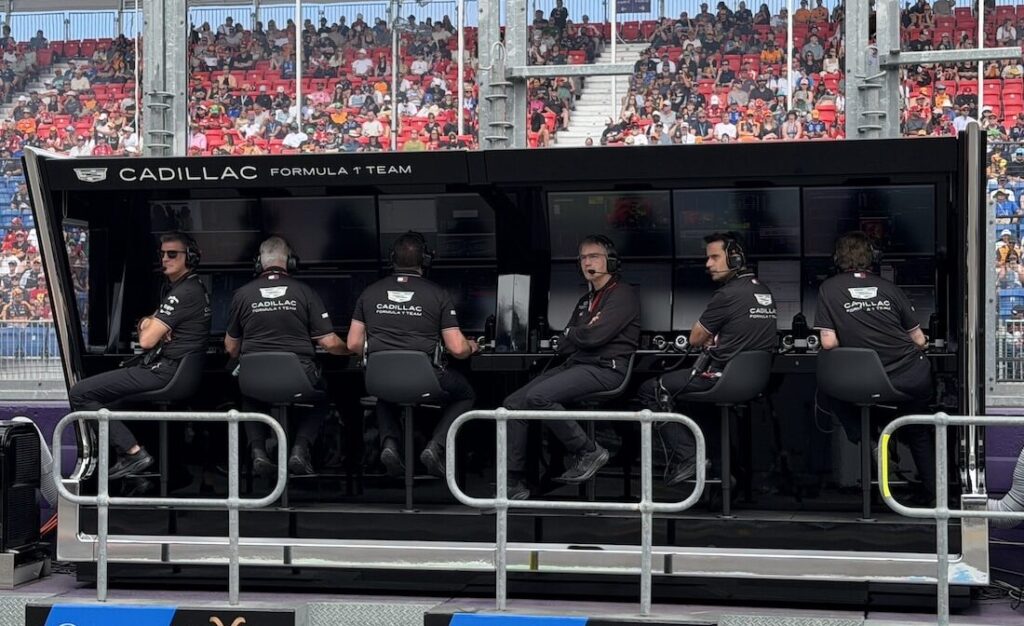
This is bigger than one team. In January 2024, Formula 1 rejected the Andretti bid that became Cadillac, saying it did not believe the team would be competitive. Twelve members of Congress wrote to Formula 1’s owner, and the Justice Department opened an investigation. America fought for this 11th team. If it stays last, the doubters are proved right and Formula 1 is left explaining why it let the team in. It would damage Cadillac, because General Motors put its luxury brand on this car and every race at the back of the grid is a headline. And it would hurt Formula 1 in the United States, the market it needs most.
You can sell a donkey as a racehorse, but only for so long. Sooner or later it has to run. Only results can justify a price tag like $3 billion. Cadillac has the brand. Now it needs the owner and the driver to match. Watch the full video report from The Motion Report below.
FAQ
Is the Cadillac F1 team for sale?
Sportico reported on 2 November that majority owner Mark Walter is shopping his stake, asking at least $3 billion, with at least seven parties interested. In August, Walter’s TWG said it was not considering a sale. None of this has been confirmed by the team.
Who owns the Cadillac F1 team?
Ownership has never been officially published. The Race reports it is generally understood that Mark Walter’s TWG is the controlling owner, General Motors holds options of up to 30%, and chief executive Dan Towriss holds options of around 3%.
Who will drive for Cadillac in 2027?
Sergio Pérez is signed until at least 2029. Valtteri Bottas’s 2027 option has not yet been triggered, according to Formula 1’s own website, and IndyCar winner Colton Herta is the other name linked to the second seat. Team principal Marcin Budkowski says there is no timetable.
Has the Cadillac F1 team scored any points in 2026?
No. According to The Motion Report’s video in mid-November, Cadillac had started 20 races in its first season and scored zero points.
Read More