Show Image
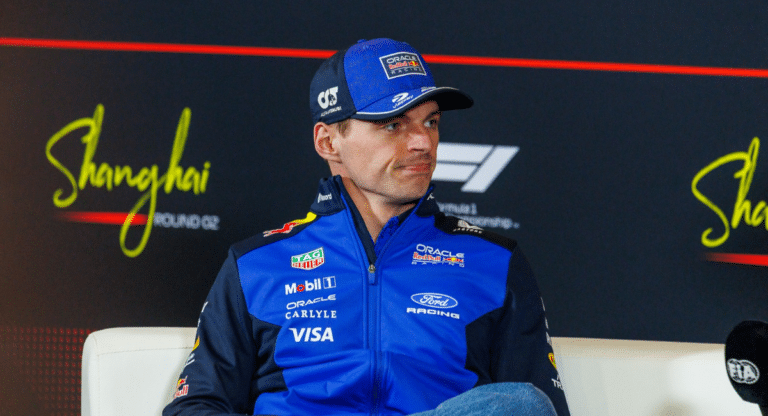
Max Verstappen will start Sunday’s Spanish Grand Prix from third on the grid, eleven hundredths of a second off the front row he was fighting for until the final corner of qualifying. On current form, he is back to something like his best: sharp, motivated and racing for a team that, for the first time in a while, looks fully aligned behind him. The problem is geography, not pace. Lando Norris and Kimi Antonelli start ahead of him. Lewis Hamilton lines up alongside on row two. His own teammate, Liam Lawson, starts eighth, three and a half tenths back. If Verstappen is going to win the inaugural Madrid Grand Prix, he will have to do it without a single favour from the cars around him.
Norris Takes Madrid’s First-Ever Pole Position
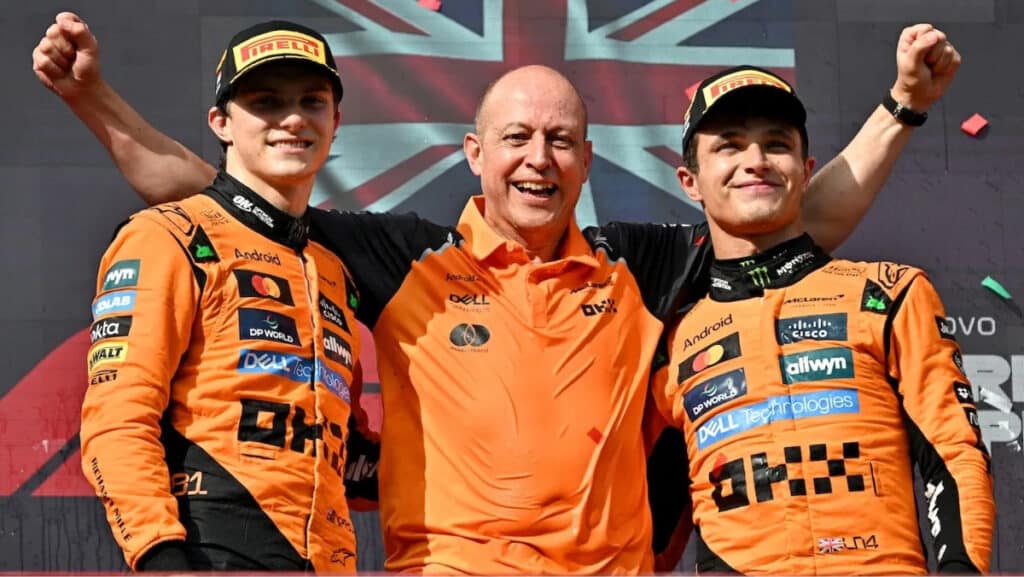
Lando Norris claimed the first pole position in Formula 1 history at the new Madring circuit, setting a time of 1:31.824 to beat Antonelli’s Mercedes by just eleven thousandths of a second. The margin is remarkable given Norris missed second practice on Friday with a gearbox issue and ran wide at the final corner on his pole lap, costing roughly three tenths. McLaren team principal Andrea Stella described the lap as championship-calibre, adding that the mistake at the last corner only underlined how much pace was really in the car.
Verstappen slotted into third at 1:31.964, having led the second qualifying segment and stayed in contention for pole until the final runs. He said the margin came down to losing time in the last sector, but pointed to tyre management as the bigger factor for race day, calling it something Red Bull “need to stay on top of” if they want to challenge for the win. Behind him, Hamilton took fourth after briefly leading Q3, followed by Charles Leclerc in fifth — Ferrari’s sole car running last season’s engine specification while the team verifies it survived a heavy Monza crash, at a reported cost of 10–15 horsepower.
The Full Grid: Four Teams, Four Different Stories
George Russell qualified sixth after Mercedes altered his setup mid-session, a change Russell’s own team principal, Toto Wolff, later described as leaving the driver in a “negative cycle.” Oscar Piastri took seventh, four tenths off his McLaren teammate and admitting that losing rhythm at this track is difficult to recover. Liam Lawson qualified eighth — his closest gap yet to Verstappen in the sister Red Bull — while Franco Colapinto and Arvid Lindblad rounded out the top ten in ninth and tenth, both beating faster cars on a circuit nobody had raced before this weekend. Notably, four different constructors occupy the top four grid slots, something that has not happened once this season.
Why Verstappen Can Still Win in Madrid
The Madring is not built for overtaking. Corners run directly into one another with almost no braking zones long enough to attempt a clean pass, and the pit lane is long enough that an extra stop is effectively ruled out. Barring a safety car or red flag, Sunday is shaping up as a one-stop race for the entire field, where strategy timing — the undercut and overcut — matters far more than raw pace, and small errors decide positions.
That format favours Verstappen. He produced a podium at Monza from a car that qualified only ninth, simply by running close to the car’s limit for the full race distance, and few drivers read a developing race situation as quickly or as independently as he does. Norris, by contrast, starts with almost no long-run tyre data after losing Friday afternoon to a gearbox failure — a gap McLaren itself has acknowledged. Antonelli, meanwhile, is managing a championship campaign rather than chasing a single win, and Wolff has told both Mercedes drivers publicly that late, aggressive defending will not be tolerated after Monza.
The Obstacles Standing in His Way
None of this makes Sunday simple. Every rival ahead of Verstappen has a reason to hold their position rather than assist him: McLaren will cover Mercedes, Mercedes will protect its championship lead against McLaren, and Ferrari will be preoccupied managing its own two drivers after recent internal tension. Lawson starting eighth looks helpful on paper, but in practice it places him in the most congested part of the field, likely to spend his afternoon defending against Piastri, Colapinto and Lindblad rather than holding up rivals for his teammate’s benefit.
The opening laps carry the greatest risk of the weekend. With no run-off area and the field tightly compressed, any stranded car is likely to trigger a red flag rather than a safety car — the same type of incident that ended Lawson’s Monza weekend two weeks ago. Ironically, that unpredictability may work in Verstappen’s favour again. He starts this race the way he has built his career: as a one-man operation, with no teammate cover and no alliances, relying entirely on tyre management, strategy and race-craft to convert third on the grid into a win.
Can Max Verstappen win the Spanish Grand Prix from third on the grid without any help from the cars ahead?
Read more
- Liam Lawson Struggles Again as Arvid Lindblad Shines on Madrid F1 Friday
- Madrid Grand Prix 2026: Inside the Paddock, the Hotels and the Homecoming 45 Years in the Making
- The Italian Grand Prix Delivered a Result Nobody Saw Coming
- George Russell Was Booed at Monza — So Why Are Insiders Calling Him the Real Winner?
- A Bruising Weekend for Ferrari, But a Triumph for Style