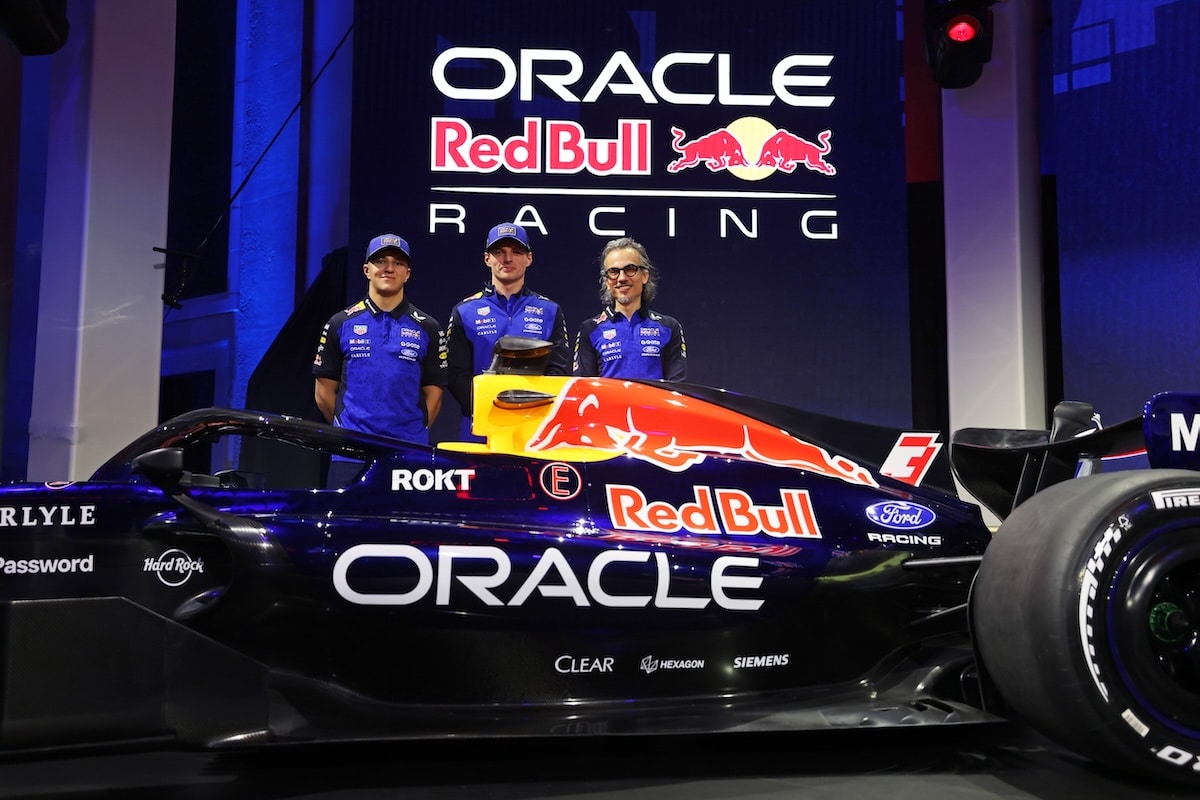
When asked on stage at Red Bull’s Detroit launch to turn around and show his new outfit, Max Verstappen responded with a grin: “Do you want to see my ass?”
It was a throwaway joke, delivered without malice or performance. And yet it captured something essential about Verstappen — a four-time world champion with little interest in ceremony for its own sake. While Red Bull unveiled a new era with polished visuals and symbolic gestures, Verstappen cut through it effortlessly, reminding everyone where the real gravity still lies.
Behind the humour sat a more serious truth. Red Bull is changing — profoundly — but the one constant remains the driver at its centre.
The One Constant in a Changing Team
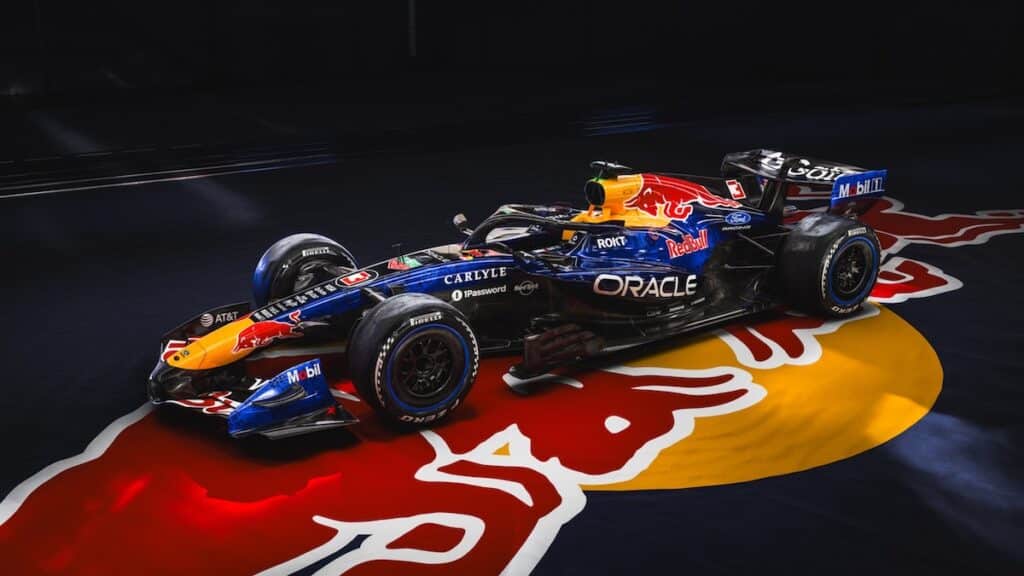
As Red Bull looks toward 2026, almost everything around Verstappen is in flux. Leadership structures are shifting. Technical philosophies are being rewritten. The car itself, for now, exists only as a carefully curated concept.
Yet Verstappen enters this new era not as a legacy figure or symbolic leader, but as the benchmark by which the project will live or die. He is neither protected by sentiment nor burdened by nostalgia. His influence is rooted entirely in relevance.
Even the smallest details reflect that reality. The return to a glossy livery — after years of Red Bull’s matte finish — was quietly confirmed internally as a Verstappen preference rather than a branding exercise. He welcomed it publicly, praising its retro feel. A minor aesthetic choice, perhaps, but a telling one. In moments of transition, his voice still shapes direction.
Power Without Sentiment
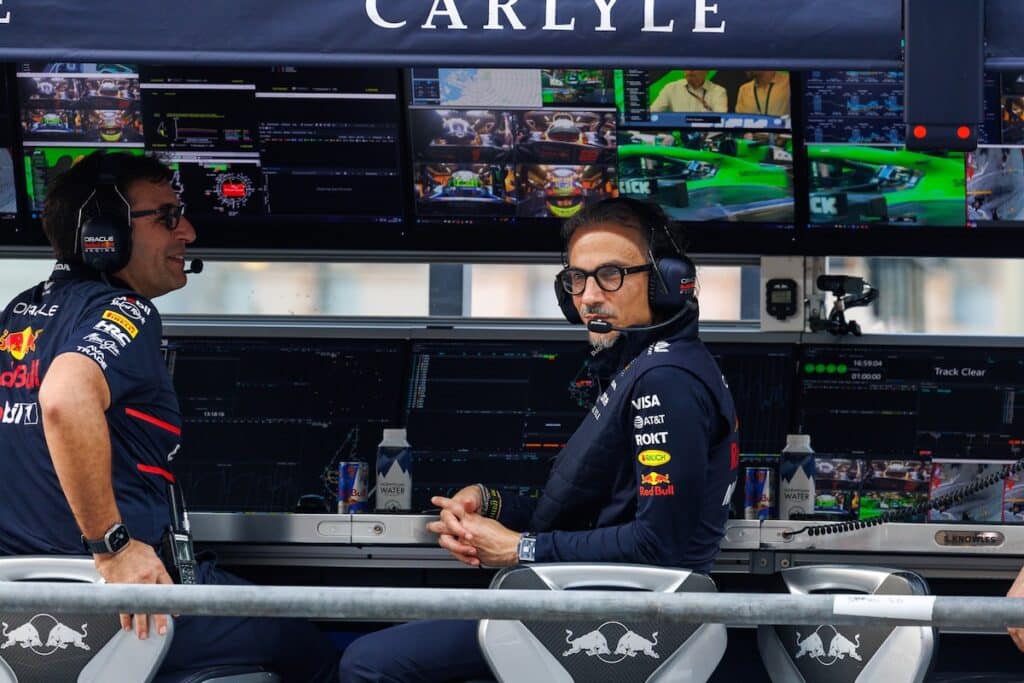
This rebuild is unfolding without the architects of Red Bull’s golden era. Adrian Newey’s influence is gone. Helmut Marko no longer shapes daily operations. Christian Horner is absent from the new structure.
In their place stands a quieter, more corporate leadership — symbolised by Laurent Mekies, visible at the launch as a marker of transition rather than continuity. For Verstappen, this is not simply a regulation change. It is a shift in the human framework that has defined his career.
At the centre of that shift lies Red Bull’s boldest decision yet: total technical ownership.
Ownership — and Exposure
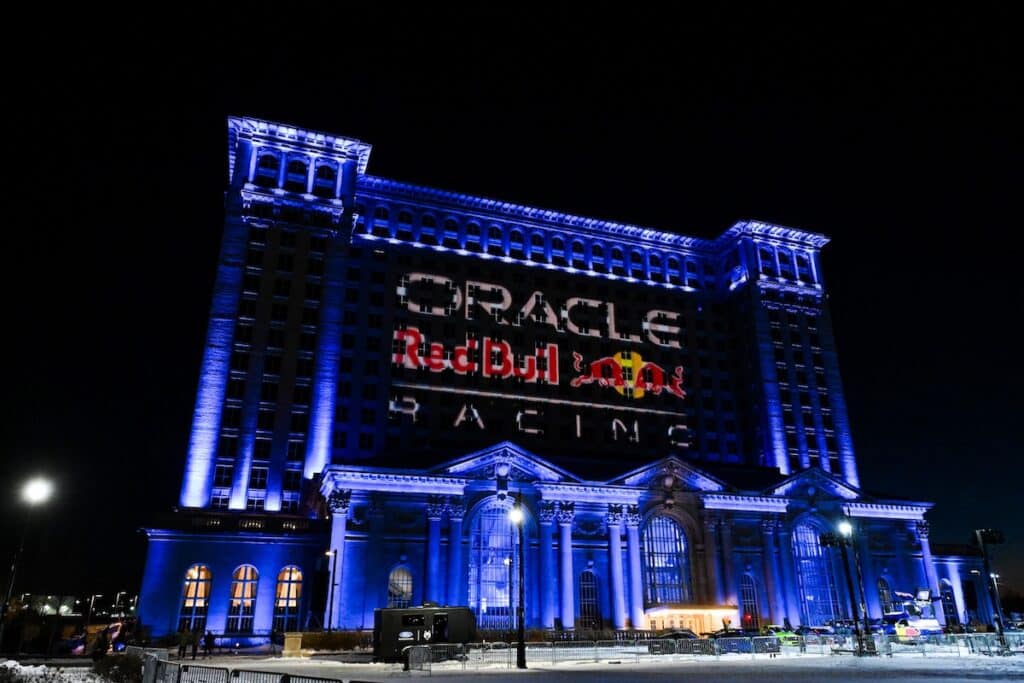
For the first time, Red Bull will compete with a fully in-house power unit developed by Red Bull Powertrains, supported by Ford in its return to Formula One. Built from nothing, staffed by hundreds, and funded without inherited infrastructure, it is ownership in the purest sense — including ownership of failure.
Internally, Red Bull has acknowledged accepting greater risk than rivals traditionally allow, prioritising performance early and resolving reliability later. It is a philosophy that reflects confidence, ambition, and exposure in equal measure.
For Verstappen, the stakes are unmistakable. This project will either elevate him further as the defining driver of an era — or reveal the limits of even the strongest individual influence.
A Reset of Context, Not Reputation
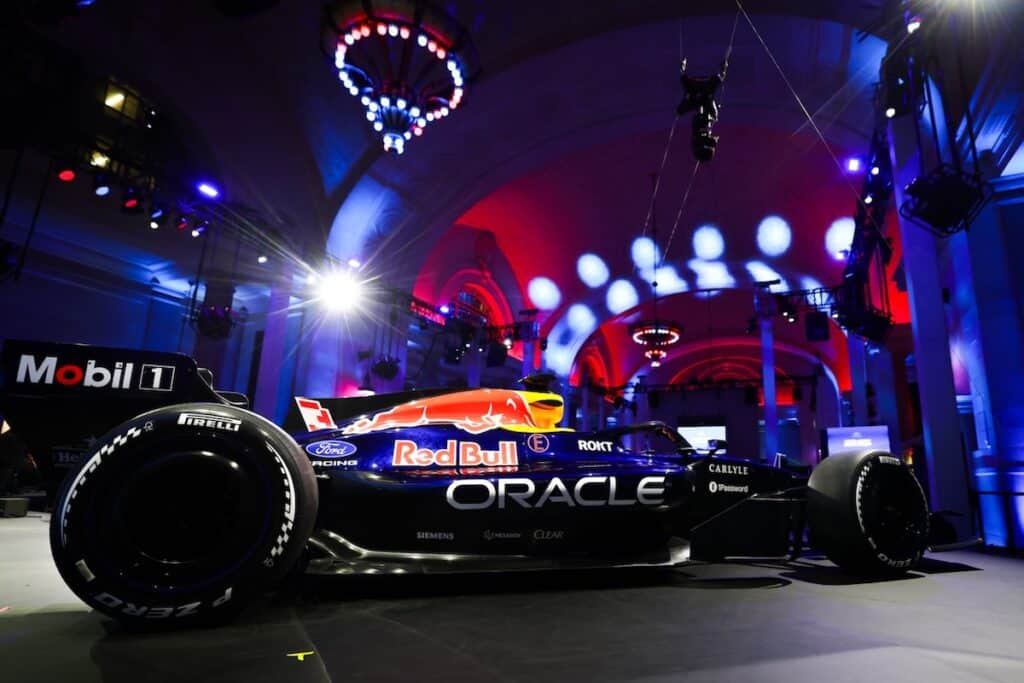
Publicly, Red Bull’s 2026 car remains a controlled abstraction. Details are revealed selectively, ambiguity preserved by design. What matters is not what is shown, but what is coming.
The 2026 season will test Red Bull more severely than any year since its first championship challenge. A new leadership structure. A self-developed power unit. A philosophy that favours control over insulation.
For Verstappen, this is not a reset of reputation. That has already been settled.
It is a reset of context.
Red Bull’s objective is clear: to return him — and the team — to the top using an entirely self-owned platform. That clarity cuts both ways. If it works, Verstappen remains the foundation of Red Bull’s next era. If it fails, the team’s central pillar could falter.
Read More: