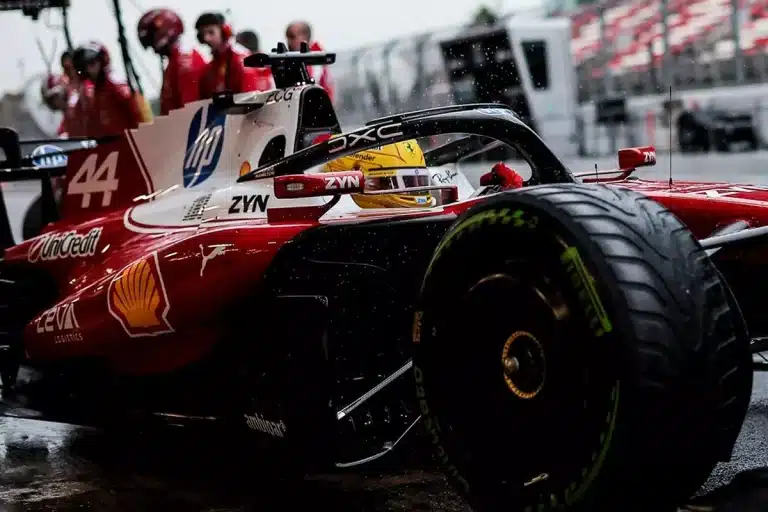
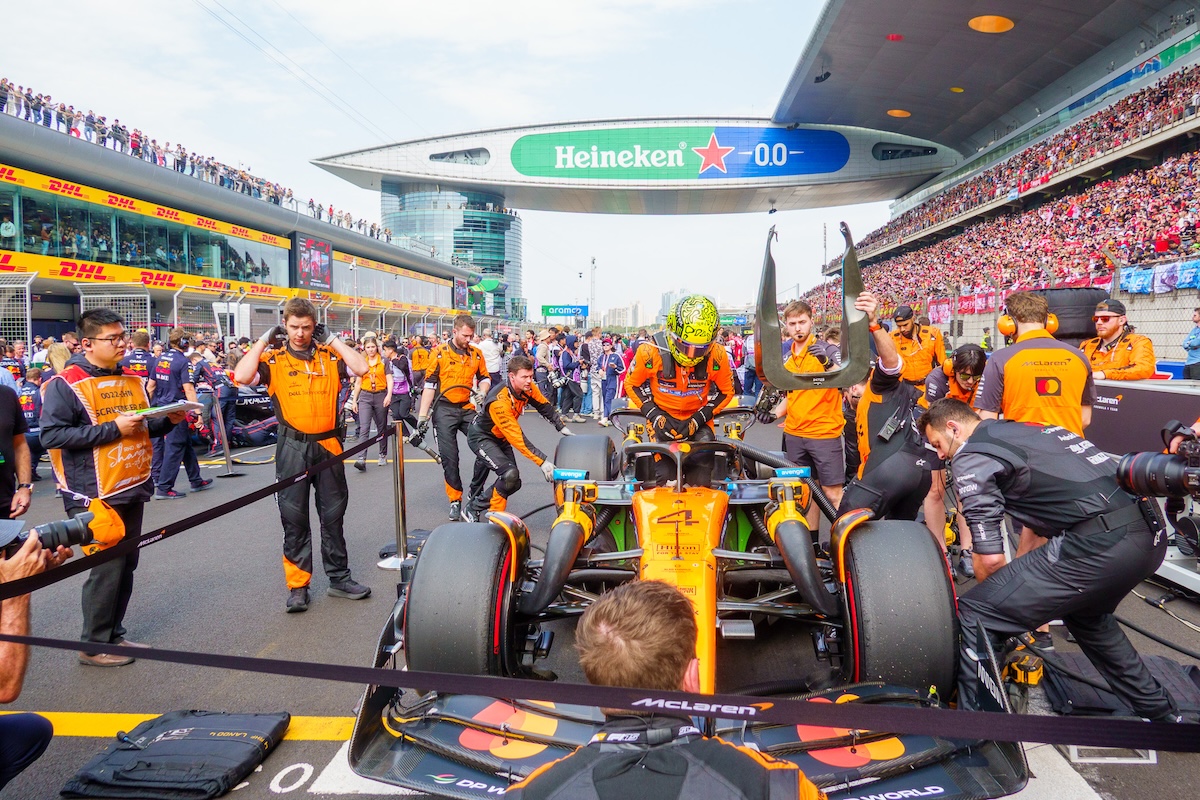
The celebration inside the Ferrari garage looked genuine. Lewis Hamilton smiled freely, laughing with mechanics and engineers as cameras lingered nearby. Yet despite the positive body language, the moment never felt fully settled. This was only a Sprint Race victory — encouraging, symbolic, but not the definitive statement Ferrari or Hamilton ultimately seek. The sense around the paddock was one of cautious optimism rather than confirmation.
Across the paddock, the contrast was striking. Liam Lawson stood quietly, helmet off, his attention fixed somewhere distant. Two race weekends into his Red Bull opportunity, the silence around him carried more weight than open criticism. Shanghai would quietly become a defining weekend — one that offered hope to one driver and signaled the beginning of a difficult reckoning for another.
Shanghai’s Distinct Paddock Atmosphere
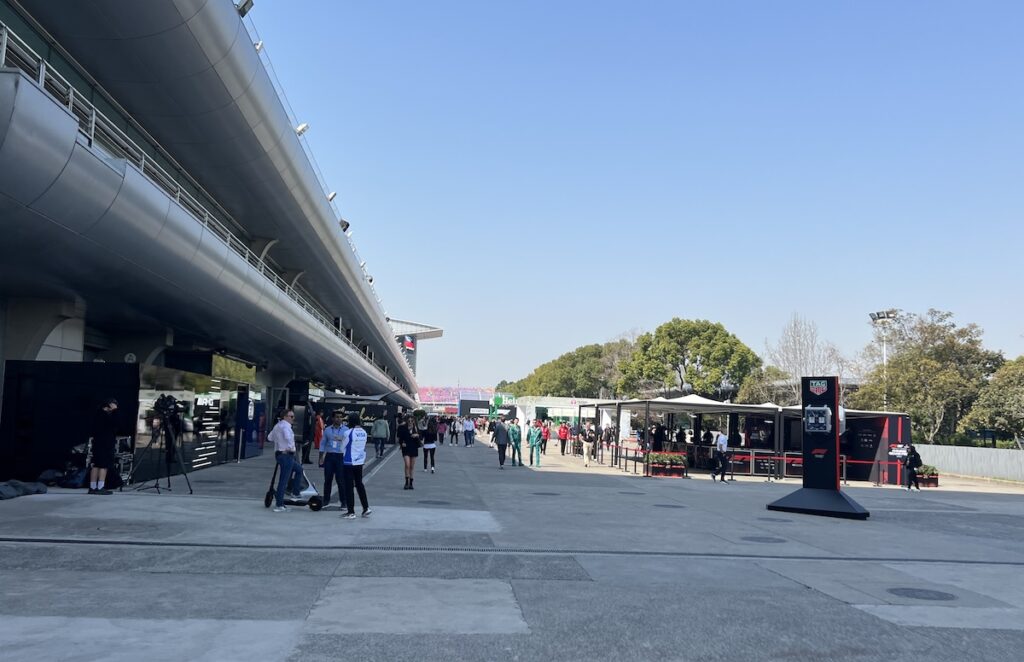
The Chinese Grand Prix always feels slightly detached from the rest of the Formula One calendar. Shanghai is modern, expansive, and driven as much by spectacle as by sport. The circuit sits at the edge of a vast city, and the paddock reflects that scale. Private jets arrived steadily throughout the week, team motorhomes rolled into place under soft spring skies, and VIP hospitality filled early — long before cars hit the track.
This weekend also highlighted Formula One’s role as a cultural event. Alongside drivers and team personnel, Chinese actors and influencers moved confidently through the paddock, drawing attention in their own right. Familiar local names such as Cheng Yi and Victor Ma were frequently surrounded by fans, phones raised just as often for them as for the drivers. The result was a weekend that blurred the boundaries between motorsport, entertainment, and celebrity culture.
WAG Presence — And Noticeable Absences
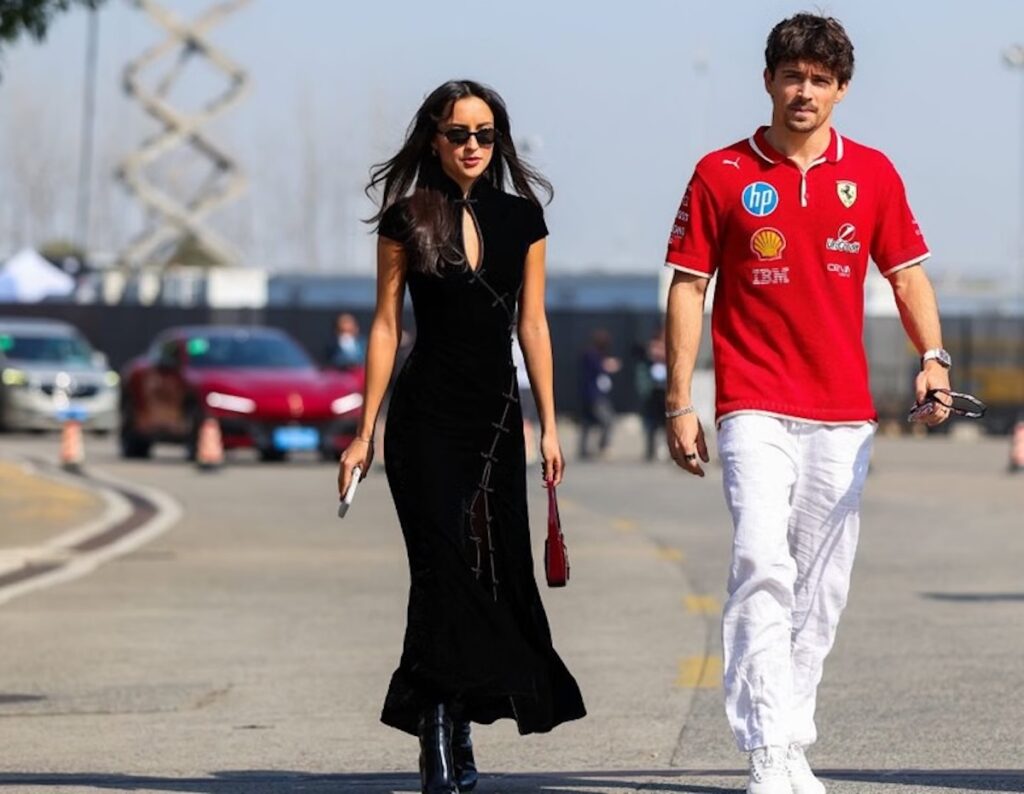
With the season still in its early stages and the race taking place far from Europe, the Chinese Grand Prix saw a reduced WAG presence. Long travel distances and a tightly packed calendar kept many familiar faces away, which made the absences particularly noticeable for those who follow paddock life closely.
Lily He, the professional golfer and Chinese-born partner of Alex Albon, was present in support of Williams, fitting naturally into the Shanghai setting. Her appearance was one of the few consistent WAG sightings across the weekend.
More surprising was the presence of Alexandra Saint Mleux, who attended in support of Charles Leclerc — and notably on her own. With Lewis Hamilton now Leclerc’s teammate and without an official partner, Ferrari’s usually visible WAG circle felt incomplete. Rebecca Donaldson, previously a regular presence at Ferrari alongside Carlos Sainz, has followed him to Williams and did not attend the Chinese Grand Prix.
In 2024, Saint Mleux and Donaldson were often seen together inside Ferrari hospitality. In Shanghai, that familiar dynamic was missing — something long-time followers immediately picked up on. Fans are already watching closely to see whether the pairing reappears later in the season, now split across different teams and colours.
Ferrari Red and Hamilton’s Growing Presence
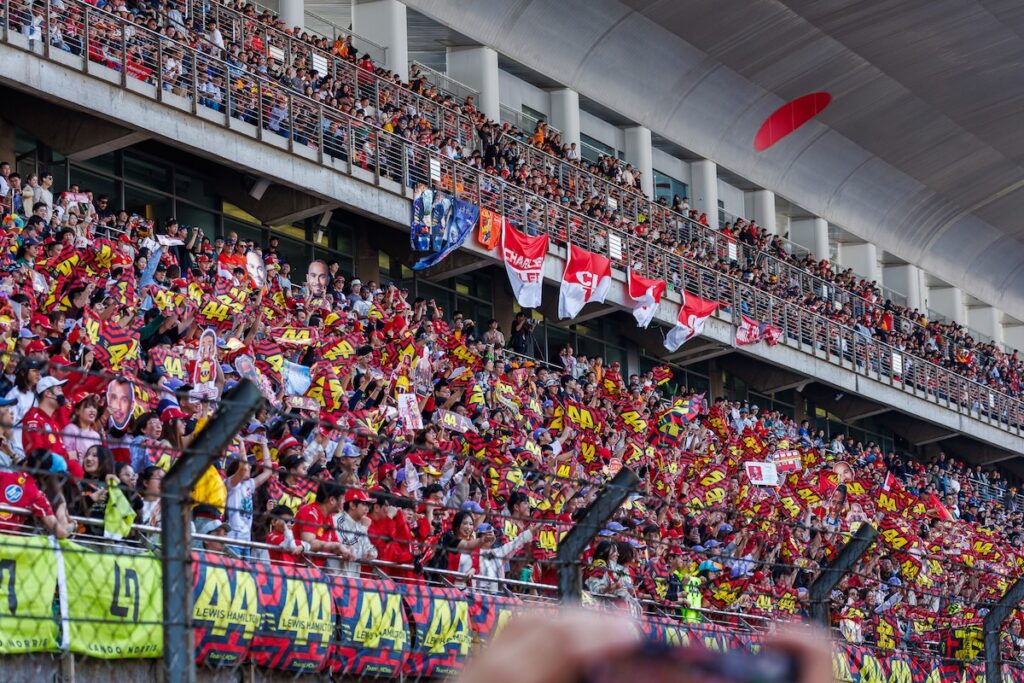
Lewis Hamilton’s arrival in Shanghai came with unmistakable focus. A six-time winner at the circuit, he was greeted by large numbers of Chinese fans who turned the grandstands red with new Ferrari merchandise. The transition from Mercedes to Ferrari still feels fresh, but the response from fans has been immediate and enthusiastic.
This was Hamilton’s first Sprint weekend where Ferrari momentum felt tangible. The expectation was not just performance, but reassurance — a signal that progress was real. When Hamilton secured Sprint pole and converted it into a Sprint Race victory, the atmosphere inside the Ferrari garage subtly shifted. There were no dramatic celebrations, only quiet confidence and steady work. For the first time this season, the idea of Hamilton succeeding at Ferrari began to feel more than theoretical.
A Difficult Weekend for Lawson
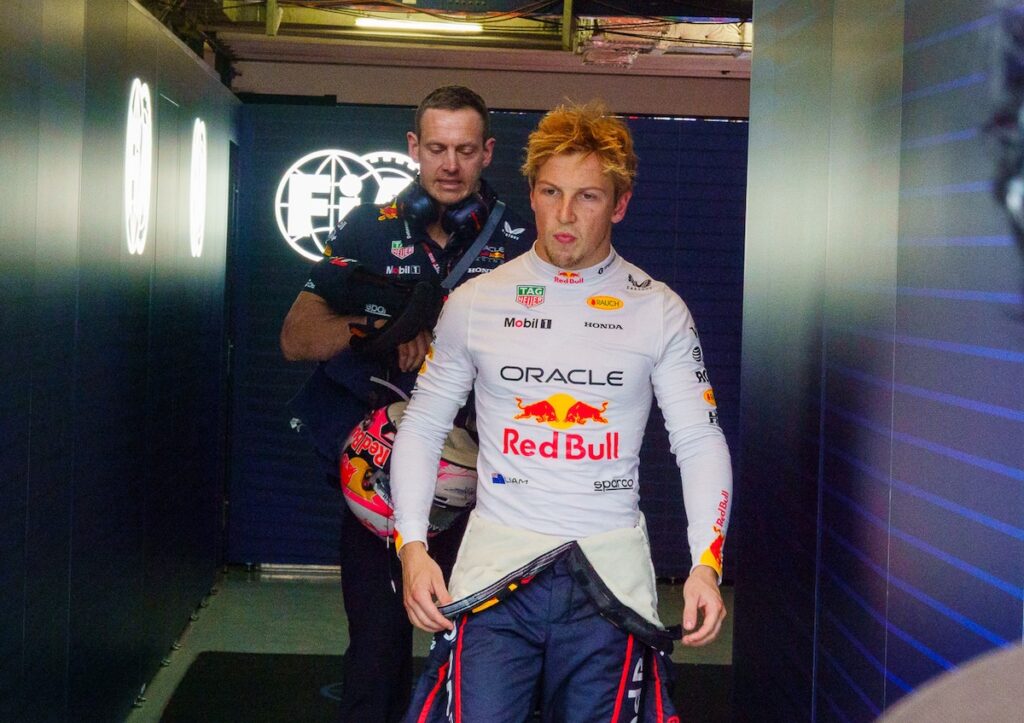
Liam Lawson arrived in Shanghai with far less attention. His Australian Grand Prix had already raised concerns, qualifying eighteenth while Max Verstappen started third. A wet-weather crash in Melbourne further complicated his start to life at Red Bull, even if conditions had caught out more experienced drivers as well.
Before the season even began, questions surrounded his promotion, with many pointing to Yuki Tsunoda’s experience and long-term development within the Red Bull system. Those doubts followed Lawson to Shanghai, where the weekend was meant to offer a reset. Instead, the results reinforced existing concerns. Sprint qualifying and main qualifying both ended in P20, while race finishes offered little momentum.
Red Bull rarely speaks publicly before acting. By Shanghai, the data, body language, and internal evaluations were already aligning.
Sunday and Its Consequences
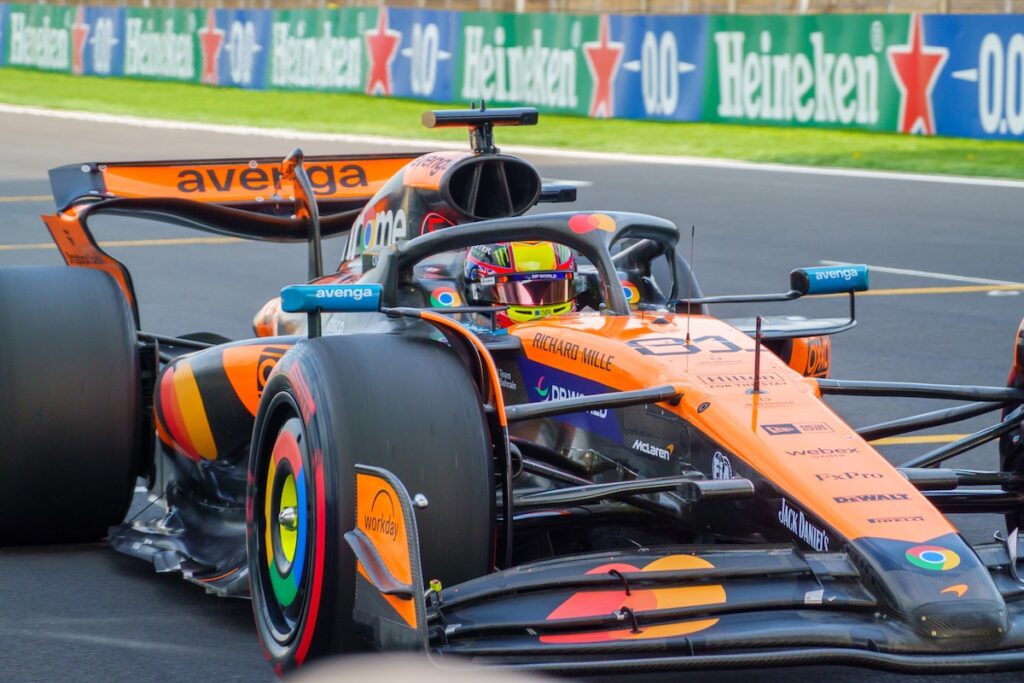
Sunday belonged firmly to McLaren. Oscar Piastri delivered a composed, controlled victory, holding off Lando Norris without drama. It was another reminder that McLaren’s strength is now firmly established rather than theoretical.
Ferrari’s weekend took a harsh turn when both cars were later disqualified due to excessive plank wear. Officially, it resulted in a double DNF — one of Ferrari’s worst recent results on paper. Emotionally, however, the weekend still left Hamilton with encouragement. The Sprint performance mattered, even if the final result did not.
Shortly after the Chinese Grand Prix, Red Bull confirmed its decision. Liam Lawson would be replaced ahead of the Japanese Grand Prix. Two race weekends had been enough. The announcement was brief and unspectacular — typical of a team that prioritizes decisiveness over sentiment.
What Shanghai Left Behind
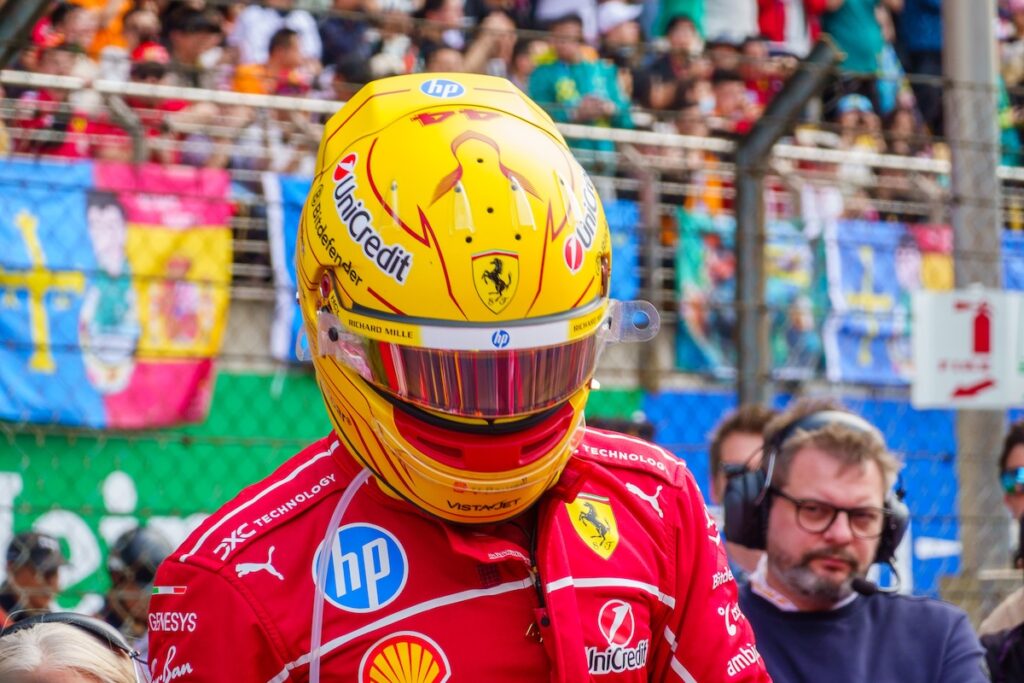
As the paddock packed up, two contrasting trajectories emerged. Hamilton left Shanghai with cautious optimism, believing the season could still deliver meaningful moments even if the Ferrari SF-25 was not yet ready to fight consistently at the front. Lawson departed knowing his opportunity had ended almost as quickly as it began.
Hope and disappointment crossed paths that weekend. The decisions made in Shanghai would shape careers heading into Japan, a home race that would soon be remembered as career-defining — though not in the way one driver had hoped.
Looking back, did the Chinese Grand Prix foreshadow the diverging paths inside Red Bull? Did it hint at Max Verstappen’s title dominance slowly becoming less inevitable? And did Shanghai truly mark a turning point for Lewis Hamilton — or was it simply a brief moment of fragile hope?
Read More: