The second and third days of running at the Circuit de Barcelona-Catalunya shifted the tone of Formula One’s first 2026 shakedown.
Day One hinted at early direction. Days Two and Three began to define pathways — particularly for one team — as clearer patterns emerged around preparation, risk management, and operational readiness.
With previously absent teams joining the running, changing weather conditions, and tightly restricted test days, the focus moved away from outright speed. What mattered instead was how teams managed uncertainty.
This is our overview of Days Two and Three of the private Barcelona shakedown.
Day Two: Decisions Under Constraint
Day Two was shaped almost entirely by the weather.
Rain arrived early, and with each team limited to just three days of running during the Barcelona week, most opted not to waste valuable mileage in mixed conditions.
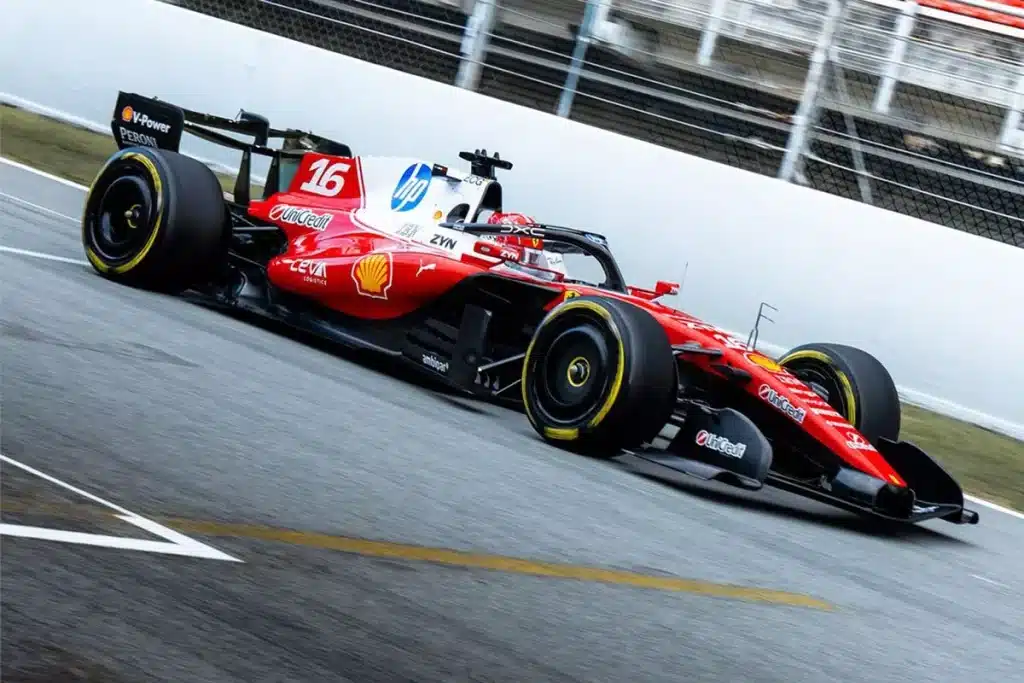
Only two teams ran in any meaningful way: Red Bull Racing and Ferrari.
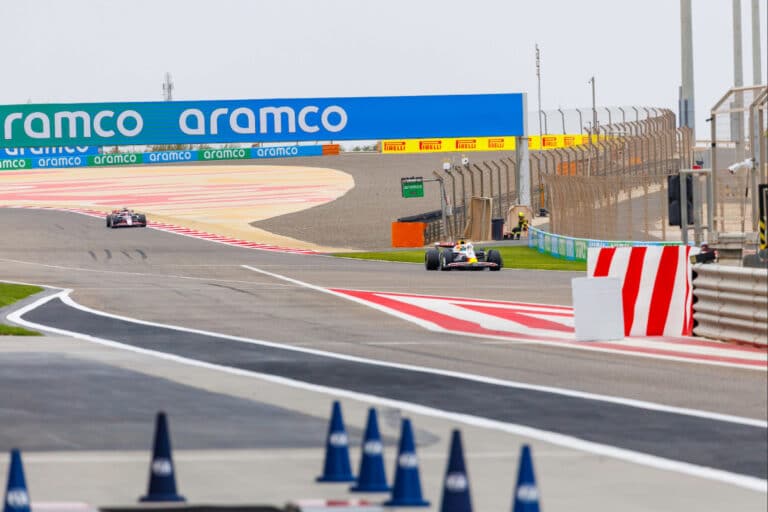
For Red Bull, the day delivered both reassurance and consequence. Max Verstappen ran in damp conditions, set an early reference, and briefly ran wide into the gravel at Turn 5. There was no damage and no interruption — a routine moment given the conditions.
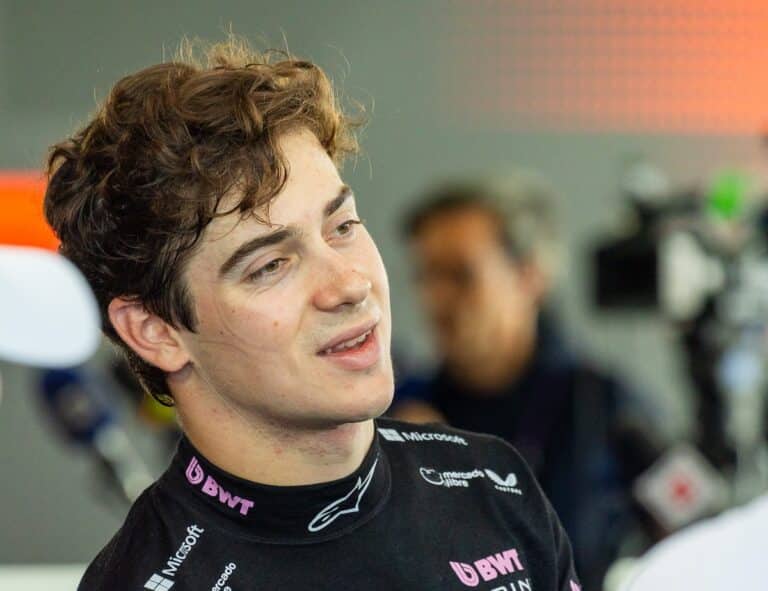
Later in the day, however, Isack Hadjar’s session ended abruptly with a heavy crash into the barriers. While the driver was unharmed, the incident brought Red Bull’s running to an immediate end. In a private test environment with limited spare parts, the consequences extended into the following day.
Ferrari approached the conditions differently. Charles Leclerc ran in the morning, with Lewis Hamilton taking over in worsening weather during the afternoon. The focus was not pace, but systems, communication, and integration.
For Hamilton, still early in his Ferrari tenure, the value was straightforward: meaningful time in the car under real conditions, without competitive pressure. Ferrari left Day Two having achieved precisely what it set out to do.
By the end of the day, most teams had chosen preservation over exposure — a choice that would shape Day Three.
Day Three: Who Was Ready to Work
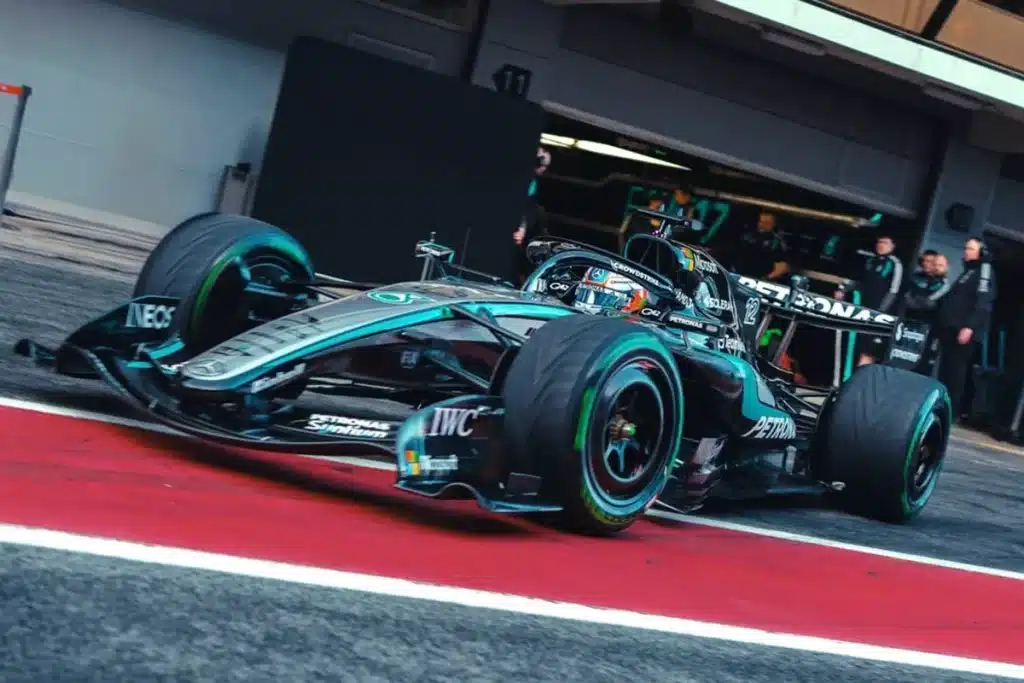
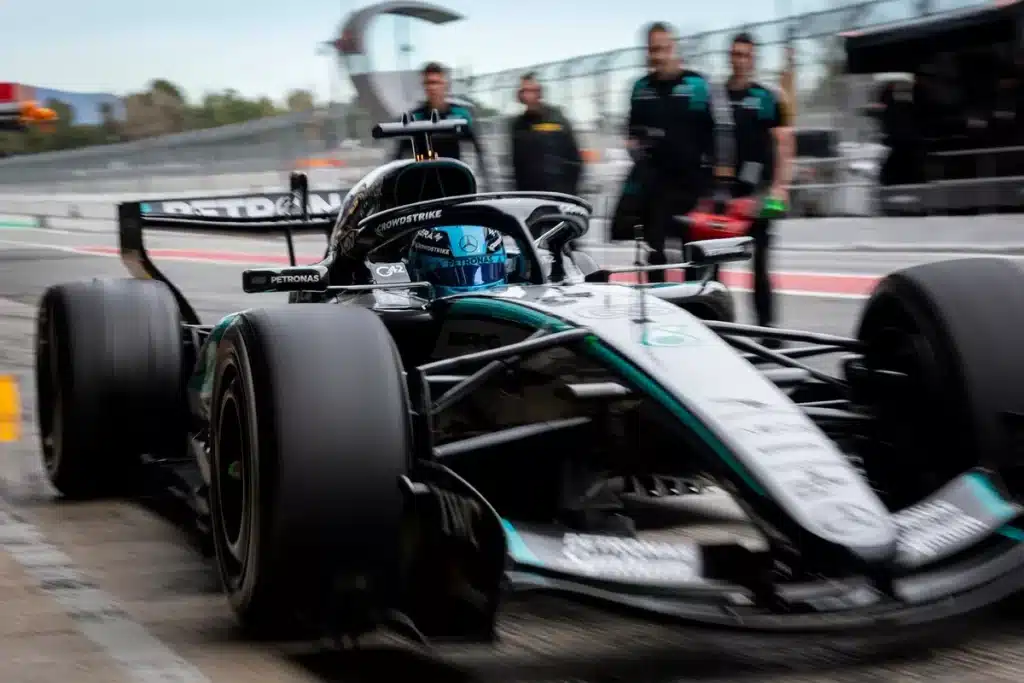
Day Three delivered the clearest signal of competitive readiness so far — and Mercedes set the benchmark.
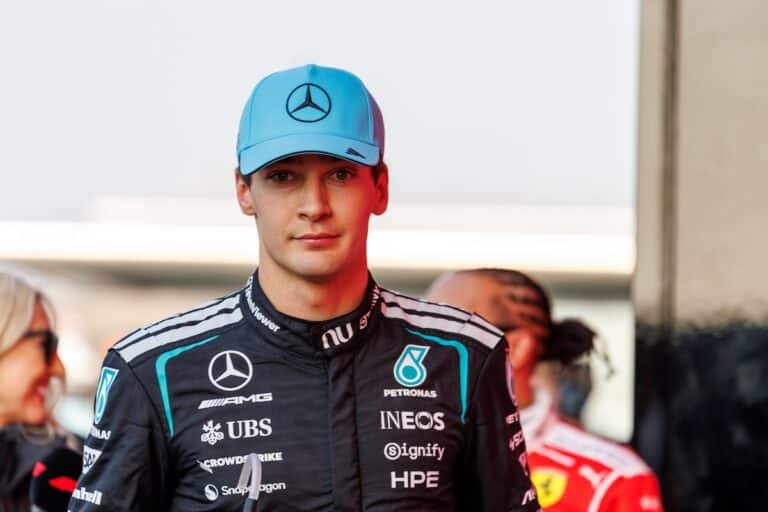
George Russell completed 92 laps during the morning session alone, the highest single-session mileage of the test to that point. Kimi Antonelli followed in the afternoon, adding further running and, according to paddock reports, improving on Russell’s times later in the day.
What stood out was not pace.
It was structured.
Mercedes executed a full programme that resembled a normal race weekend rather than a shakedown. Driver changes were clean. Feedback loops were tight. The plan unfolded exactly as intended.
Across three days, Mercedes have accumulated more mileage than any other team. In testing, that is rarely accidental.
For Russell, the running reinforced his role as the team’s reference point — calm, methodical, and clearly trusted. For Antonelli, it marked another quietly impressive step: learning without pressure and progressing without noise.
Mixed Fortunes Across the Grid
Elsewhere, the picture was more uneven.
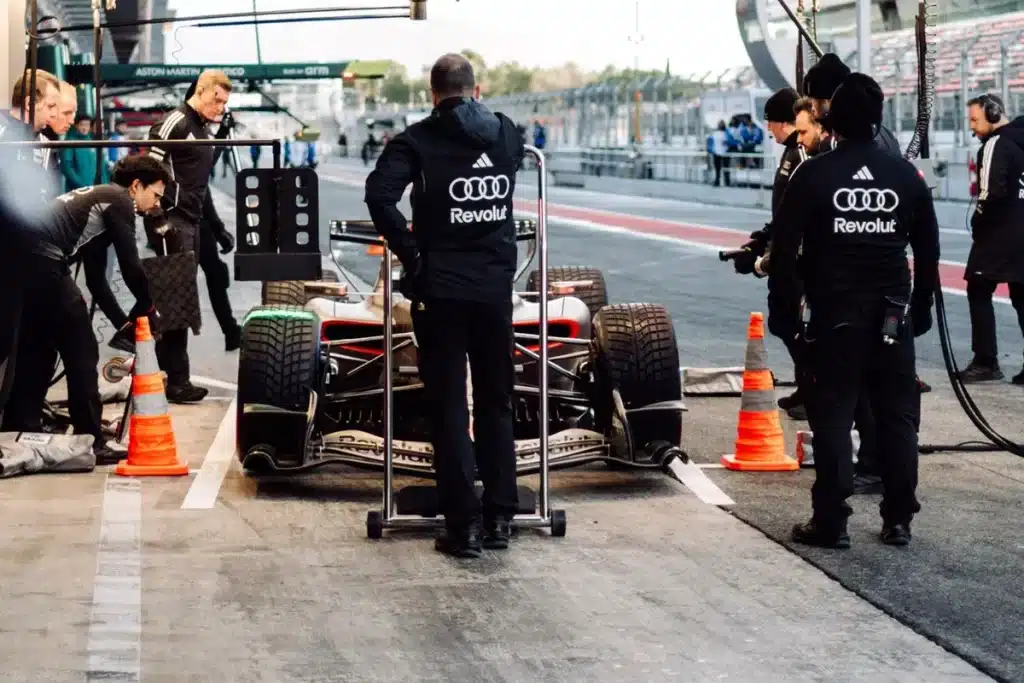
Audi endured another interrupted day. Nico Hülkenberg stopped on track early with a hydraulic issue, forcing a recovery. Running remained limited thereafter, leaving Audi at the bottom of the mileage table after three days. As a new works operation running its own power unit and internal systems, the challenge is understandable — but still significant.
McLaren appeared in earnest for the first time. Lando Norris did not run until late afternoon following extended garage time, likely linked to system checks rather than concern. Nevertheless, the delay leaves McLaren behind its direct rivals in total mileage.
Alpine and Racing Bulls completed steady, unremarkable days, each logging around sixty laps. No incidents. No attention. Exactly what both teams needed.
Haas experienced a brief stoppage, reportedly electrical or sensor-related, before returning to complete its programme.
Red Bull did not run at all, focusing instead on repairs following Hadjar’s crash. With only one Barcelona day remaining, the loss of running tightens their preparation window ahead of Bahrain.
Ferrari also chose not to run, having completed its wet-condition programme on Day Two. Remaining mileage is scheduled later in the week.
Early Winners and Losers — Cautious, but Real
After three days, a clearer picture is beginning to form.
Mercedes appear confident enough not to hide. So far, they look the most complete package.
Red Bull leave Barcelona having shown intent, but also vulnerability. Attention is likely to turn toward their driver pairing in the coming weeks, potentially diverting focus from the more fundamental task of integrating the RBPT–Ford power unit partnership. At this stage, they lack the smooth routine Mercedes have already demonstrated.
Ferrari and McLaren remain methodical and composed, behaving exactly as expected from organisations confident in their internal processes.
Audi continue to face challenges on multiple fronts. Cadillac, aided by Ferrari power, can focus on refining workflow and operations. Audi, despite inheriting an existing team structure, are building and troubleshooting simultaneously.
This is likely to be an educational year for Audi.
What Comes Next
The Barcelona shakedown is not over.
We will return after Day Five with a full summary of what five days of closed testing have revealed — including which drivers have made early impressions, and which teams still have work to do before Bahrain.
Read More: